Africa’s investability is being underestimated just as global financial conditions are shifting in its favor, and that gap is creating one of the more interesting asymmetric opportunities in emerging markets.
Africa ETF AFK rises to 28.40 as rates stabilize

For years, the continent has struggled not with a shortage of ideas, entrepreneurs or demand, but with a shortage of patient capital willing to price risk fairly. That matters economically because capital is the transmission mechanism for infrastructure, energy, logistics and consumer growth. When that capital is scarce or mispriced, projects stall, returns stay trapped, and growth remains below potential. When global money finally looks through the old stereotypes, the upside can be dramatic.
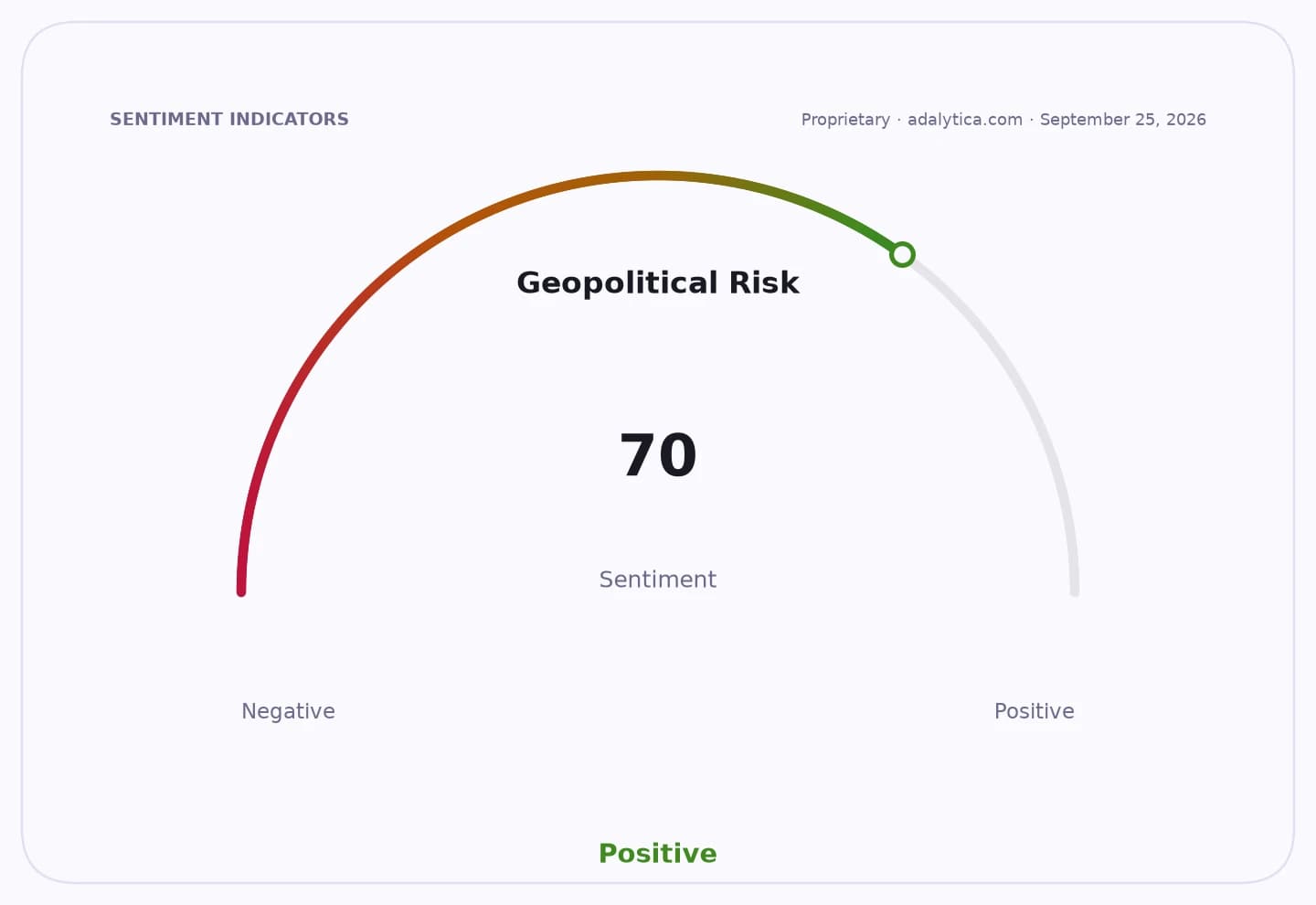
Sentiment IndicatorsⓘProprietary · adalytica.com · August 10, 2026
This is a snapshot — live sentiment, awareness and momentum for 130+ markets update continuously in the dashboard.Open AlphaPulse
The timing is better than the market appreciates. U.S. benchmark yields are still elevated, with the 10-year Treasury around 4.63% and the fed funds rate at 3.63%, but the direction of policy is no longer aggressively restrictive. That creates room for risk capital to rotate back toward higher-beta and longer-duration assets, especially in markets where valuations have already been compressed by years of neglect. At the same time, broader market gauges remain in extreme greed, a sign that investors are already hunting for the next source of growth — and frontier and emerging markets are the obvious place where under-owned assets can re-rate fast.
That helps explain why Africa-focused exchange-traded funds are beginning to attract attention again. The iShares MSCI Africa ETF, AFK, jumped to 28.40, while the iShares MSCI Emerging Markets ETF, IEMG, was near 79.99 and the broader EEM fund was holding around 65.64. The relative move in AFK is more important than the absolute price: it suggests investors are probing for exposure to a region that remains structurally underrepresented in global portfolios. The rally also comes with technically stronger readings, as AFK’s price pushed above its 50-day and 200-day moving averages and its RSI climbed into overbought territory, while IEMG and EEM stabilized near their own short-term trend lines. In plain English, money is testing the door.
The market’s mistake has been to treat Africa as a single risk bucket rather than a collection of country, sector and asset-specific opportunities. That is precisely where mispricing is most attractive. Africa is not just a growth story; it is a capital formation story. Power grids, ports, data centers, mobile money, rail, fertilizer, telecom and local-currency debt all become compelling when investors stop demanding a blanket discount for geography and start underwriting cash flow, scarcity value and strategic relevance.
That strategic relevance is rising. The world needs diversification away from concentrated supply chains, more reliable access to critical minerals, new sources of food production and a bigger runway for consumers in underpenetrated markets. Africa sits at the center of all four. If capital can be matched to projects with governance, currency and execution protections, the region can become a toll road for global thematic money, not a charity case.
What the market is missing is that Africa’s risk premium is not static. It compresses when U.S. rates stabilize, when the dollar peaks, when global liquidity improves and when investors are forced to search outside the crowded U.S. megacap trade. That creates a powerful second-order setup: any improvement in capital flows can have an outsized effect on valuations because local markets are still thinly owned and under-researched.
For investors, the actionable takeaway is simple: use broad Africa exposure as a starting point, but focus on the infrastructure, resource, financial and consumer platforms most likely to benefit from a re-rating in global capital access. The continent’s growth opportunity is not the question. The real question is whether investors will finally pay for it before the crowd does.
| Entity | Gains | Losses |
|---|---|---|
| Africa-focused equities | ▲Re-rating potential | ▼Persistent discounting |
| Global investors | ▲Early access to mispriced growth | ▼Missing the inflection point |
| U.S. Treasuries and cash | ▲Yield appeal remains high | ▼Less relative advantage if rates ease |
| Africa infrastructure and banks | ▲Funding tailwind | ▼Cost of capital burden |