World Cotton Day matters less for the bales Africa grows than for the wealth it fails to keep after harvest.
Africa Cotton Value Chain and Local Processing
The continent produces about 7.5% of the world’s cotton, but most of that fibre still leaves Africa before it is spun, woven, dyed, cut and sold. That gap is the economic story: Africa remains a raw-material supplier in an industry where the biggest margins are captured downstream, by mills, factories, brands and retailers.
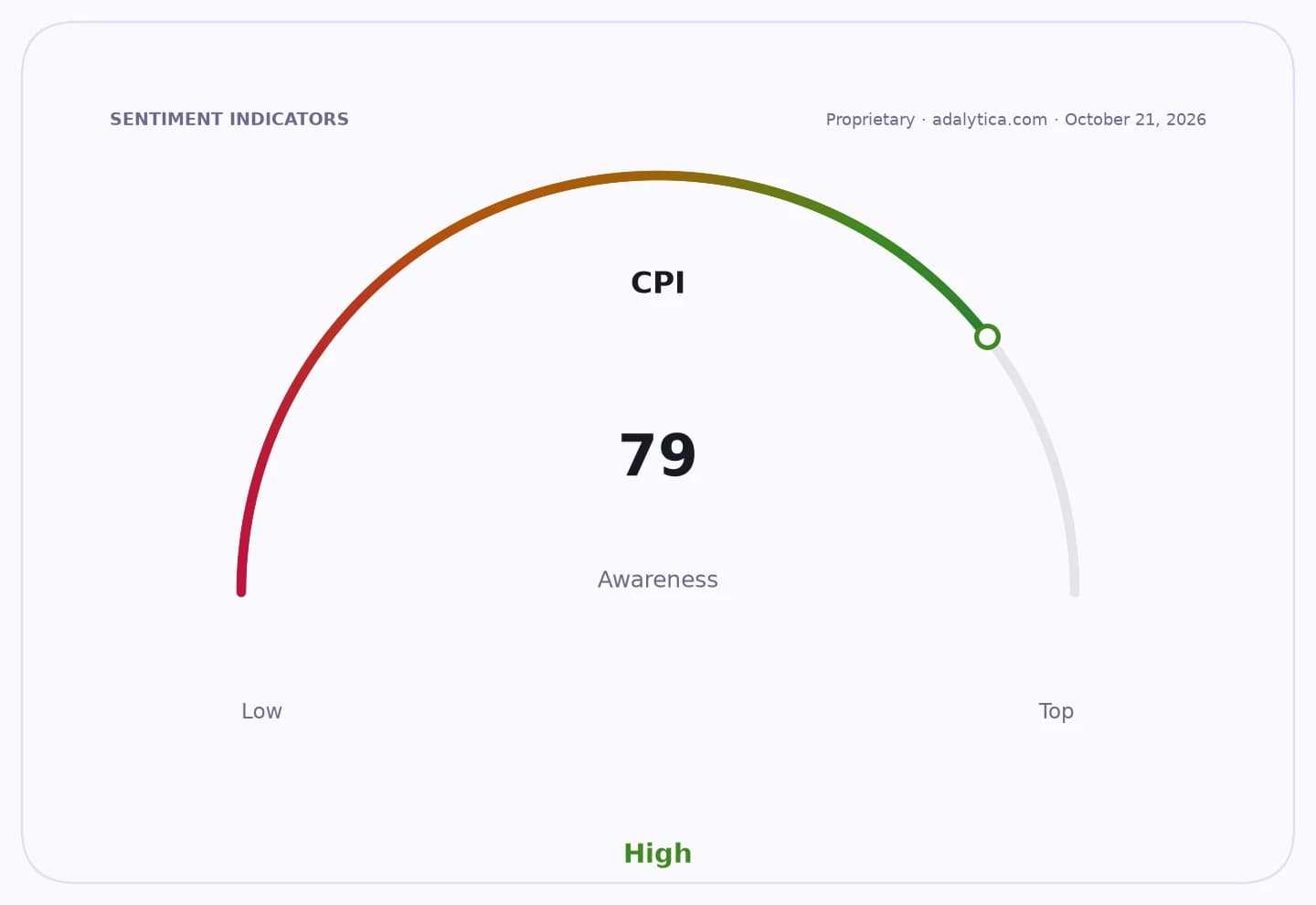
Sentiment IndicatorsⓘProprietary · adalytica.com · October 10, 2026
This is a snapshot — live sentiment, awareness and momentum for 130+ markets update continuously in the dashboard.Open AlphaPulse
The numbers underscore how much value is leaking away. UNCTAD puts raw-cotton exports at about 70% of output, while UNESCO cites an International Cotton Advisory Committee estimate that 81% of sub-Saharan Africa’s cotton was exported unprocessed in 2022. However the methodologies differ, the conclusion does not: the continent is harvesting cotton without fully industrialising it.
That matters because the trade balance reflects not just shipments, but jobs and capital formation. Africa exports about $15.5 billion of textiles, clothing and footwear a year, while importing $23.1 billion, according to UNESCO figures drawn from World Bank trade data. The resulting $7.6 billion deficit is a proxy for factories that are not being built, workers who are not being trained and brands that are not being owned locally.
The development case for shifting more of the chain onshore is substantial. The African Development Bank says control of the cotton value chain can generate a 600% increase in economic value. Raw lint is only the starting point; ginning, spinning, weaving, finishing and garmenting multiply the commercial payoff at every stage. For governments facing weak growth and scarce foreign exchange, that is more than an industrial-policy slogan: it is a path to higher domestic value added and deeper formal employment.
Benin offers one of the clearest early tests. Cotton accounts for roughly 12% to 13% of its economy, and the Glo-Djigbe Industrial Zone has helped lift local processing to about 30% of output, with annual production of seven million to 10 million finished garments. The project’s backers say the wider effort could support 300,000 formal industrial jobs by 2030. Those targets are ambitious, but they show how African countries are starting to treat cotton as an industrial platform rather than an export crop.
For investors, the implication is that the winners are likely to be found in the bottlenecks, not just the fields. Electricity, water, freight, machinery finance, customs efficiency and technical training will matter as much as harvest volumes. A garment line cannot scale without reliable power and logistics, and a spinning mill cannot compete if transport and border delays wipe out the labour-cost advantage. That makes the opportunity broader than agriculture, extending into industrial parks, utilities, logistics, textile machinery and domestic retail.
The social dividend could also be meaningful if policy is designed to capture it. Cotton provides income to an estimated 3.5 million African farmers, but only about 17% are women. Deeper processing could improve incomes, yet it could also entrench existing gaps if ownership and management remain concentrated. Further down the chain, women make up 70% to 90% of the formal garment workforce, which means industrialisation could widen access to jobs and skills if it is paired with training, progression and access to capital.
There is also a market-access opportunity. Clothing and footwear sales in sub-Saharan Africa were valued at about $31 billion in 2020, while e-commerce is broadening the route to consumers. The share of active online shoppers rose from 13% in 2017 to 28% in 2021, or an estimated 334 million users. That gives local producers a larger potential customer base, but it does not solve the harder problem of making goods competitively and consistently at scale.
The African Continental Free Trade Area is central to that challenge. Intra-African textiles and apparel trade is still only about $2.7 billion, or 8% of continental imports, leaving plenty of room for regional supply chains to deepen. AfCFTA is expected to lift intra-African trade, but tariffs alone will not build a competitive textile industry. The bigger constraints are fragmented standards, slow borders, expensive freight and weak payments infrastructure.
| Entity | Gains | Losses |
|---|---|---|
| African processors | ▲More local value capture | ▼Raw-bale dependence |
| Farmers | ▲Higher farmgate demand, steadier incomes | ▼Low-margin export role |
| Asian textile importers | ▲— | ▼Lost sourcing share |
| African governments | ▲Jobs, taxes, industrial depth | ▼Persistent trade deficits |