Xinjiang’s cotton industry is being reshaped by automation and a new generation of tech-savvy growers, a shift that could lift output, cut labor costs and make China’s biggest cotton base even harder to dislodge from the global supply chain.
Xinjiang Cotton Output Rises With Automation
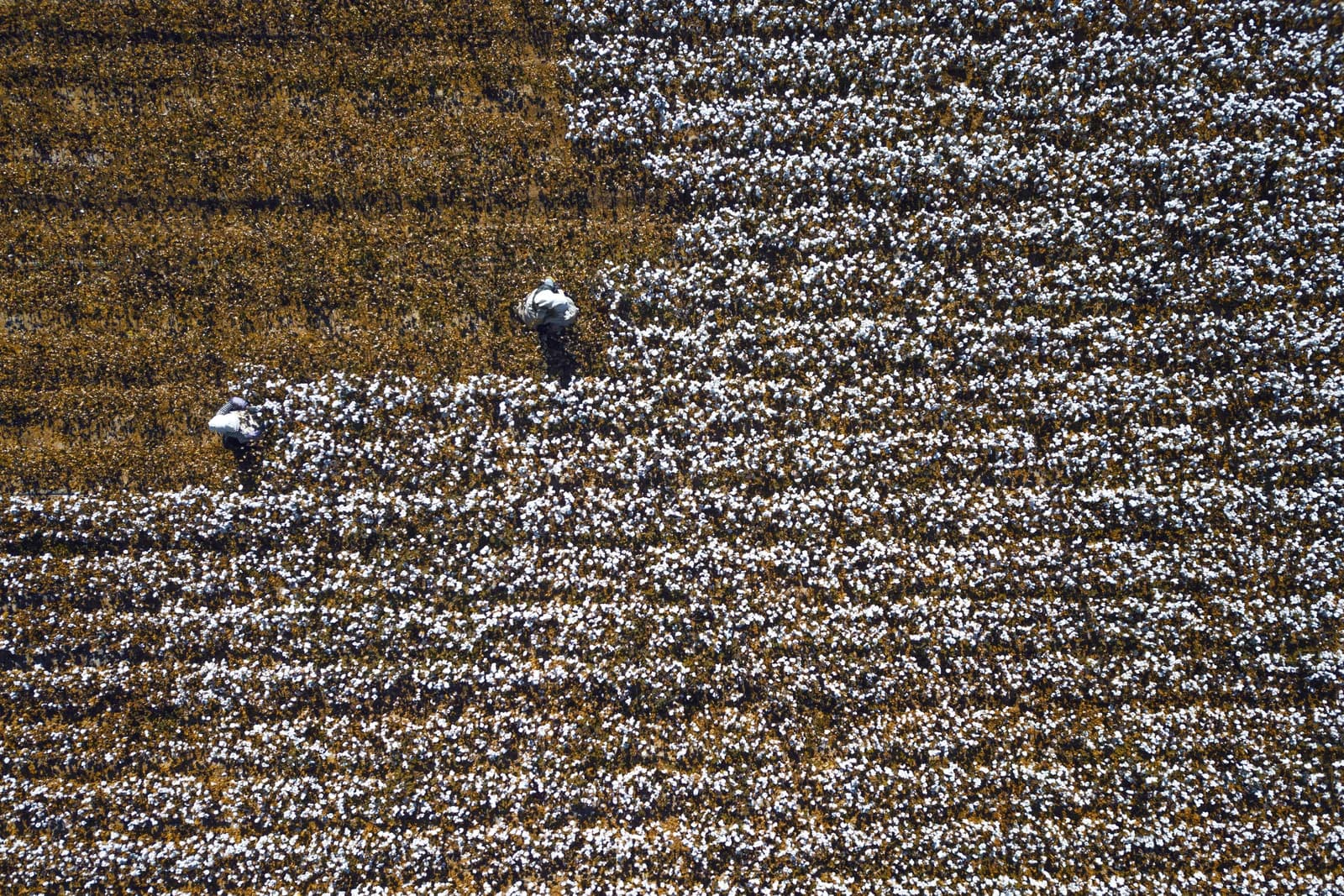
The change matters because Xinjiang now accounts for 92.8% of China’s cotton production, and the region has held the country’s top spot for both total and per-unit yield for 32 straight years. That dominance gives any productivity gain in Xinjiang outsized importance for China’s textile sector, farm incomes and the government’s push to modernize agriculture without relying on ever-larger rural workforces.
Sentiment IndicatorsⓘProprietary · adalytica.com · October 22, 2026
This is a snapshot — live sentiment, awareness and momentum for 130+ markets update continuously in the dashboard.Open AlphaPulse
At the center of the shift is a move from labor-intensive farming to managed, machine-led production. In Yuli County, a “super cotton field” launched with local government support in 2021 now reports unmanned operations for 75% of management tasks, including water, fertilizer and pesticide application. By the end of 2025, the model had reportedly been extended to more than two million mu across Xinjiang, underscoring how quickly what began as a demonstration project has become a scalable template.
The economics are straightforward. One farmer in Changji said a single cotton picker can harvest 400 to 450 mu a day, with harvesting costs of about 60 yuan, or roughly $9, per mu. What once required dozens of workers over an entire season can now be done by one machine, while a 25,000-mu farm can be managed with about 50 workers. For growers, that means lower labor expenses, tighter control over timing and inputs, and potentially better margins even in a cyclical crop market.
The broader significance goes beyond machinery. The story now is also about labor and human capital. Farmers such as Ai Haipeng and Guo Teng, both born in the 1990s, represent a generation treating cotton farming as a business rather than a fallback. They use drones, precision drip irrigation and phone-based controls, and they talk about management, data and operations rather than manual toil. That helps address a longstanding problem in Chinese agriculture: the aging of the rural workforce and the challenge of attracting younger talent back into farming.
The technology is also moving fast enough to change the labor equation in real time. The latest agricultural drone deployed in Yuli can automatically mix pesticides, refill, recharge, plan routes and spray without pilot intervention. For farmers, that reduces the need for skilled operators and around-the-clock supervision during critical growth stages. For equipment makers such as XAG, it creates a larger addressable market as automation spreads from pilot fields to mainstream acreage.
Investors should read the development as a supply-side efficiency story, not just a rural lifestyle narrative. More mechanized production can support steadier cotton supply, improve quality consistency and reinforce Xinjiang’s strategic role in China’s textile chain. It may also weigh on labor demand in rural areas while supporting demand for agri-tech, drones, precision irrigation systems and large-scale farm management services.
The bull case is that Xinjiang’s model becomes a blueprint for other crops and regions, improving returns per acre and drawing more educated workers into agriculture. The bear case is that high equipment costs, weather volatility and policy sensitivity around Xinjiang could slow adoption or complicate export-linked supply chains. But for now, the main message is that cotton farming in Xinjiang is no longer defined by labor scarcity alone; it is increasingly a capital-intensive, data-driven business.
| Entity | Gains | Losses |
|---|---|---|
| Xinjiang cotton growers | ▲Lower costs, higher yields | ▼Manual labor dependence |
| Agri-tech firms | ▲Bigger equipment market | ▼Traditional farm services |
| Young rural workers | ▲New income opportunities | ▼Older labor model |
| Textile supply chain | ▲More stable cotton supply | ▼Labor-intensive sourcing |