Tamil Nadu is rolling out full subsidies for cotton growers in 22 districts, a policy move that could lift farm incomes, improve yields and help the state’s textile sector secure more of the fiber it needs at home.
Tamil Nadu Cotton Revival Mission Gets Rs 26.21 Crore
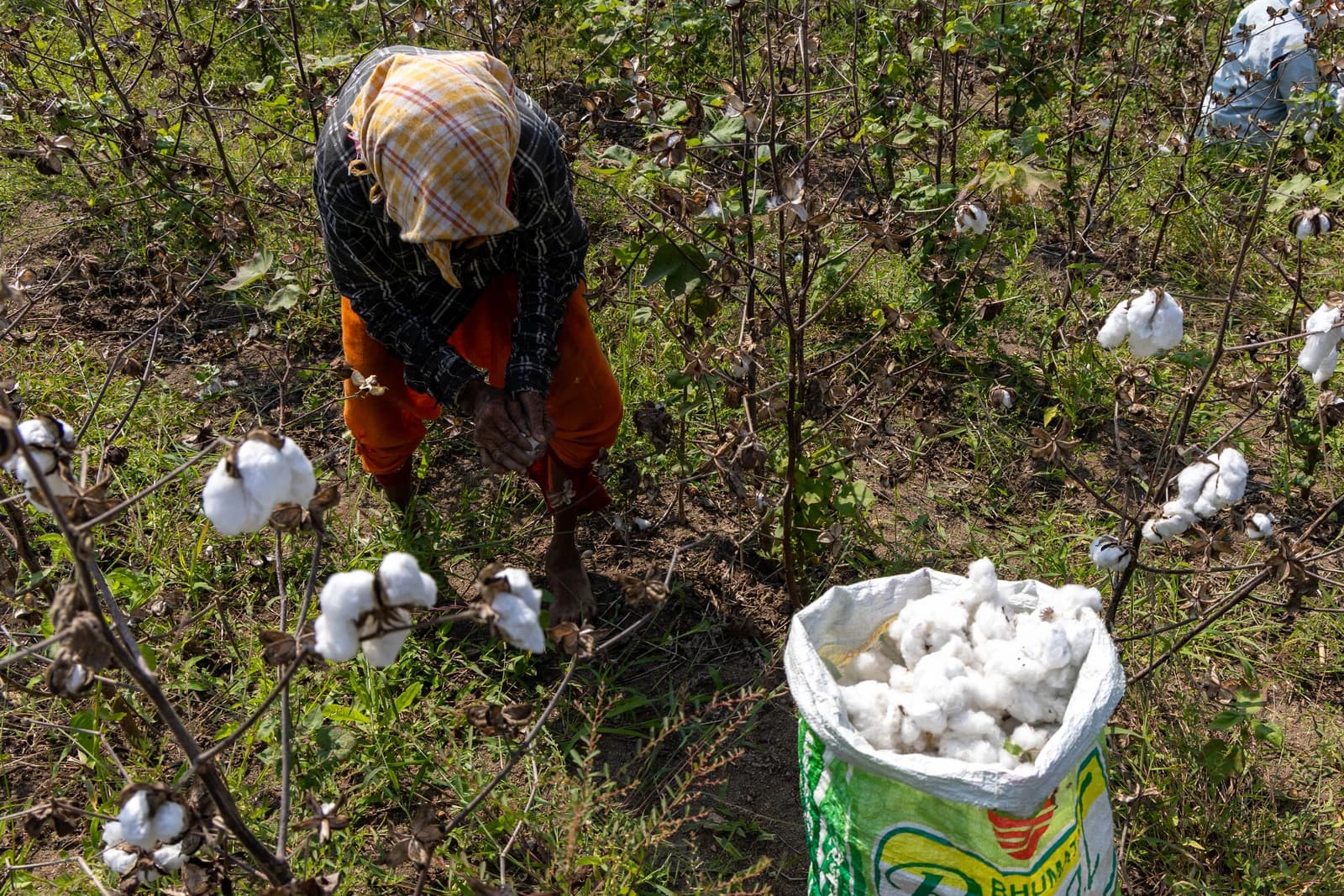
That matters because cotton is still a core link in Tamil Nadu’s agricultural and industrial economy. The state grows about 1.27 lakh hectares of cotton and produces roughly 2.50 lakh bales, but local mills need far more than domestic acreage can reliably supply. By backing better seed, agronomic practices and harvesting costs, the government is trying to raise productivity rather than simply expand acreage, which is the more durable way to improve farm profitability.
Sentiment IndicatorsⓘProprietary · adalytica.com · October 19, 2026
This is a snapshot — live sentiment, awareness and momentum for 130+ markets update continuously in the dashboard.Open AlphaPulse
The new five-year Cotton Revival Mission, announced in the 2026-27 agriculture budget, has administrative approval of Rs 26.21 crore, with the first tranche of Rs 10.48 crore already sanctioned. Under the program, farmers can receive support for high-density and close-spacing cultivation demonstrations, long-staple cotton production and integrated crop management. The package also covers seed subsidies, liquid biofertilizers, biocontrol agents, mepiquat chloride, micronutrients, TNAU Cotton Plus growth promoter, azadirachtin, and post-harvest labor costs at 100% subsidy.
For investors, the significance is less about one state scheme than about the broader effort to stabilize a crop that feeds the textile chain. Better cotton productivity can support ginning, spinning and apparel supply security, while also improving cash flow for growers in districts such as Ariyalur, Coimbatore, Cuddalore, Dharmapuri, Dindigul, Kallakurichi, Krishnagiri, Madurai, Mayiladuthurai, Nagapattinam, Namakkal, Perambalur, Ramanathapuram, Salem, Tenkasi, Thanjavur, Theni, Tirupattur, Tiruvarur, Tuticorin, Trichy and Virudhunagar.
The policy also leans into modern farming methods. Tamil Nadu is promoting closer planting, high-density planting and demonstrations for extra-long staple cotton, which can fetch better prices and lift farmer earnings if yields and quality improve. The program even subsidizes drone spraying at Rs 1,500 an hectare and includes training for farmers, signaling that the state is not just handing out aid but trying to push a technology upgrade in the field.
Still, execution will decide whether this becomes a meaningful earnings boost for farmers or just another policy headline. Adoption of new methods, weather conditions and procurement efficiency will determine how much of the subsidy translates into higher output and better margins. For long-term investors, the larger takeaway is that India’s cotton supply chain is being nudged toward higher productivity, and that is exactly the kind of structural reform that can compound over time.
| Entity | Gains | Losses |
|---|---|---|
| Tamil Nadu cotton farmers | ▲Lower costs, higher yields | ▼Dependence on scheme rollout |
| Tamil Nadu textile mills | ▲Better local fiber supply | ▼Less exposure to crop shortages |
| State government | ▲Rural support, higher productivity | ▼Budget burden |
| Traditional low-yield practices | ▲None | ▼Pressure to modernize |