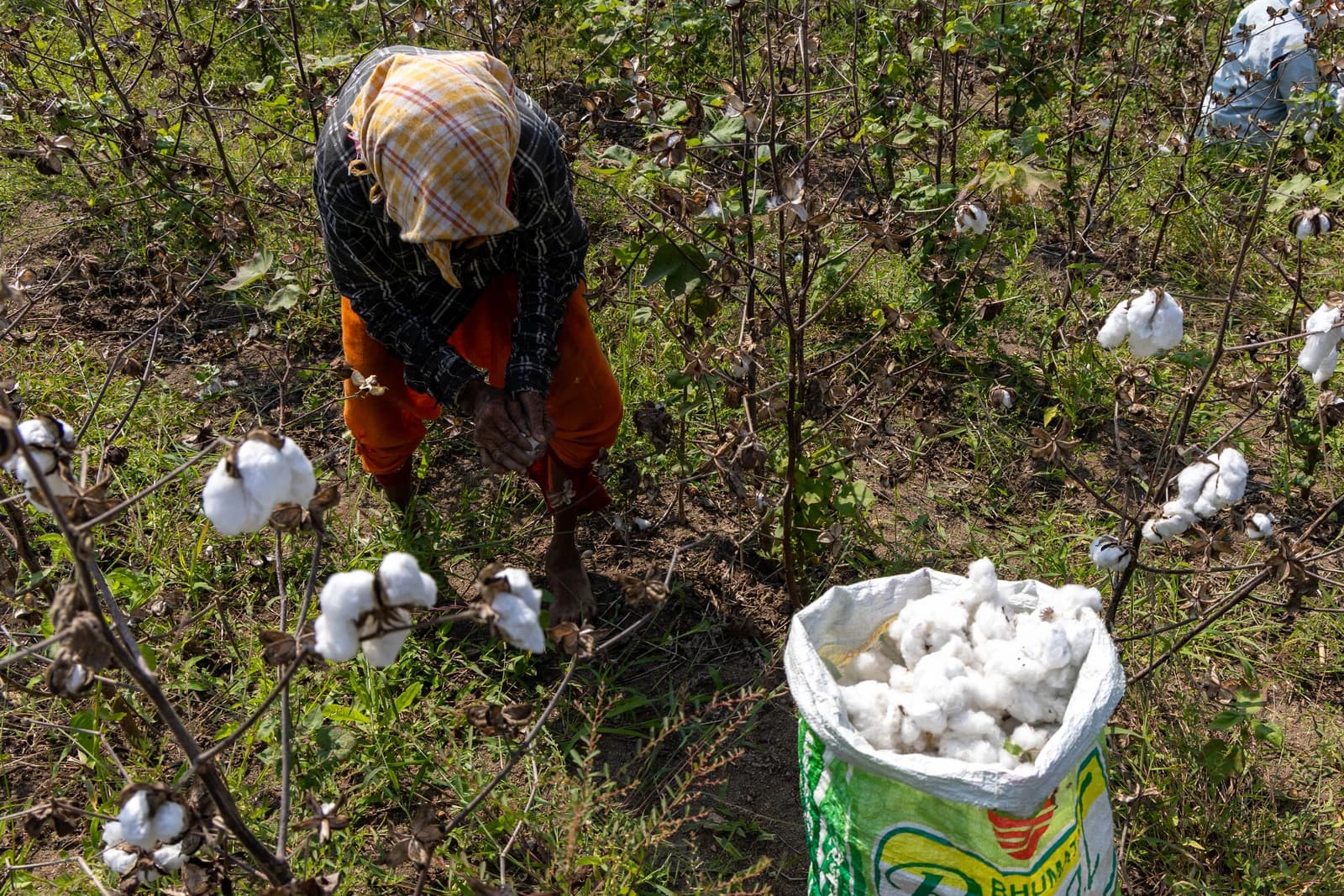
India has lifted wages under its flagship rural jobs scheme by as much as 25%, setting a nationwide floor of ₹300 a day in a move that should support household incomes in poorer states but also add to fiscal pressures if demand for work stays strong.
India raises rural job wages to ₹300 a day
The revised rates, announced under the renamed VB–G RAM G programme, take the national average daily wage to ₹327.4 from ₹298.8, according to the government. In states where pay had lagged most, including Uttar Pradesh, Bihar, Jharkhand, West Bengal, Assam, Arunachal Pradesh and Himachal Pradesh, the increase runs from 15% to 25%. For workers in some of those states, the jump from as little as ₹241 a day marks a meaningful real-income boost at a time when food and living costs remain sticky.
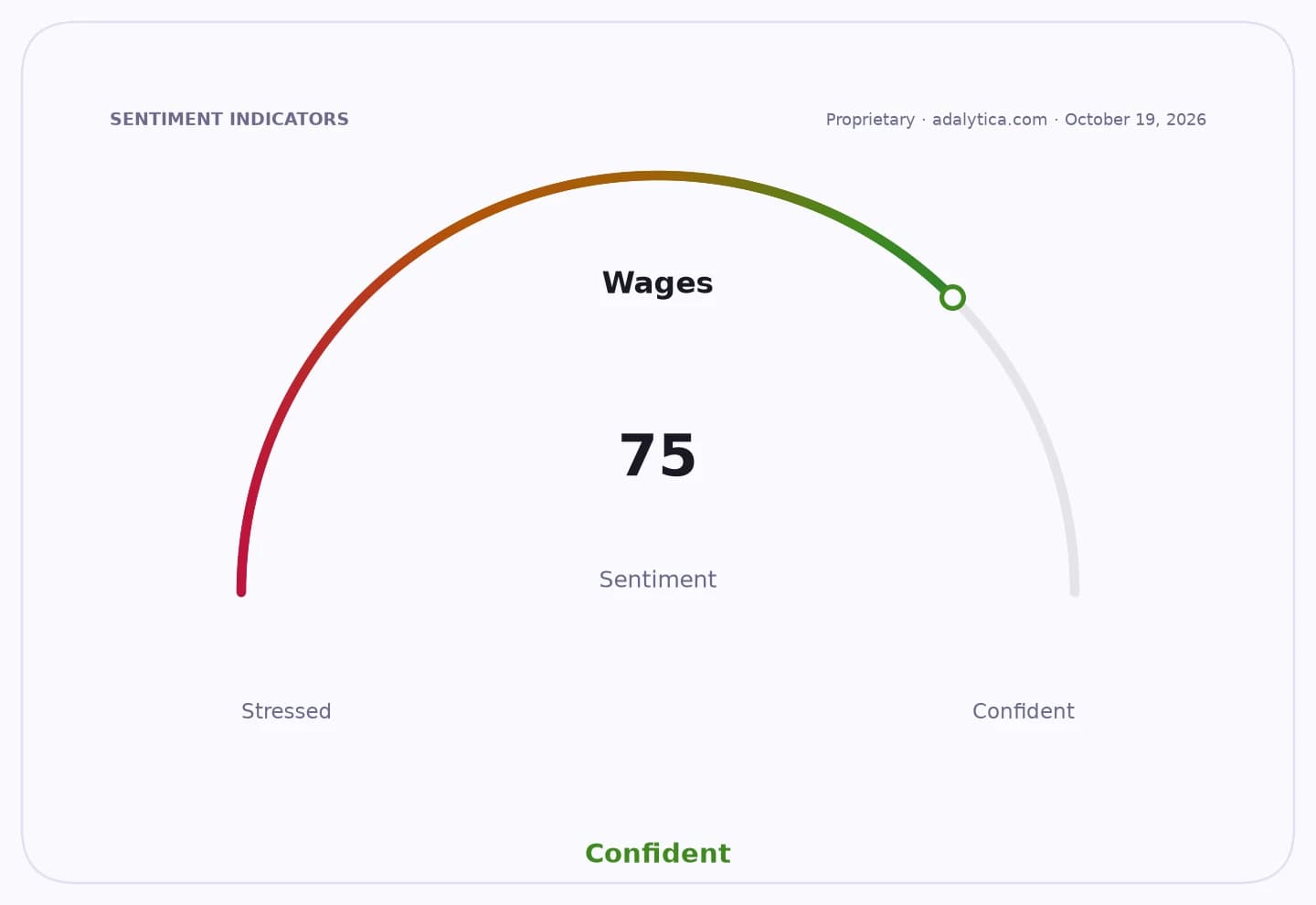
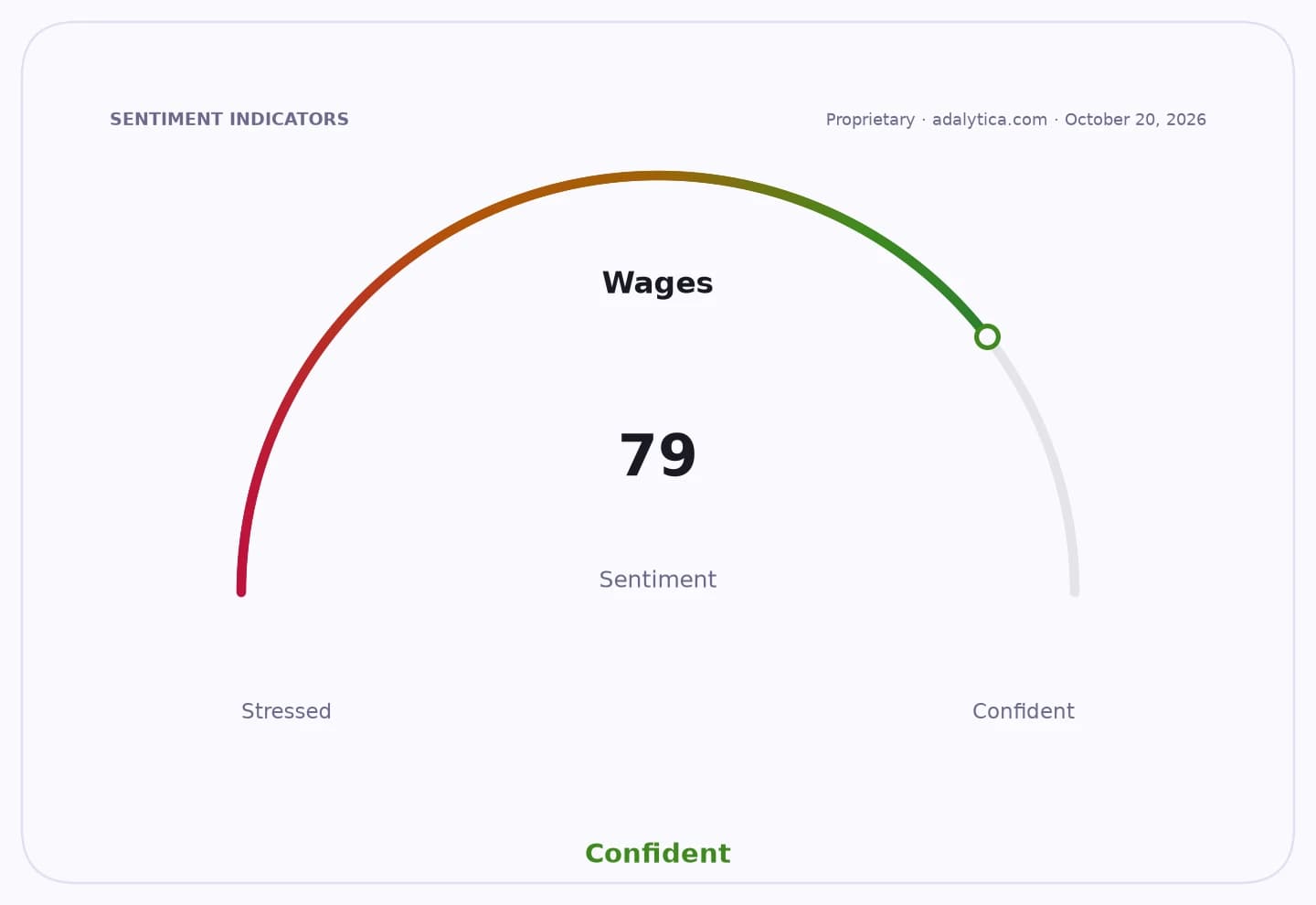
Sentiment IndicatorsⓘProprietary · adalytica.com · October 20, 2026
This is a snapshot — live sentiment, awareness and momentum for 130+ markets update continuously in the dashboard.Open AlphaPulse
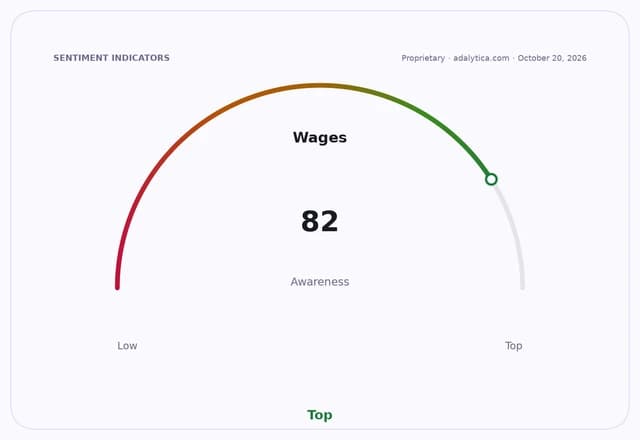
The policy matters because rural employment schemes are not just welfare programmes; they are automatic stabilisers for India’s consumption economy. Higher guaranteed wages can improve cash flow for low-income households, lift discretionary spending in villages and reduce the need for distress migration to cities. The government is also extending the employment guarantee to 125 days, which could deepen the scheme’s reach and make earnings more predictable for rural families.
The biggest beneficiaries are likely to be India’s poorer, labour-scarce states, where the wage floor was lowest and the uplift is largest. Those regions should see the strongest near-term consumption impulse, particularly in basic goods, farm equipment and local services. The move also has a political economy dimension: with India’s rural wage growth often a barometer of distress, a larger pay floor helps cushion households from inflation and could ease social pressure in states where living standards lag.
For investors, the implications cut both ways. Consumer-facing companies with exposure to rural demand could see a modest tailwind if the higher wages translate into stronger spending. But the measure also reinforces the risk that wage support and broader labour tightness keep input costs elevated, especially for businesses already facing margin pressure from compensation and logistics inflation.
From a market perspective, the announcement is less about an immediate tradable shock than about the direction of India’s rural policy mix: higher wage floors, more guaranteed work and greater income support. That combination should help underpin rural demand, but it also raises the burden on the budget and makes future policy debates around inflation, fiscal prudence and rural labour supply more consequential.
| Entity | Gains | Losses |
|---|---|---|
| Rural households | ▲Higher guaranteed income | ▼Less urgency for distress work |
| Poorer states | ▲Stronger local demand | ▼Higher fiscal dependence |
| Consumer companies | ▲Better rural spending | ▼Higher wage-cost pressures |
| Central government | ▲Political support | ▼Bigger subsidy bill |