Russia will lift the minimum wage to 28,935 rubles in 2027, while also increasing unemployment benefits, in a budget package that signals the government is trying to support household incomes without abandoning fiscal discipline.
Russia to raise minimum wage in 2027
The increase, announced by Labor Minister Anton Kotyakov, would raise the minimum wage by 6.8% from the current 27,093 rubles. The unemployment benefit will also be indexed, reaching 16,966 rubles in 2027. That combination matters because it puts more money into both the working and non-working segments of the labor market at a time when the state is still relying on a large social spending program to cushion households and maintain consumption.
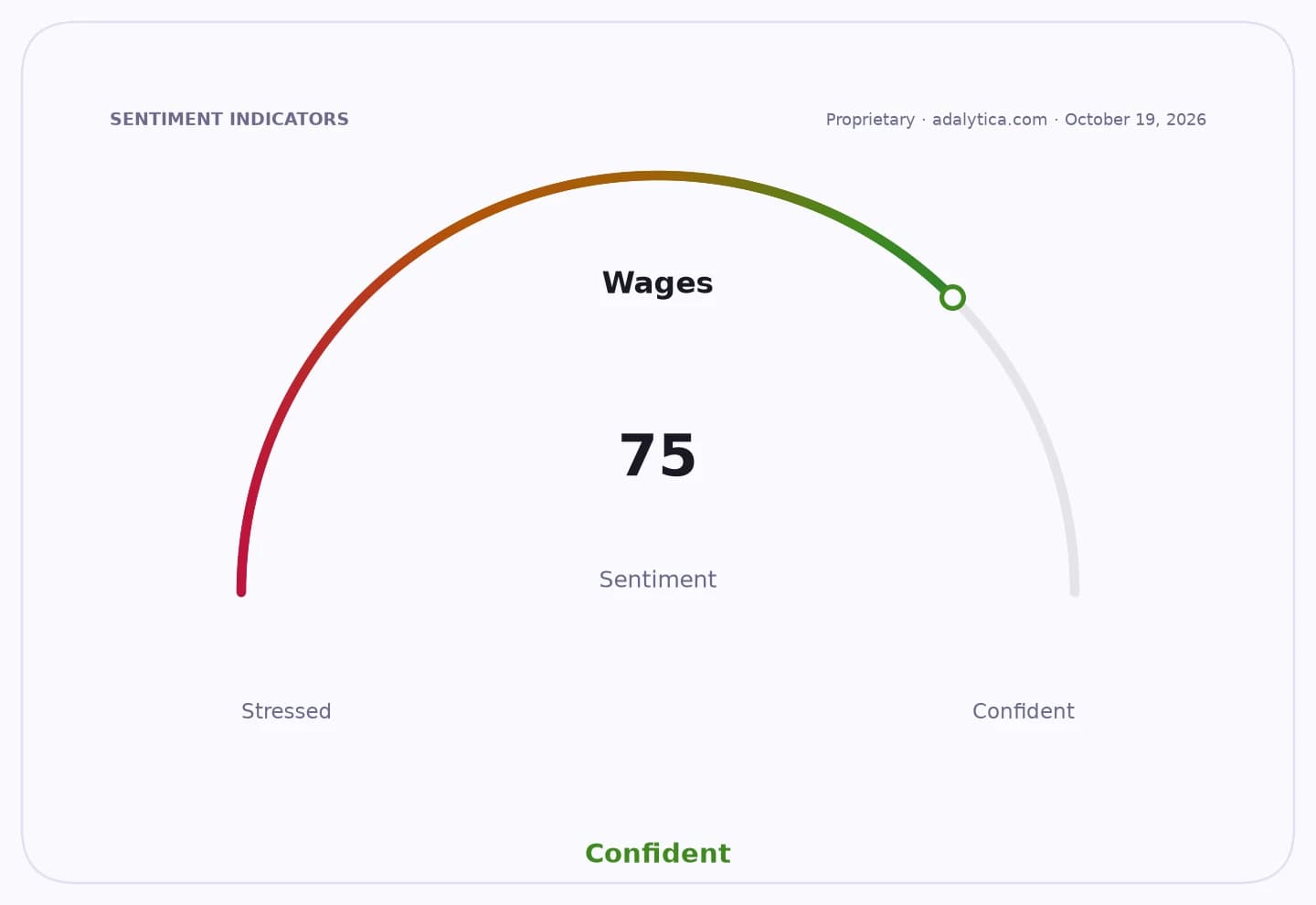
Sentiment IndicatorsⓘProprietary · adalytica.com · October 19, 2026
This is a snapshot — live sentiment, awareness and momentum for 130+ markets update continuously in the dashboard.Open AlphaPulse
For the economy, the move is a straightforward income support measure with potentially mixed inflation effects. Higher minimum pay tends to lift take-home incomes for low-wage workers and can help sustain consumer demand, particularly in basic goods and services. But it also raises labor costs for employers, especially in retail, logistics, food service and other labor-intensive sectors where pay scales cluster near the floor. With Russia still managing elevated inflation pressures and a tight labor market by historical standards, the policy adds to wage growth already running ahead of productivity in many low-margin industries.
The broader budget backdrop reinforces the point. The Finance Ministry said the 2027-2029 budget is planned with a deficit of about 2% of GDP a year, while also funding social obligations, defense and security, and investment in technological self-sufficiency. That suggests the wage and benefits increase is less a standalone labor-market tweak than part of a wider strategy to preserve household stability while continuing heavy state spending elsewhere. The ministry’s pledge that the budget will preserve macroeconomic stability will be tested by how much of that extra income filters into consumption and prices.
For investors, the key issue is the balance between support and cost. On one side, higher minimum wages and benefits can bolster domestic demand and reduce social strain, which is generally supportive for consumer-facing companies and regional economies. On the other, they can squeeze margins for private employers, increase wage bills for state-linked enterprises and complicate the central bank’s inflation fight if labor costs keep rising faster than output. That matters for rates, the ruble and valuation multiples in sectors sensitive to domestic demand and input costs.
The policy also keeps attention on the state’s broader tax and spending mix. Alongside the wage increase, the finance ministry has proposed changes including bringing dividends, deposit interest and securities income into the main personal income tax base at 13%-22%, raising VAT on cross-border e-commerce to 22%, and lifting tax on dividends to non-residents on “C” accounts to 35%. Together, the measures indicate a fiscal framework built to finance social commitments and strategic priorities without letting the deficit widen materially.
The main question for 2027 is whether the wage and benefit gains outpace the cost of living enough to lift real incomes, or whether they simply preserve purchasing power at the expense of higher business costs. If inflation eases, the policy could support spending and household sentiment. If prices stay sticky, the benefit will be muted and the burden on employers more visible.
| Entity | Gains | Losses |
|---|---|---|
| Low-wage workers | ▲Higher pay floor | ▼Employer cost controls |
| Unemployed households | ▲Larger benefits | ▼Fiscal flexibility |
| Consumer-facing businesses | ▲Stronger demand | ▼Higher labor expenses |
| Government budget | ▲Social stability | ▼Greater spending pressure |