New Zealand First said it would lift the minimum wage by at least the rate of inflation for the next three years if it returns to government, a move that would shore up household incomes but add to wage pressures in an economy still working through elevated living costs.
New Zealand First plans inflation-linked minimum wage
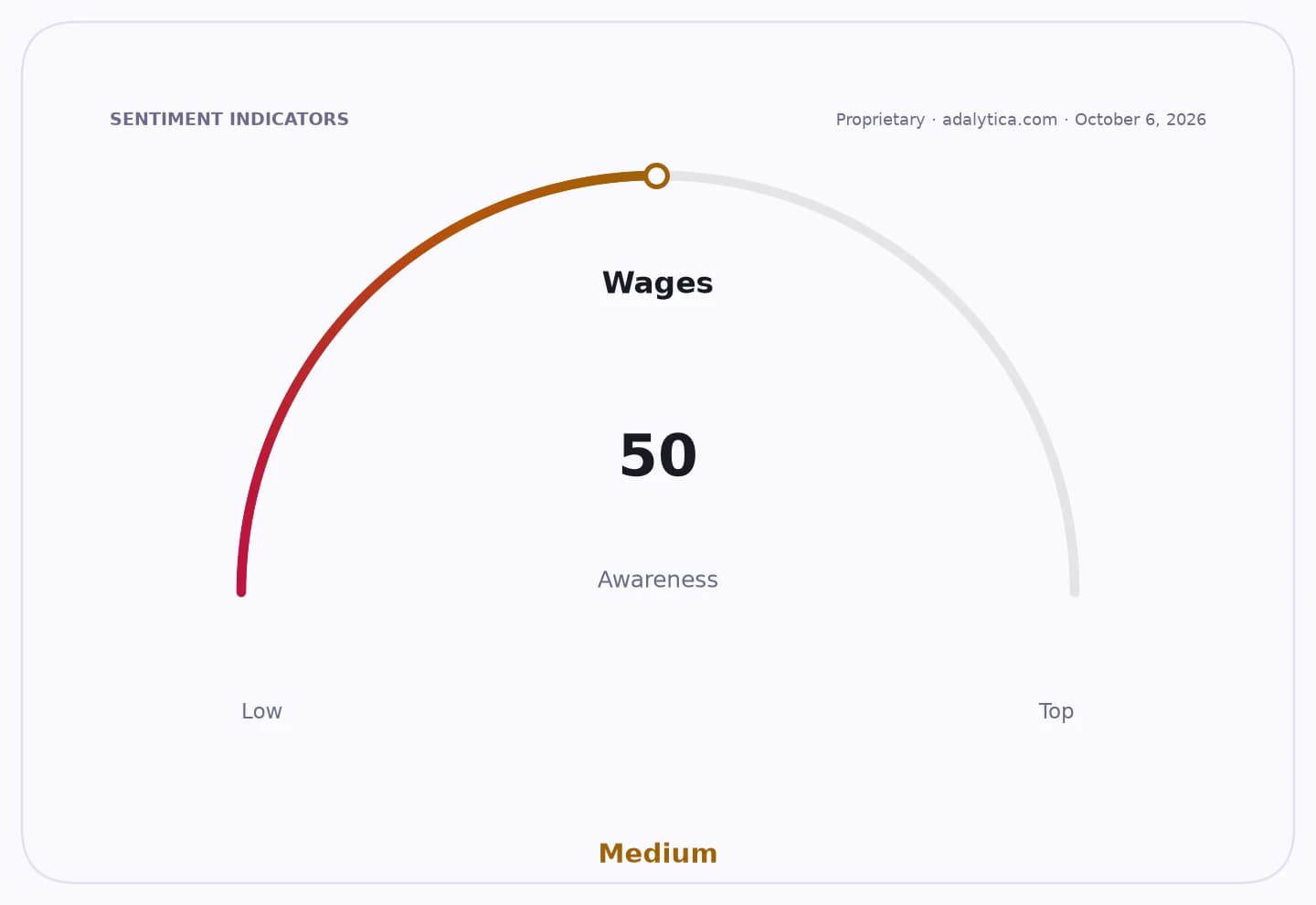
The pledge matters because wage policy in New Zealand is now a direct macroeconomic lever. By tying the floor to inflation, the party is effectively promising real wage protection for low-paid workers rather than a nominal adjustment that can be eroded by prices. That supports consumption among households with the highest propensity to spend, but it also risks keeping labour costs sticky for small firms, hospitality, retail and other employers that already operate on thin margins.
Sentiment IndicatorsⓘProprietary · adalytica.com · October 12, 2026
This is a snapshot — live sentiment, awareness and momentum for 130+ markets update continuously in the dashboard.Open AlphaPulse
Winston Peters made the announcement at a public meeting in Invercargill, saying workers should be able to afford basic necessities without falling behind inflation. He also said New Zealand First would make permanent a temporary boost to the Working for Families in-work tax credit and add another NZ$70 a week, taking the total to NZ$120 a week.
The party said the family payment expansion would cost between NZ$500 million and NZ$600 million a year. Combined with a minimum wage policy indexed to inflation, the proposals would pull more money into lower-income households at a time when the broader economy remains sensitive to demand support. That can help stabilise retail spending and ease financial stress, but it also raises questions about the fiscal cost and whether higher wage floors could be passed through into prices.
The announcement also highlights a policy split inside the governing camp. ACT has campaigned for a minimum wage freeze, while New Zealand First has already secured wage increases under the coalition agreement. That leaves businesses and investors facing a less predictable labour-cost outlook if coalition bargaining continues to tilt toward income support.
For investors, the immediate relevance is not just the size of the wage increase but the policy direction it implies. A wage floor that rises with inflation tends to compress low-end labour flexibility and can complicate the case for disinflation if firms defend margins through pricing. At the same time, the tax credit increase would be supportive for discretionary demand and could cushion the consumer sector if households remain under pressure from higher borrowing costs and past price rises.
The bull case is that targeted support for low-income workers can sustain spending without a broad-based fiscal stimulus. The bear case is that repeated wage and transfer increases deepen cost pressures for employers and leave the government with less room to manoeuvre if growth slows. The key catalyst is whether the proposal becomes part of a governing programme, where it would have immediate implications for wage negotiations, company cost structures and the path of inflation.
| Entity | Gains | Losses |
|---|---|---|
| Low-income workers | ▲Higher real wages | ▼None directly |
| Families receiving in-work tax credit | ▲More disposable income | ▼Fiscal restraint |
| Small employers | ▲Consumer demand support | ▼Higher labour costs |
| Inflation-fighting policymakers | ▲Limited if demand stays firm | ▼Harder disinflation path |