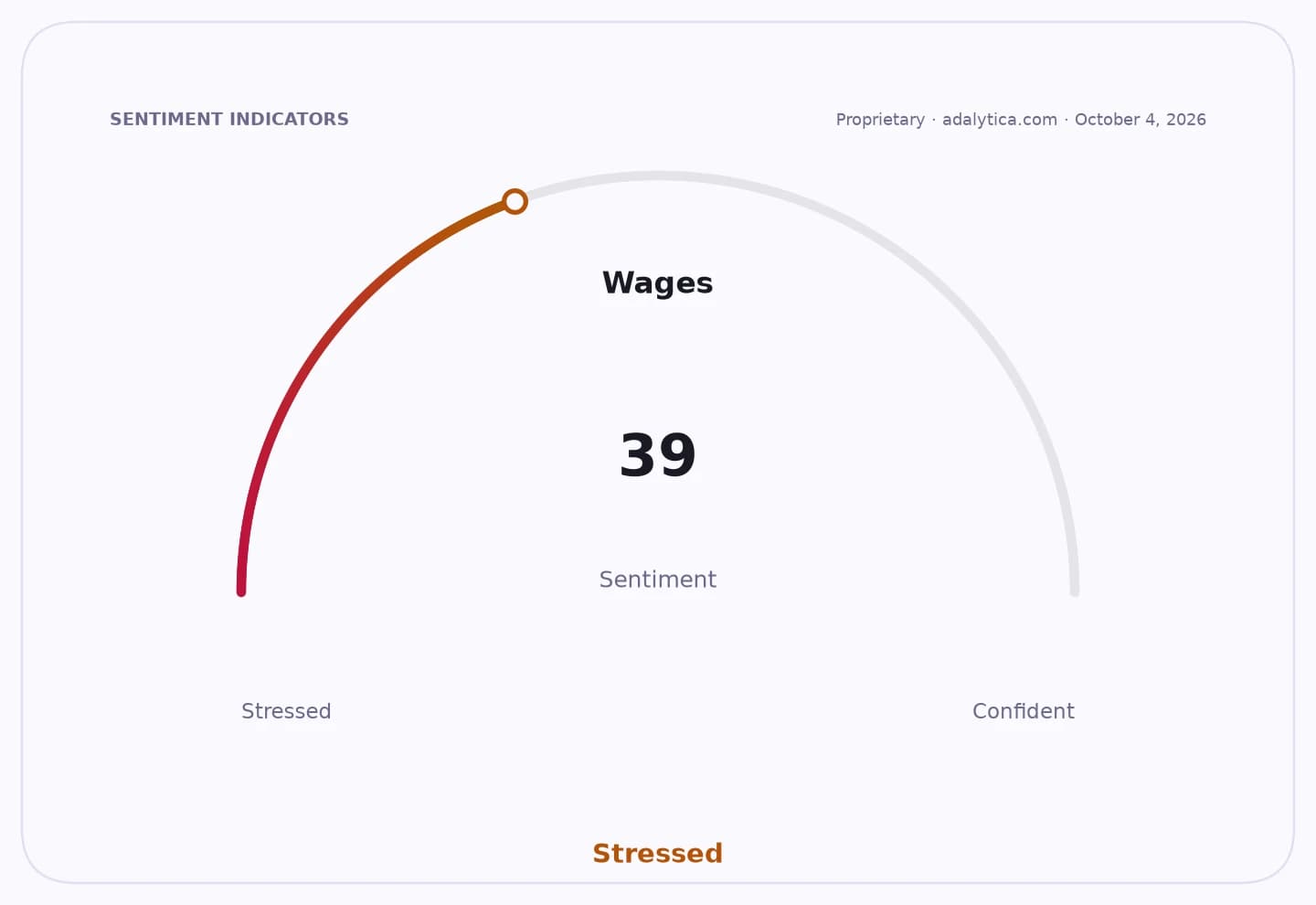
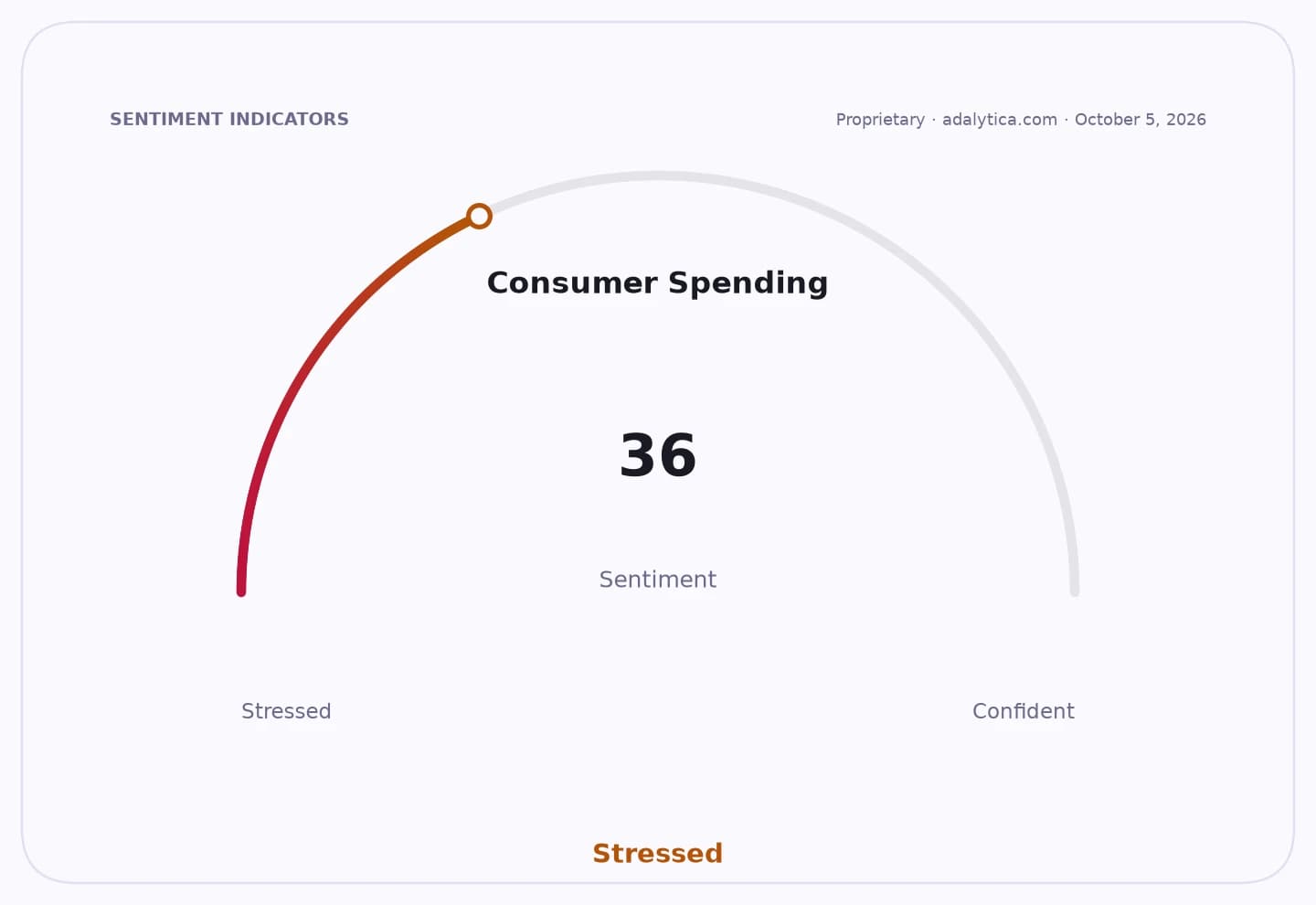
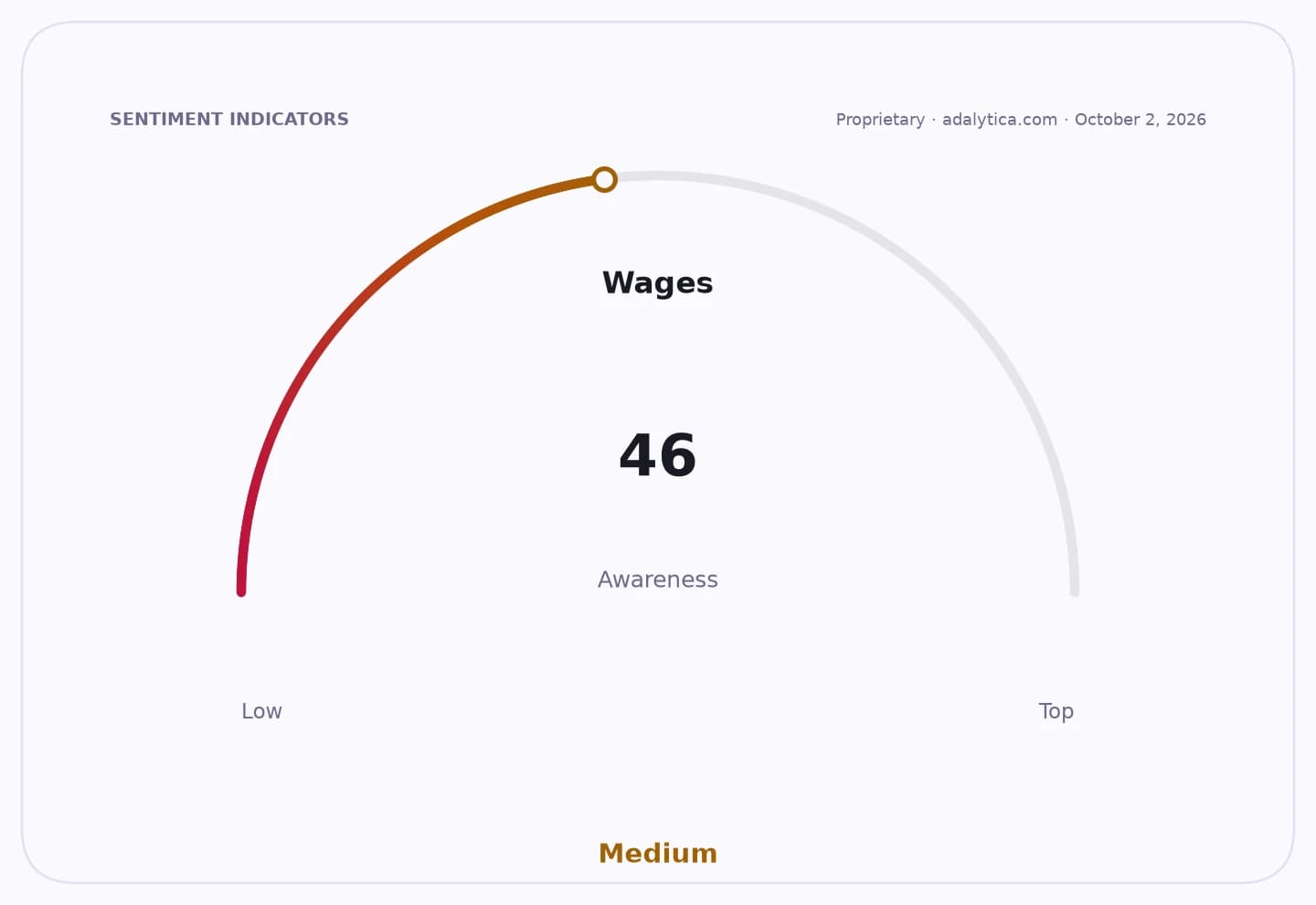
Wages in Italy have risen far more slowly than prices over the past decade, leaving households in many cities with less buying power even after pay increases. From 2015 to 2025, salaries climbed 14.2% while the cost of living jumped 22.6%, underscoring how inflation has outpaced incomes and squeezed consumer spending.
Italy wages lag inflation, squeezing household buying power

The gap matters because it shows the recovery in nominal pay has not been enough to restore real income. That erosion hits retail demand, savings and discretionary spending, while adding pressure on employers and policymakers to address stagnant living standards.
Sentiment IndicatorsⓘProprietary · adalytica.com · October 5, 2026
This is a snapshot — live sentiment, awareness and momentum for 130+ markets update continuously in the dashboard.Open AlphaPulse
The pain has not been evenly distributed. Torino is the northern provincial capital that has lost the least purchasing power, while Bolzano has lost the most, according to the ranking cited in the dossier.
The wider backdrop is a labor market that has stabilized but still leaves households exposed to cumulative price shocks. US-style inflation gauges in the data remain elevated on a multi-year basis, while the unemployment rate is forecast to edge only slightly higher to 4.2%, suggesting wage gains may continue to lag the cost of essentials unless productivity and pay settlements improve.
For investors, the story points to a consumer sector that remains under strain even if headline inflation cools. Companies tied to mass-market spending may face weaker volume growth and more price sensitivity, while businesses with stronger pricing power or exposure to higher-income regions should hold up better. The next catalyst is whether governments and unions respond with fresh minimum-wage hikes or broader pay deals to narrow the real-income gap.
| Entity | Gains | Losses |
|---|---|---|
| Workers in low-inflation cities | ▲Smaller real-income erosion | ▼Less urgent wage catch-up |
| Workers in Bolzano and high-price cities | ▲Policy attention to pay gaps | ▼Biggest loss of purchasing power |
| Consumer staples and value retailers | ▲Price-sensitive demand support | ▼Margin pressure if spending weakens |
| Policymakers and unions | ▲Case for wage action | ▼Credibility if living standards keep falling |