China’s decision to set 2027 import tariff-rate quotas for wheat, rice, corn and cotton gives the market a clearer line of sight on one of the world’s most important agricultural demand centers, even as the quotas themselves keep Beijing’s grain market tightly managed. For exporters, traders and food companies, the announcement matters less for any immediate price shock than for what it says about China’s willingness to preserve a controlled import regime at a time when global agriculture is navigating trade tensions, stubborn producer prices and shifting currency conditions.
China Sets 2027 Wheat, Rice, Corn, Cotton Quotas
The quotas act as the gatekeeper for access to the Chinese market, determining how much of these staples can enter at relatively low tariff rates before higher duties kick in. That makes them a key variable for global grain and fiber flows, especially for suppliers in the US, Brazil, Australia and Southeast Asia that compete for Chinese demand. Any change in quota levels can alter trade routes, hedge positioning and storage decisions long before cargoes move.
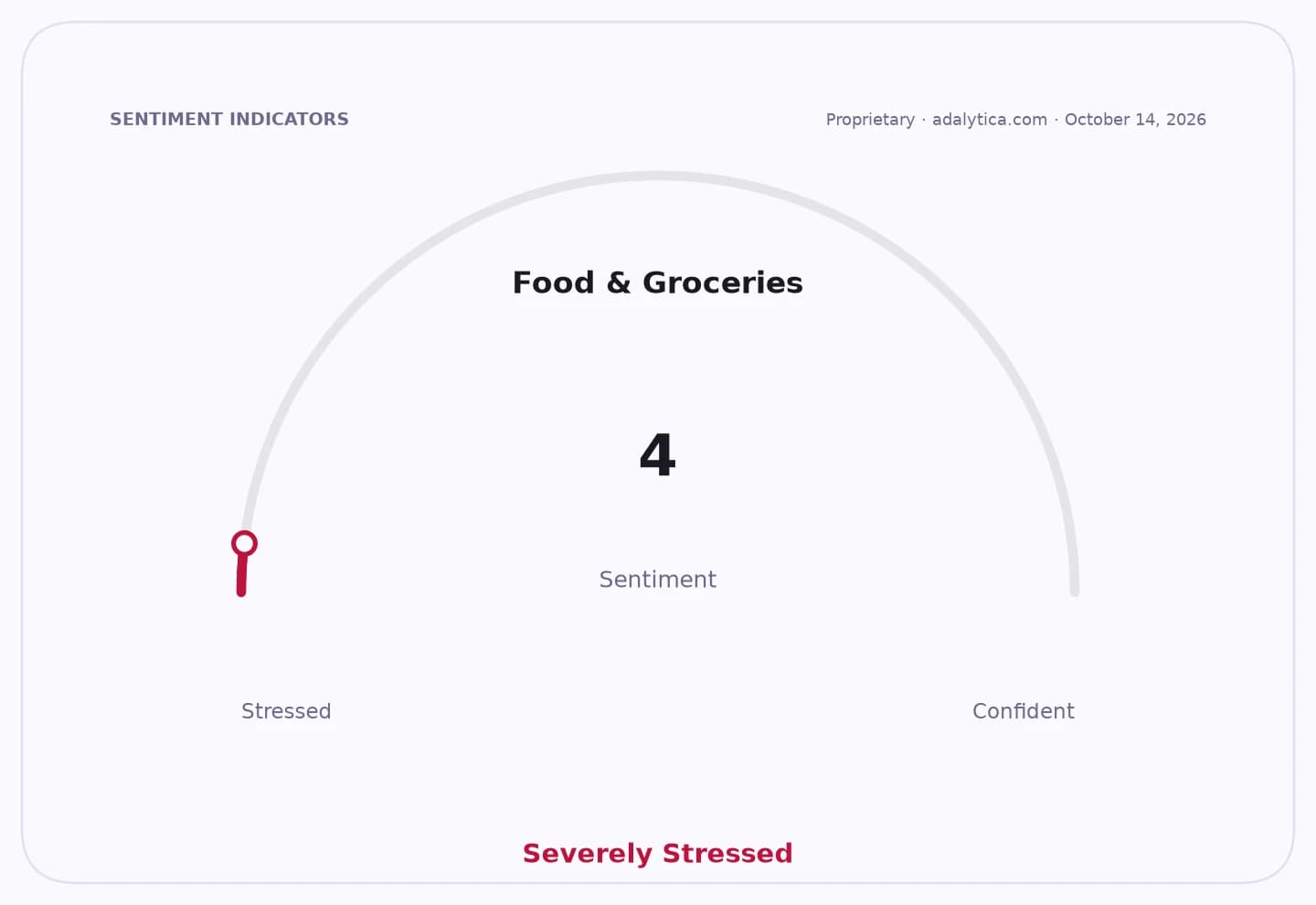
Sentiment IndicatorsⓘProprietary · adalytica.com · October 18, 2026
This is a snapshot — live sentiment, awareness and momentum for 130+ markets update continuously in the dashboard.Open AlphaPulse
The policy arrives against a backdrop of still-elevated agricultural costs. Global producer prices remain high by historical standards, with the broad industrial producer price index at 292.7 in the latest forecast after a recent reading of 295.7, underscoring that input costs and supply chains have not normalized fully. Brent and US crude have also stayed firm enough to keep freight, fertilizer and farm input economics sensitive to policy shifts. For grain markets, that means trade policy remains a more powerful price driver than in a calm cycle.
For investors, the immediate read-through is mixed. Grain and cotton exporters may see the quotas as preserving a predictable though restrictive channel into China, which supports baseline demand visibility but caps upside if Beijing keeps import growth contained. US-listed grain-trading and agribusiness names such as Archer-Daniels-Midland and Bunge tend to benefit from stable trade rules and cross-border volumes, but not from quotas that are materially tighter than expected. On the other side, domestic Chinese producers and state-linked buyers gain protection from foreign competition, while global suppliers lose flexibility.
The policy also fits a broader pattern of managed openness rather than liberalization. China has used tariff-rate quotas as a tool to balance food security, domestic farm incomes and inflation control. That approach is unlikely to change quickly, even as Beijing seeks to cushion growth and maintain supply stability. The latest market signal from Adalytica’s China growth-target gauge is neutral, suggesting policymakers remain focused on balance rather than aggressive stimulus that would sharply reaccelerate commodity imports.
Corn and wheat futures underscore how sensitive the complex remains to policy and weather. WEAT and CORN have both weakened from recent highs, with WEAT falling to $24.00 and CORN to $18.19 in the latest trading data, leaving both below their 50-day moving averages. Their RSI readings, at 35.3 for WEAT and 21.4 for CORN, point to subdued momentum and a market that is vulnerable to both policy disappointment and short-covering if Chinese import demand surprises higher.
The bigger takeaway for investors is that China is keeping one of the world’s largest agricultural import channels under administrative control, not market forces. That limits the probability of a demand shock, but it also preserves optionality for Beijing to step in later if domestic supply tightens or prices rise. The next catalyst will be whether the quota volumes and allocation rules point to steady access for importers or a more defensive stance heading into 2027.
| Entity | Gains | Losses |
|---|---|---|
| China’s domestic grain sector | ▲Price protection | ▼Import competition |
| Global grain exporters | ▲Predictable access | ▼Upside volume cap |
| Cotton exporters | ▲Stable quota channel | ▼Tighter market access |
| Agricultural consumers/buyers | ▲Supply visibility | ▼Less import flexibility |