CBOT grain contracts ended lower across the board on Thursday, with soybeans sliding to a seven-week low as harvest-season supplies, weak U.S. processing demand and softer corn and wheat prices pressured the complex.
Soybeans Fall to Seven-Week Low on Harvest Supply
The November soybean contract fell 14.25 cents, or 1.12%, to $12.6300 a bushel, the weakest close in seven weeks. December corn lost 2.75 cents, or 0.57%, to $4.7800, while December wheat eased 3.25 cents, or 0.48%, to $6.7000.
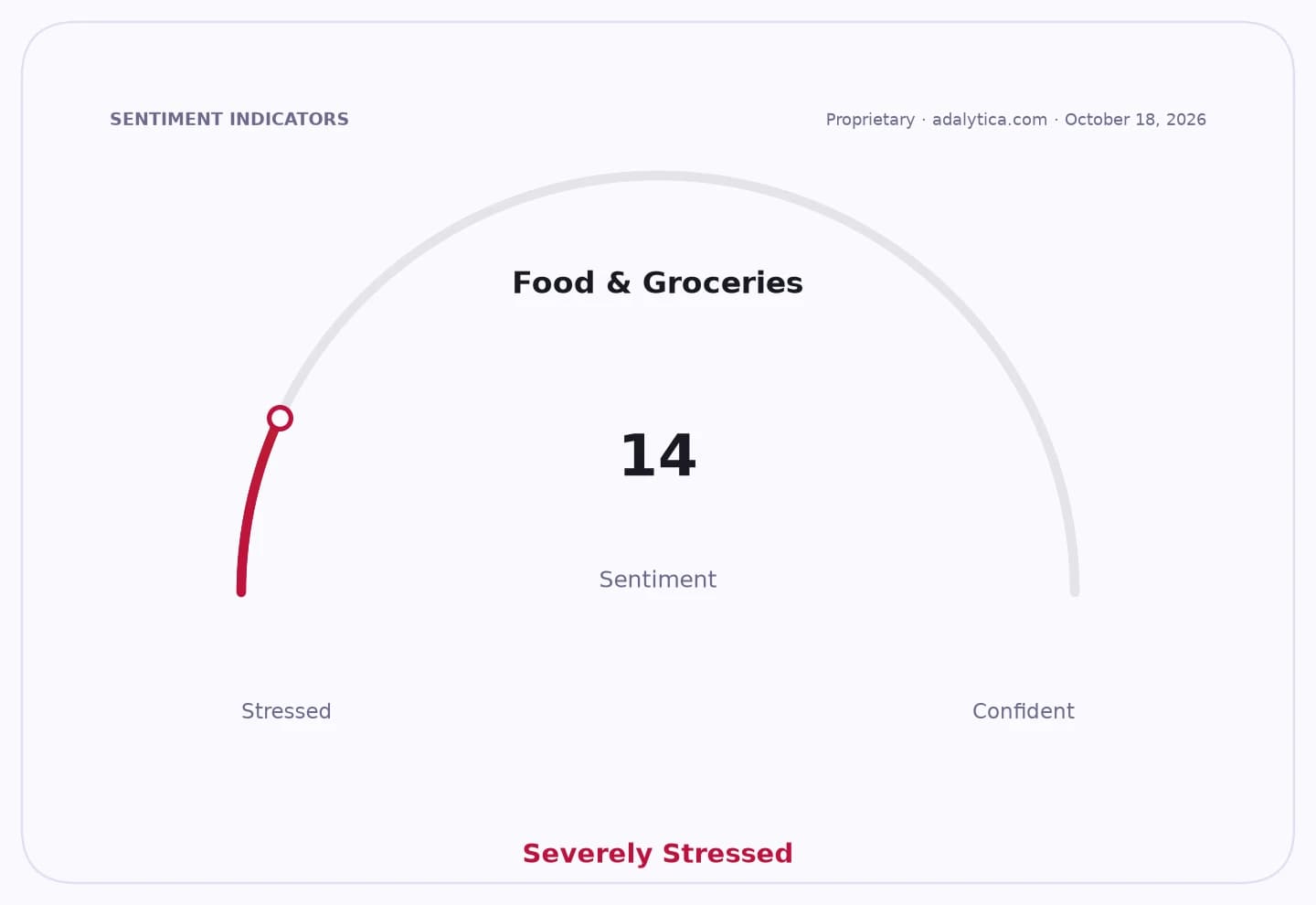
Sentiment IndicatorsⓘProprietary · adalytica.com · October 18, 2026
This is a snapshot — live sentiment, awareness and momentum for 130+ markets update continuously in the dashboard.Open AlphaPulse
Soybeans were hit hardest because the market is still absorbing fresh harvest supplies even after signs of Chinese buying. The U.S. Department of Agriculture said Tuesday that 330,000 metric tons of U.S. soybeans were sold to China, but traders focused more on sluggish domestic processing last month and forecasts for drier weather next week, both of which can keep near-term supply pressure elevated.
Corn also stayed under pressure after the USDA last week surprised the market by raising its estimate for U.S. corn production this year. That has reinforced the view that U.S. supplies will be ample into the fourth quarter, limiting upside even as the market watches the next export sales report for clues on demand.
Wheat was volatile before settling lower, with technical selling adding to the drag from the weaker tone in corn and soybeans. The move leaves the whole CBOT grain panel on the defensive heading into Friday’s weekly export sales data, which Reuters-checked analysts expect will show 300,000 to 600,000 metric tons of net U.S. wheat sales for the 2026/27 marketing year in the week ended Oct. 8.
For investors, the slide is another reminder that grain prices remain highly sensitive to harvest timing, export demand and USDA supply revisions. Continued weakness in soybean and corn futures could weigh on farm incomes and grain-linked ETFs, while any stronger-than-expected export sales or weather shift could quickly spark a short-covering rebound.
| Entity | Gains | Losses |
|---|---|---|
| Soybean sellers | ▲Lock in harvest cash flow | ▼Lower nearby futures prices |
| Corn buyers | ▲Benefit from cheaper feedstock | ▼U.S. growers facing weaker prices |
| Wheat users | ▲Lower input costs | ▼Long futures positions |
| China importers | ▲Better bargain on U.S. beans | ▼U.S. exporters if demand stalls |