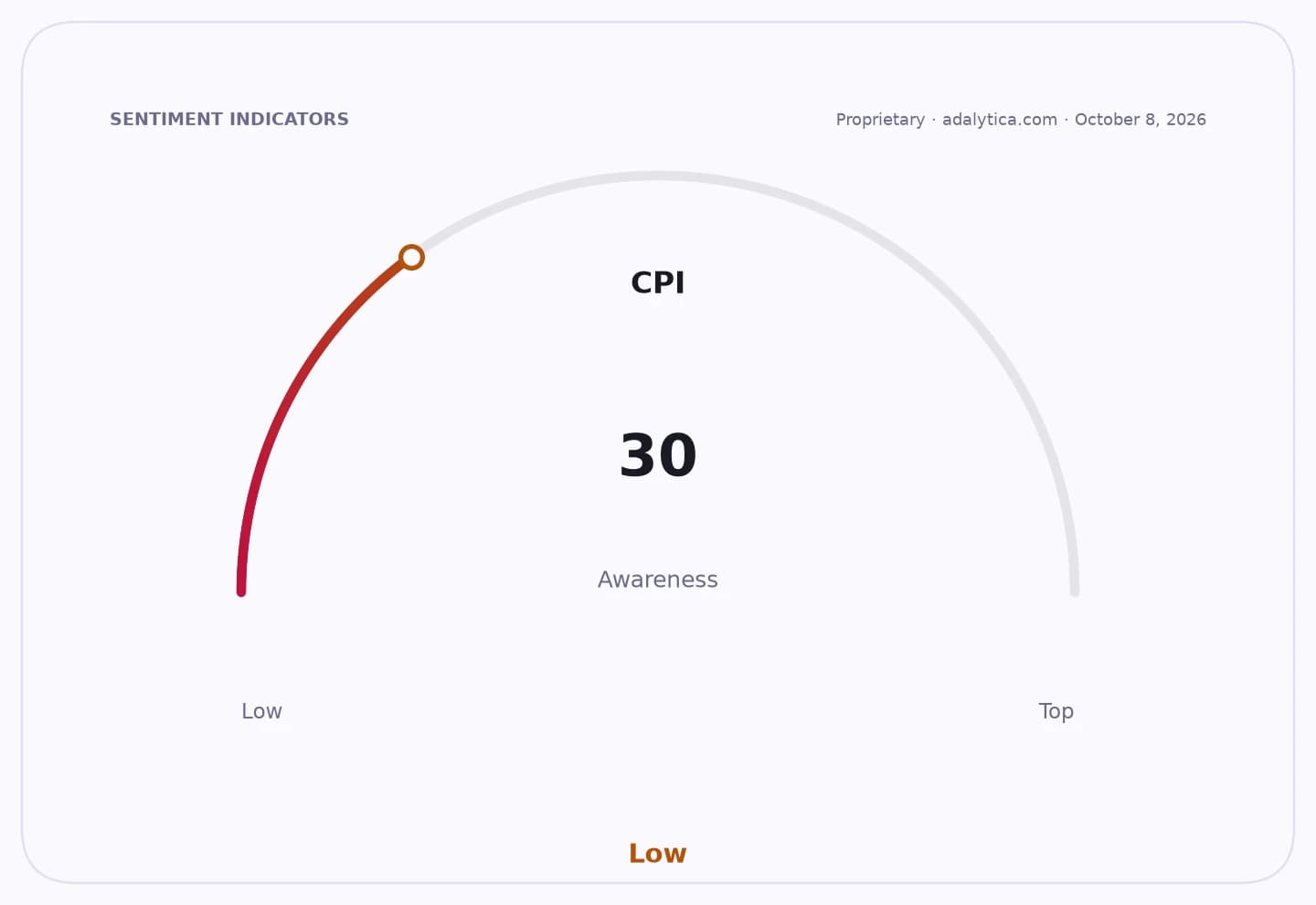
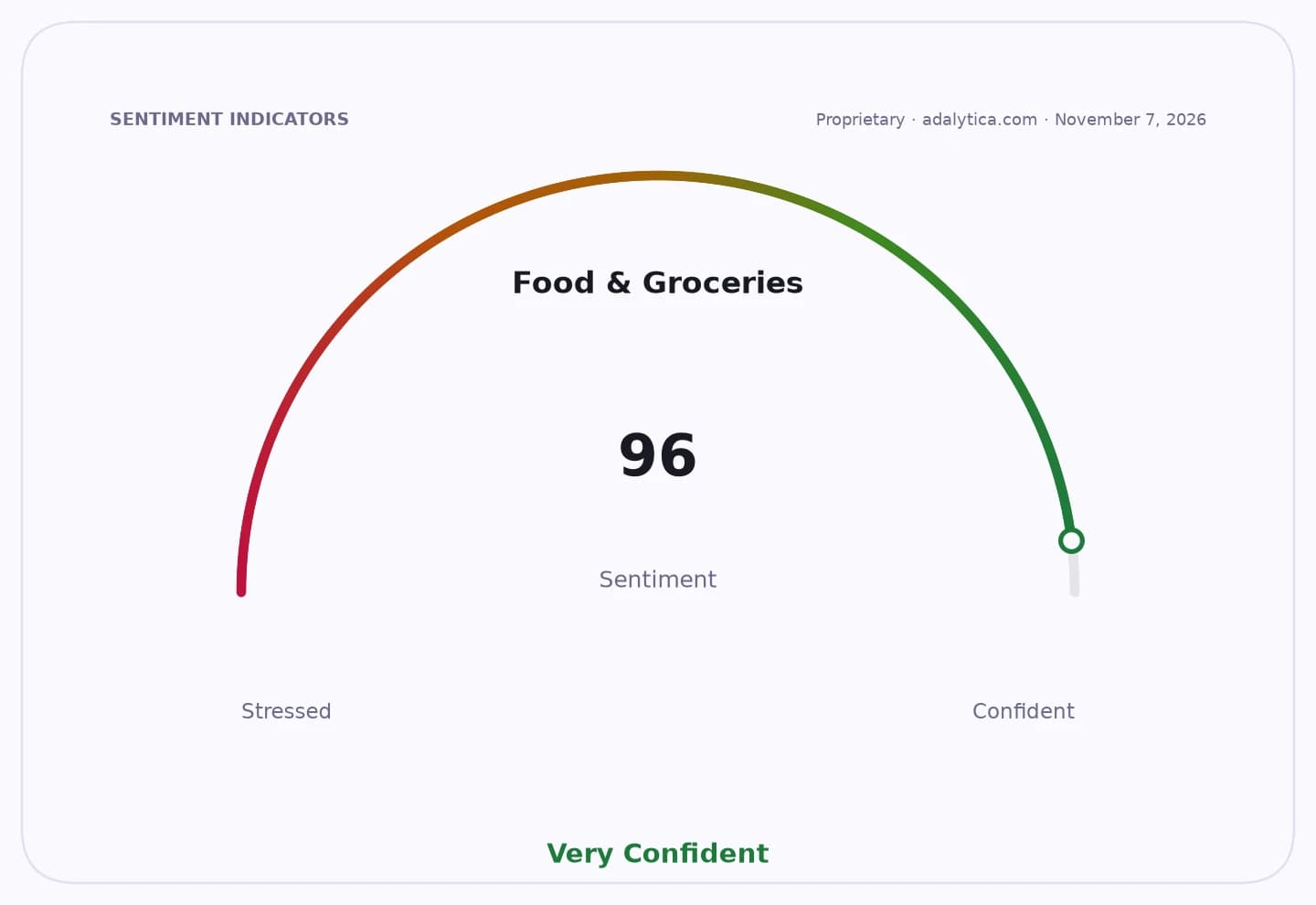
Agricultural products are still getting more expensive, with prices rising more than 1% from a year earlier, keeping pressure on food costs and the margins of companies that buy, process and sell farm commodities.
Agricultural Prices Rise Above Last Year
The latest inflation backdrop shows agricultural prices up 1.0%-plus year on year while broader consumer prices continue to run far above that pace, leaving food producers and retailers with another round of cost tension. The Producer Price Index for agricultural commodities points to a sector that remains volatile even after last year’s swings in grains, oilseeds and livestock feed.
Sentiment Indicators
That matters because agricultural inflation feeds through the supply chain with a lag, from processors such as Archer-Daniels-Midland and Bunge to grocers and restaurant distributors. ADM has warned in recent filings that in periods of significant price changes, margins are a better gauge than revenue because commodity prices move through both sales and costs. Bunge said higher commodity prices in many regions have been driven by strong global demand, biofuel mandates in North America and geopolitical stress tied to the Black Sea and Iran.
For investors, the price trend keeps agricultural ETFs and commodity-linked names in focus. The Invesco DB Agriculture Fund has been volatile, recently trading below its 50-day moving average after a sharp retreat from earlier highs, while its relative strength and MACD readings have weakened, showing momentum has cooled even as the inflation story remains intact.
PPIACO vs CPIAUCSL — macro contextadalytica.com
Explore this data interactively — full history, time series and cross-market comparisons.
A sustained rise in farm prices can support growers and commodity traders, but it can squeeze margins for packaged-food makers, restaurant suppliers and retailers if they cannot pass on costs quickly enough. Food inflation also complicates the policy outlook, because stubbornly higher grocery prices can keep consumer inflation sticky even when energy costs ease.
The next catalyst is the next round of crop and inflation data, which will show whether agricultural prices are stabilizing or whether weather, trade and geopolitical risks keep another leg of food inflation alive.
| Entity | Gains | Losses |
|---|---|---|
| Grain and oilseed producers | ▲Higher selling prices | ▼Cost pressure from inputs |
| ADM, Bunge and traders | ▲Wider commodity turnover | ▼Margin volatility |
| Grocers and food distributors | ▲Potential inventory gains | ▼Squeezed margins |
| Consumers | ▲None | ▼Higher grocery bills |