Farmers are getting squeezed from both sides: the cost of what they buy climbed far faster than the prices they received for what they sell, a mismatch that threatens margins, cash flow and, eventually, food prices.
Agricultural input costs rise faster than farm prices
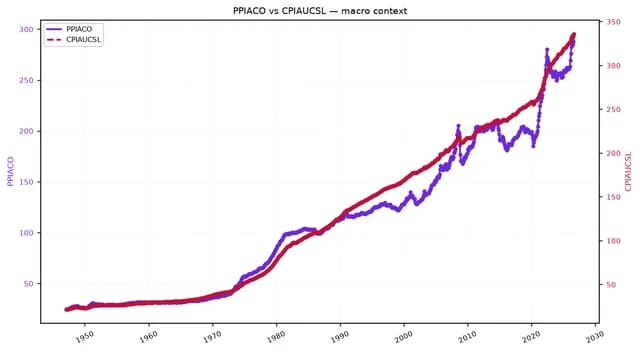
New data from the state statistics office show agricultural input prices rose 8.8% in September from a year earlier, while farm output prices increased only 2.3%. That gap matters because it is the clearest sign yet that inflation in farming is still eating into profitability, even after a stretch of volatile commodity markets.
Sentiment IndicatorsⓘProprietary · adalytica.com · October 20, 2026
This is a snapshot — live sentiment, awareness and momentum for 130+ markets update continuously in the dashboard.Open AlphaPulse
The pressure is broad-based. Plant production prices were up 3.9%, but livestock production fell 2.1%. Industrial crops saw the biggest jump at 18.9%, while vegetable prices rose 8.2% and potatoes 6.5%. By contrast, grain and rice prices fell 2.2%, animal crops were down 3.5%, and fruit and grapes slipped 1.8%. In livestock, prices for animals for slaughter rose 7.4%, but livestock products dropped 7.6%.
For investors, the important point is that this is not just an agronomy story — it is an earnings story, a consumer story and a policy story. When farmers face faster-rising costs than selling prices, they tend to cut spending, delay equipment purchases, lean harder on credit and push for more support from governments. That can ripple through agricultural suppliers, machinery makers, fertilizer producers, food processors and commodity-linked exchange-traded funds.
The pain is also visible in market pricing. The Teucrium Corn Fund, known by its ticker DBA, has recently traded around $28.18, above its 200-day moving average near $27.30, while the Teucrium Agriculture Fund, or MOO, was roughly $81.12, just below its 50-day and 200-day moving averages. The Teucrium Wheat Fund, WEAT, has been weaker, sliding to about $23.54 and sitting below both its 50-day and 200-day moving averages. That split fits the broader story: some agricultural markets are holding up, but the sector as a whole is still wrestling with margin pressure.
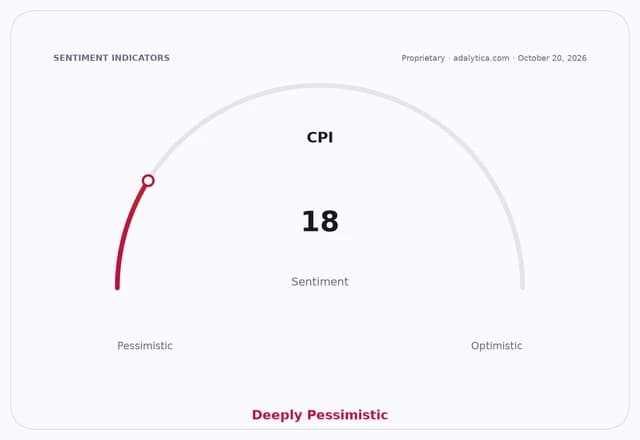
Adalytica’s CPI sentiment gauge also reflects the broader inflation anxiety, showing fear at 18 with awareness still elevated, a reminder that investors remain alert to any sign that food inflation could reaccelerate. If fuel and transport costs stay high, the squeeze could deepen before relief arrives.
For long-term investors, the takeaway is straightforward: farm economics are being shaped by a stubborn cost squeeze, and that usually rewards businesses with pricing power while punishing those with little room to absorb higher inputs. The best names in the farm value chain can still compound over time, but the near-term backdrop argues for patience, diversification and a close watch on fertilizer, fuel and grain pricing.
| Entity | Gains | Losses |
|---|---|---|
| Fertilizer and fuel suppliers | ▲Higher input pricing | ▼Farmer margins |
| Crop producers | ▲Stronger prices in some crops | ▼Higher production costs |
| Food consumers | ▲None immediately | ▼Higher grocery inflation risk |
| Agriculture ETFs | ▲Trading opportunities from volatility | ▼Broad farm-sector weakness |