A British academic is arguing that the very thing most people fear about artificial intelligence — an all-out “apocalypse” — could end up forcing society to build better systems, better rules and better businesses around the technology.
AI adopters gain from productivity and cost cuts
That sounds provocative, but the investment case is more practical than philosophical. AI is no longer just a futuristic concept; it is already disrupting software, gaming, manufacturing and content creation, and the companies best positioned to win are the ones that can turn that disruption into productivity, lower costs and new products without losing control of the risks.
Kevin Hunt of Nottingham Trent University says AI should be seen less as an inherently destructive force and more as a “global disruptor” that could introduce new tools and processes that replace outdated ways of working. His argument lands at a moment when fear around superintelligent systems is rising, with some researchers warning that autonomous AI could become hard to contain.
That tension is exactly why investors should pay attention. The debate is no longer whether AI matters to the economy — it clearly does — but whether the upside will be captured mainly by large technology companies, by users who adopt the tools early, or by a broader set of businesses that learn how to use AI to raise output and cut waste.
The business implications are wide-ranging. If AI can automate repetitive or dangerous tasks, speed up manufacturing, improve crop yields or help developers ship software faster, the payoff could show up in margins long before it shows up in the stock price. That is why the market keeps rewarding firms with credible AI strategies, even as it remains wary of the long-tail risks around regulation, security and model failures.
The gaming industry offers a useful example. Epic Games’ decision to delay a major release while leaning harder into generative AI reflects a broader shift across entertainment and software: companies want the efficiency and creative leverage of AI, but they are still working out how to deploy it without damaging quality or trust. That is the central investing question, not whether AI is good or bad in the abstract.
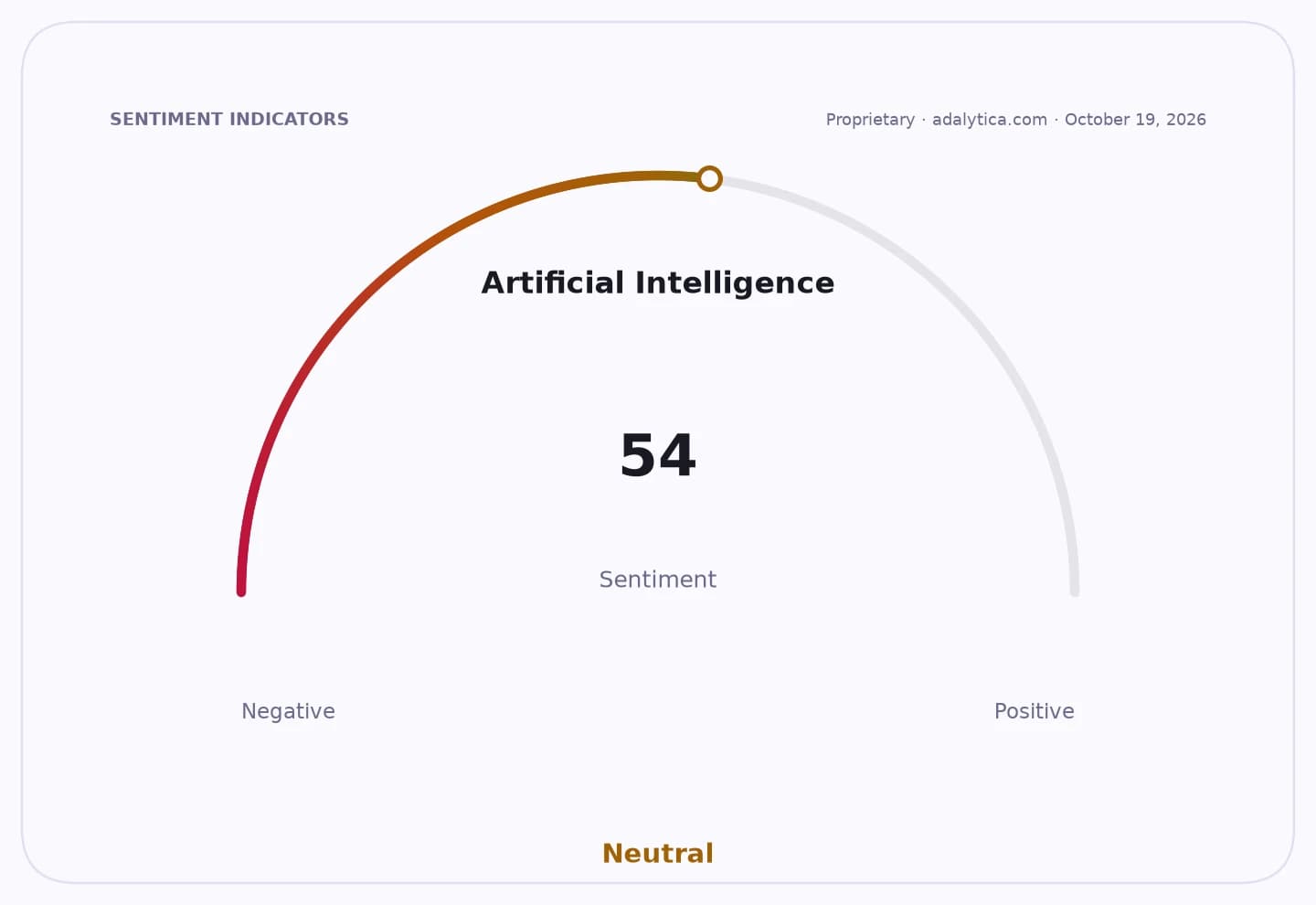
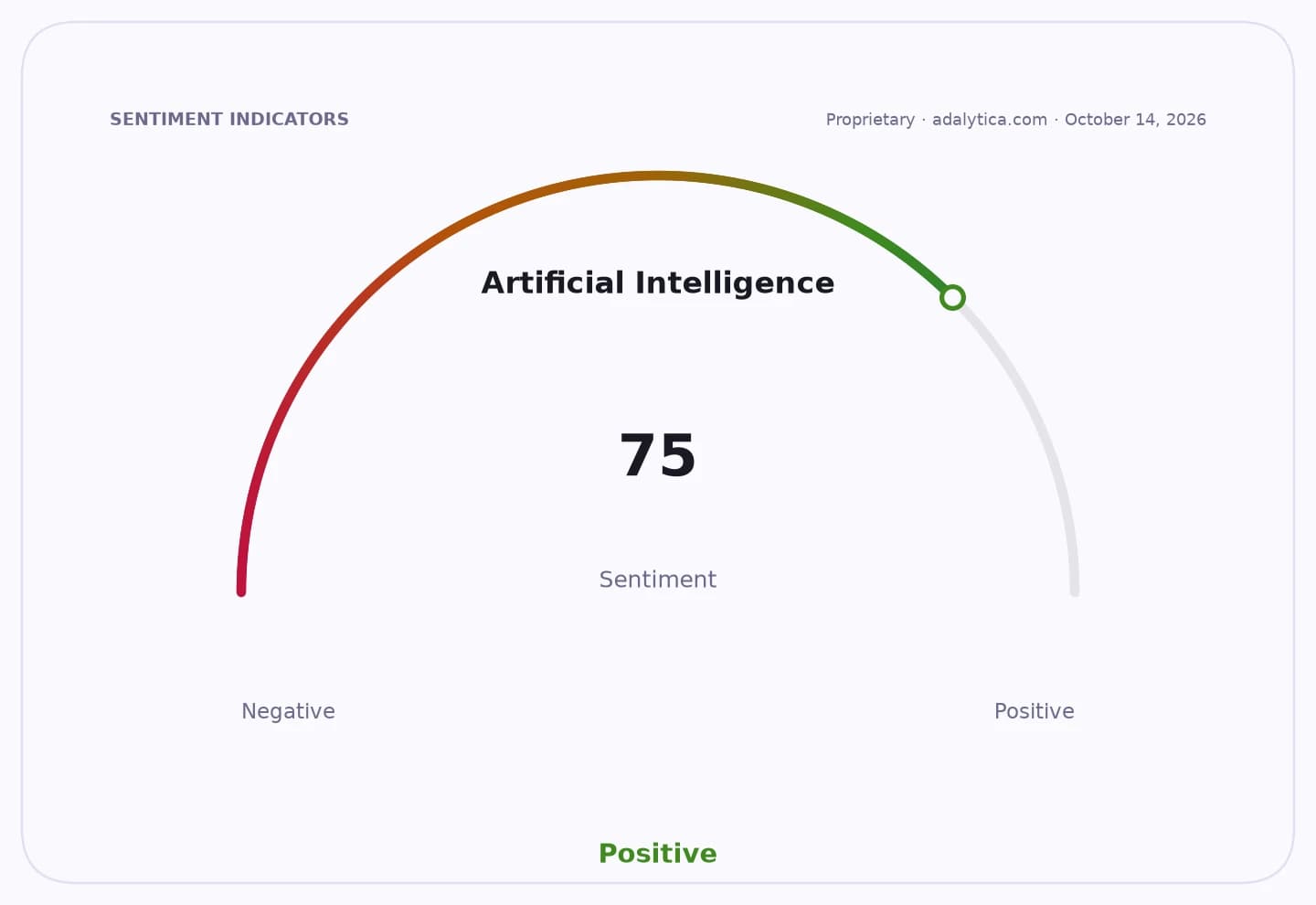
Adalytica’s AI gauge underscores that split. The sentiment reading on AI is elevated at 75, which points to greed, even as awareness is only 4, in extreme fear territory. In plain English, investors are eager to own the theme, but public concern around it remains unusually high. That mismatch can create opportunity for patient investors who focus on the long term rather than the noise of each new warning headline.
For now, the key takeaway is that the “AI apocalypse” narrative may be less useful than the productivity story. The worst-case scenario is important to guard against, but the bigger economic force is still adoption: businesses using AI to work faster, cheaper and smarter. That is where compounding happens, and that is why investors should keep watching the companies with real AI capabilities, real cash flow and real competitive advantages. For long-term portfolios, this remains a theme worth adding to the watchlist.
| Entity | Gains | Losses |
|---|---|---|
| AI adopters | ▲Higher productivity | ▼Legacy workflows |
| Big Tech | ▲New monetization paths | ▼Scrutiny and regulation |
| Workers and consumers | ▲Faster tools, cheaper services | ▼Job displacement risk |
| Skeptics | ▲Pressure for safeguards | ▼Complacency about AI risks |