Wall Street closed in positive territory as renewed demand for technology and semiconductor shares outweighed concerns over elevated Treasury yields, with the Dow Jones Industrial Average, S&P 500 and Nasdaq all lifted by investor appetite for the artificial-intelligence supply chain.
AI Chip Rally Defies Elevated Yields

The session’s economic significance lies in what investors chose to ignore. The U.S. 10-year Treasury yield remained near 4.55%, a level that typically pressures long-duration growth stocks by raising the discount rate on future earnings. Instead, buyers returned to large-cap tech and chip names, suggesting markets are still willing to pay for companies tied to AI infrastructure, memory demand and data-center spending.
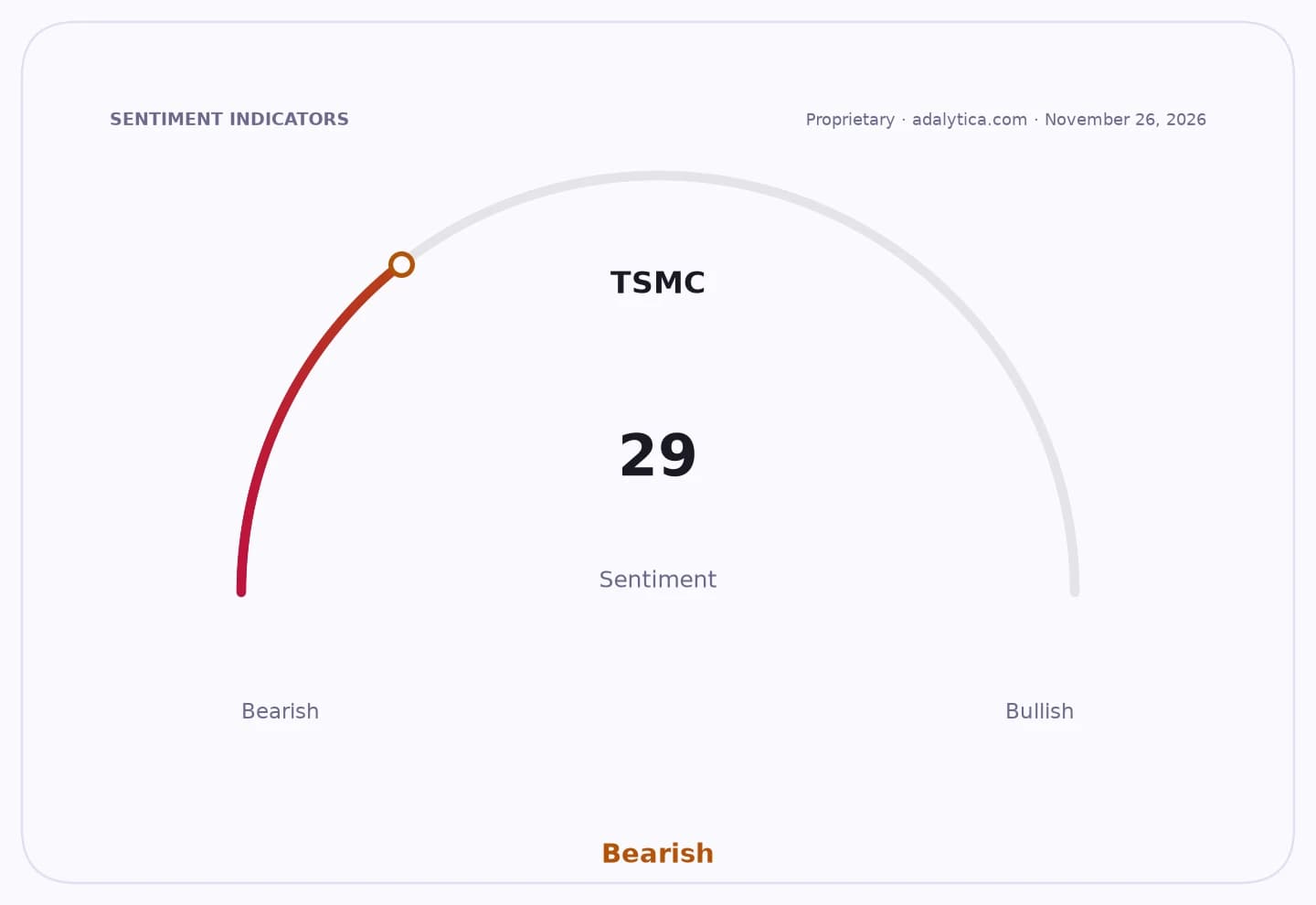
Sentiment Indicators

The Invesco QQQ Trust, a proxy for Nasdaq-heavy growth stocks, rose to $725.51, extending its rebound and holding above its 50-day and 200-day moving averages, conventional technical markers watched by market analysts. The VanEck Semiconductor ETF also advanced, closing at $611.03 and staying well above its 200-day average, underscoring that chip shares remain a central engine of the broader equity rally.
SK Hynix’s latest market momentum added to the bullish tone around memory and AI hardware. The South Korean chipmaker has become one of the key beneficiaries of demand for high-bandwidth memory used in advanced AI processors, making its performance a read-through for the wider semiconductor complex, including U.S.-listed chip suppliers and memory rival Micron Technology.

Micron’s recent filing pointed to the same theme, saying it continues to expand production capacity in the U.S. and other regions to meet expected demand, while warning that multiyear projects may not deliver expected returns. That tension is now central to the semiconductor trade: investors are rewarding companies exposed to AI memory growth, but the industry is also committing large amounts of capital before the durability of demand is fully tested.
The rally came despite mixed risk signals. Proprietary indicators from Adalytica.com showed S&P 500 sentiment at 32, labeled neutral, while awareness was in “extreme fear,” suggesting positioning remains cautious even as prices move higher. That gap can support further gains if sidelined investors are forced back into equities, but it also leaves the market vulnerable if earnings fail to justify AI-linked valuations.
Macro conditions were not uniformly hostile. Crude oil has eased to about $69.60 a barrel, with the latest forecast pointing slightly lower, reducing one inflation pressure and offering potential relief to consumers and transport companies. Still, Delta Air Lines’ filing showed the damage from earlier fuel increases, with aircraft fuel and related taxes up $2.0 billion in the first half from a year earlier and its adjusted average fuel price per gallon sharply higher.
For investors, the message from the close was that equity leadership remains narrow but powerful. Technology and semiconductors are carrying the market because they offer the clearest earnings narrative, while higher yields, fuel costs and softer sentiment continue to challenge broader participation.
The next test will be whether corporate earnings can turn AI spending into margin expansion. If SK Hynix, Micron and other chip-linked companies confirm that demand is translating into pricing power and cash flow, the tech-led advance could keep pulling the S&P 500 and Nasdaq higher even with rates still elevated.
| Entity | Gains | Losses |
|---|---|---|
| Tech and semiconductor longs | ▲AI demand momentum | ▼Valuation bears |
| SK Hynix and memory peers | ▲HBM growth expectations | ▼Capacity skeptics |
| Broad equity bulls | ▲Index support from tech | ▼Treasury-sensitive sectors |
| Airlines and fuel users | ▲Softer oil prices | ▼Margin pressure from prior fuel spike |