AI-related cyber incidents have already touched 41% of schools in the US and UK, underscoring how quickly generative tools have moved from classroom aid to operational risk.
AI Cyber Incidents Hit 41% of US and UK Schools
The figure matters because education systems are becoming one of the clearest frontline tests for AI governance. Schools and universities are adopting the technology faster than they are building the controls needed to manage phishing, harmful content creation and data exposure. The result is a widening gap between usage and preparedness that can translate into higher security costs, disruption to teaching and a greater chance of sensitive student and staff data being compromised.
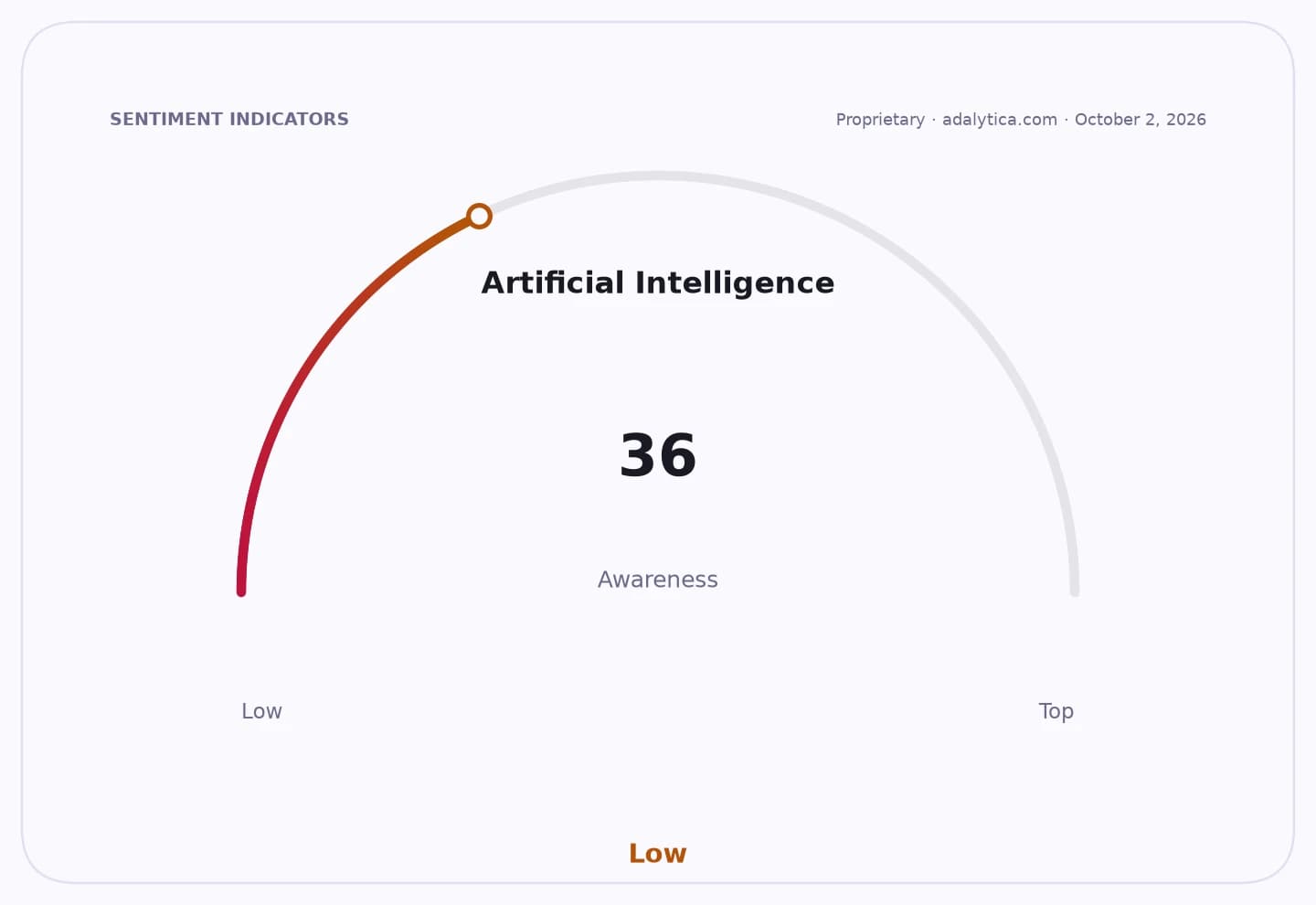
Sentiment IndicatorsⓘProprietary · adalytica.com · October 2, 2026
This is a snapshot — live sentiment, awareness and momentum for 130+ markets update continuously in the dashboard.Open AlphaPulse
The Keeper Security study found 11% of schools reported significant interruptions from AI-linked incidents, while 30% said they contained attacks quickly. That suggests many institutions are still in reactive mode, limiting damage only after an event has already occurred. Just 32% said they felt very prepared to deal with digital threats, even though 86% allow students to use AI and 91% say teachers use it. Only 51% have detailed policies and fewer than 40% have incident-response plans.
For investors, the story is not just about schools. It speaks to a broader market in which AI adoption is creating new attack surfaces and accelerating demand for cyber-defense tools. Companies such as Palo Alto Networks, CrowdStrike and Zscaler have all flagged the security risks tied to AI use in their filings, including shadow AI, prompt injection and faster, more scalable attacks by adversaries. The education sector is likely to become a steady buyer of cloud security, identity protection and content-filtering software as institutions try to catch up.
There is also a policy angle. The study reinforces the argument that blanket bans on AI are unlikely to hold, especially in environments where students and teachers are already using the tools widely. The more durable response is governance: clear usage rules, staff training, monitoring and incident playbooks. That approach may support vendors offering security platforms for AI workloads, while leaving institutions that delay on the back foot.
The near-term risk is that schools continue to scale AI before they have the controls to match, raising the odds of more disruptions and regulatory scrutiny over student data. The longer-term opportunity sits with cybersecurity providers that can package AI safety, threat detection and policy enforcement into products that education customers can actually deploy.
| Entity | Gains | Losses |
|---|---|---|
| Cybersecurity vendors | ▲Higher demand for AI defense tools | ▼Pricing pressure from budget-constrained schools |
| Schools with strong governance | ▲Lower incident risk | ▼Higher compliance costs |
| Students and teachers using AI | ▲Wider access to tools | ▼Greater exposure to misuse and phishing |
| Institutions with weak controls | ▲Short-term convenience | ▼Data loss and service disruption |