Artificial intelligence is moving from a productivity tool to a force that is redrawing which university degrees still map cleanly to jobs, with repetitive white-collar work, not just factory roles, now most exposed.
AI and university degrees most exposed to jobs
That is the central message running through recent research cited by the World Economic Forum, Microsoft Research and industry executives: AI is not yet set to wipe out employment on a broad scale, but it is already narrowing the value of study paths built around routine administration, standardised analysis and language processing. For investors, the shift matters because it points to where corporate spending, labor costs and long-term demand will move next — toward firms that sell automation, data infrastructure and AI-enabled workflow software, and away from businesses whose edge depends on clerical scale.
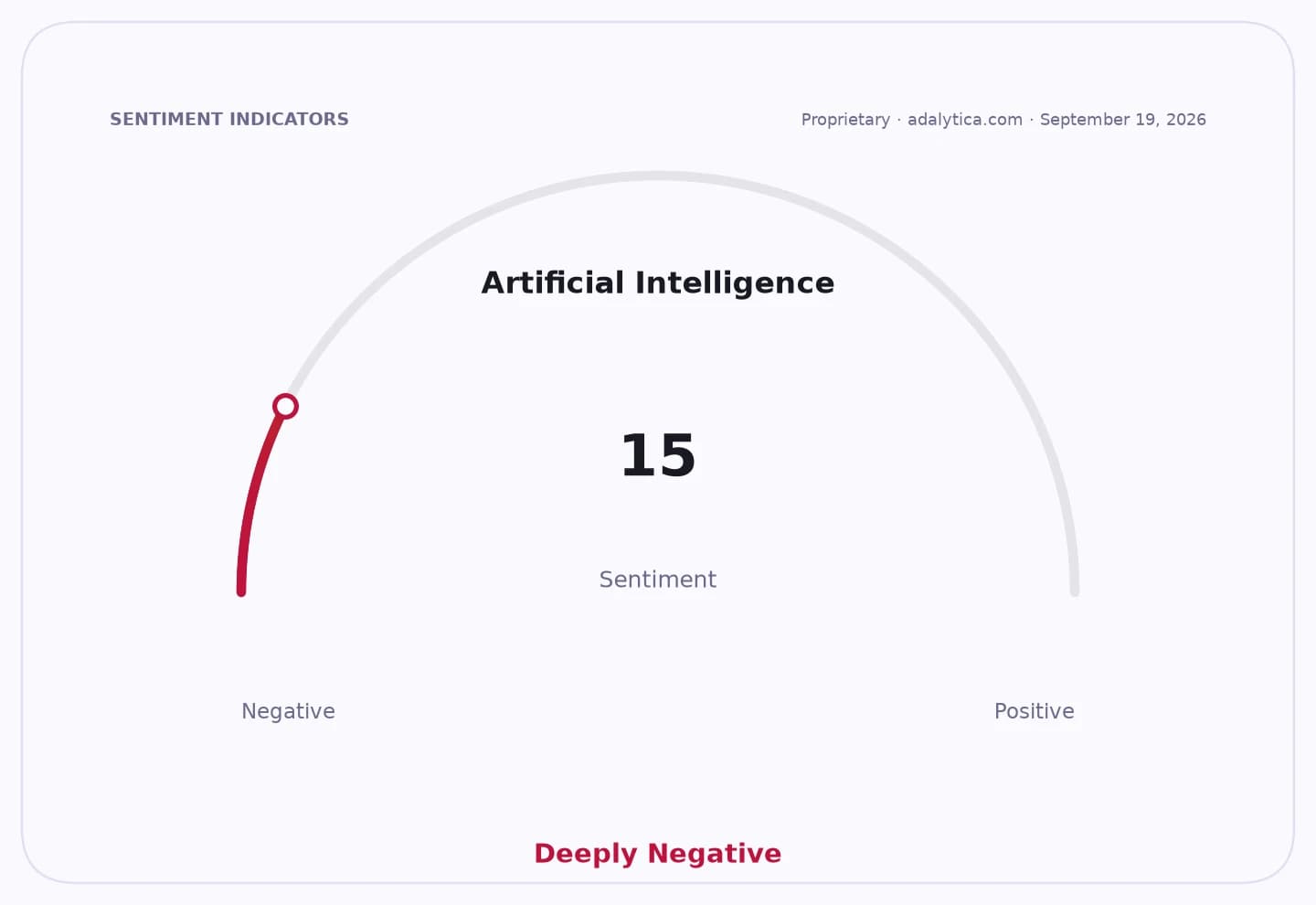
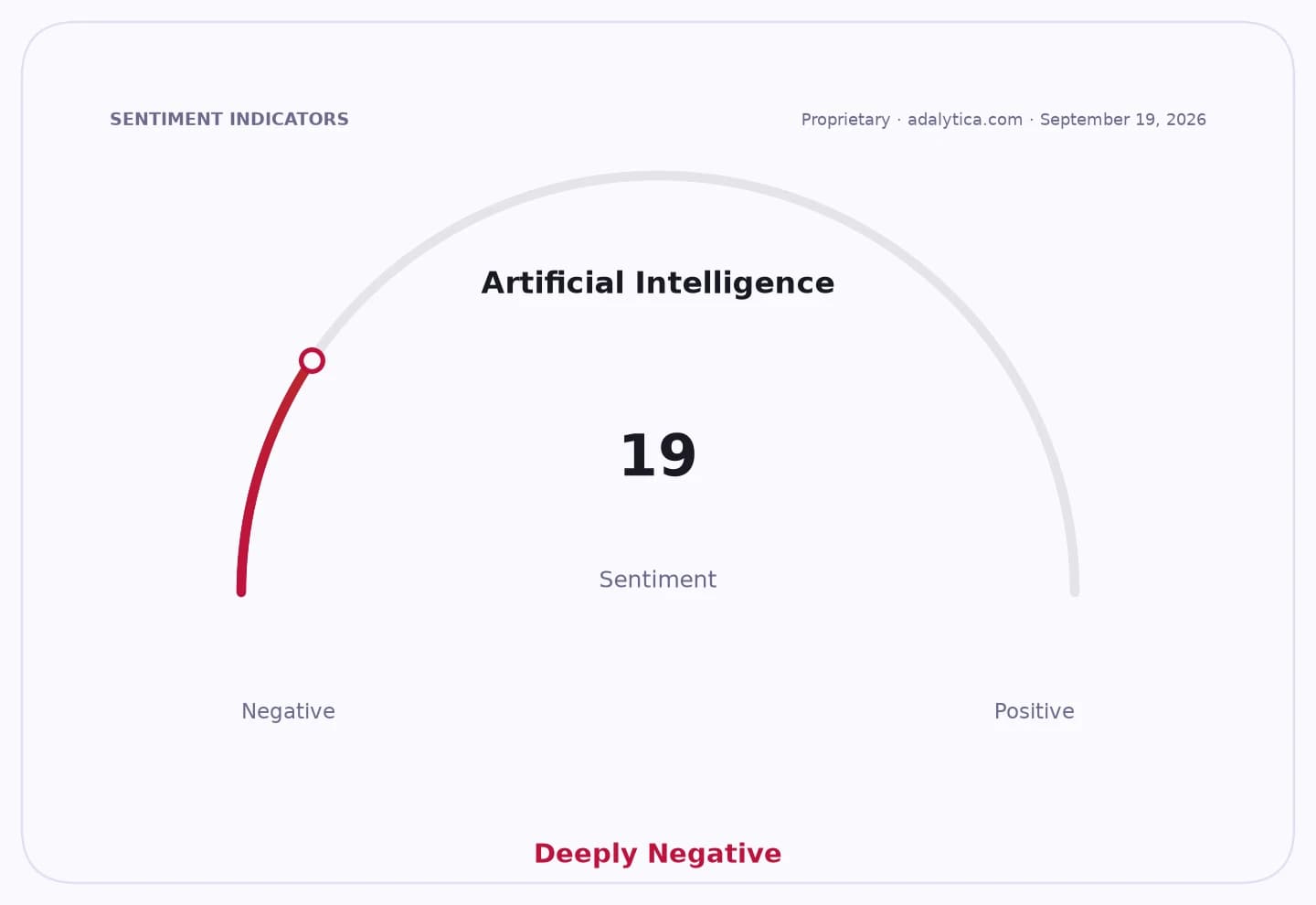
Sentiment IndicatorsⓘProprietary · adalytica.com · September 7, 2026
This is a snapshot — live sentiment, awareness and momentum for 130+ markets update continuously in the dashboard.Open AlphaPulse
The degrees most vulnerable are the ones tied to tasks that generative AI can already do cheaply and at speed. Business administration, translation, tourism management and traditional library science are among the clearest examples cited in the briefing, along with more legal and analytical careers at the lower-value end of the profession. The common thread is not the disappearance of those fields, but the erosion of entry-level and repetitive work that once justified them as broad, general-purpose qualifications.
That is economically significant because the labor market’s first point of friction is usually the hiring pipeline. If AI absorbs note-taking, summarisation, basic document handling, customer queries and standard translation, companies can do more with fewer junior staff. The World Economic Forum has said millions of jobs will be transformed before 2030, while the more important near-term finding from the briefing is that 94% of executives expect less than 5% of jobs to be eliminated over the next two years. In other words, this is less a jobs massacre than a job redesign — but redesign still reshapes wages, training budgets and graduate employability.
Bill Gates framed the transition in familiar terms: machines will take repetitive and routine tasks, leaving humans to focus on more creative work. That is the bullish case for the economy. The bearish case is that the entry rung disappears before the replacement skills are widely taught, making it harder for younger workers to break into law, media, finance, tourism and administrative functions. Microsoft Research’s list of roles most exposed — from translators and reporters to data assistants, customer service representatives and telemarketers — underlines how far the technology has moved beyond manual labor.
For investors, the read-through is clear. Microsoft, Nvidia and Alphabet are still the obvious beneficiaries of the AI buildout, but the market is increasingly distinguishing between monetisation and spending. Microsoft’s latest filing described the AI and cloud market as highly dynamic, with accelerating importance of agentic computing. Alphabet has also flagged rising investment in frontier models. Those companies benefit from demand for compute, models and enterprise software, but they also face the risk that customers use AI to cut costs faster than they expand revenues.
That tension helps explain recent price action. Microsoft shares were last around $499.70, below a 50-day moving average near $443.56? Actually the stock has been volatile around the $500 area, with the 50-day average at $443.56 and the 200-day at $429.37, showing the longer trend remains constructive despite recent consolidation. Nvidia, a central supplier to the AI infrastructure trade, closed at $230.36, above both its 50-day average of $210.57 and 200-day average of $196.53, while Alphabet ended at $338.46, just under its 50-day average of $348.35 but still above its 200-day average of $335.50. Those levels suggest the market still rewards AI exposure, though Alphabet’s softer technical position reflects more selective conviction.
The bigger investment implication is that AI remains a capital expenditure story before it becomes a clean earnings story. Companies are still funding data centers, chips, software integration and model development, while the labor savings are arriving unevenly and often without immediate margin expansion. That supports suppliers such as Nvidia and, to a degree, Microsoft and Alphabet, but it also means the next phase of the trade will hinge on which firms can convert automation into durable revenue growth rather than one-off headcount reductions.
For students and workers, the message is not that these careers are obsolete, but that the old generalist version of them is losing value. The better hedge is specialisation: data, digital transformation, compliance, AI oversight, technical translation, legal niches and experience-heavy functions that machines can assist but not fully replace. For investors, the same logic applies. The winners are likely to be the companies that sell the picks and shovels of automation and the software that makes human workers more productive. The losers are the businesses and training models built on scale, repetition and low-cost entry-level labor.
| Entity | Gains | Losses |
|---|---|---|
| Microsoft, Nvidia, Alphabet | ▲AI infrastructure demand | ▼Pressure to prove monetisation |
| Students in AI-heavy fields | ▲Demand for technical skills | ▼Generalist degree value |
| Routine white-collar workers | ▲Higher productivity tools | ▼Entry-level task roles |
| Employers using automation | ▲Lower operating costs | ▼Junior hiring pipeline |