AI is already changing how people work, but the bigger economic story is that it is widening the gap between productivity gains and job anxiety.
AI labor anxiety, Nvidia, Microsoft, Adobe impact
Workers using AI are saving an average of two hours a day, according to the news context, yet 83% say a single AI-related mistake could put their job at risk. That tension helps explain why AI is landing not just as a productivity tool but as a labor-market shock: it can lift output, compress routine tasks and still leave employees feeling more exposed than empowered. For companies, that is a rare combination of lower task costs and higher workforce uncertainty. For investors, it points to continued spending on AI infrastructure and software even as the market starts to price in slower growth in some white-collar roles.
The hardest hit are likely to be entry-level and repetitive office jobs, where AI can automate drafting, research, scheduling and customer support before it reaches more complex decision-making. The same reports cited in the context also note that some of the jobs most vulnerable to automation are among the fastest growing, a sign that AI is not simply eliminating roles but changing their content fast enough to disrupt hiring pipelines and career ladders. That matters economically because firms may become more productive without expanding headcount at the same pace, while new workers face a thinner path into professional occupations.
At the same time, AI is creating jobs of its own, particularly in health care, green energy and specialized services, where demand is expected to grow through 2035. That supports the bull case that AI is a reallocation technology rather than a pure destroyer of employment. The bear case is that the transition will be uneven and slow: the gains accrue to workers who can adapt, while those doing standardized work face wage pressure or displacement. Gender equality may also be affected if automation concentrates in occupations where women are overrepresented, adding a social and policy dimension to what is becoming a corporate operating issue.
Artificial Intelligence vs NVDAadalytica.com
Explore this data interactively — full history, time series and cross-market comparisons.Open AlphaPulse
For investors, the implications extend beyond the obvious winners in chips and cloud services. Nvidia remains the clearest infrastructure beneficiary as companies keep spending to train and run AI systems, while Microsoft’s results show how AI adoption is spreading across business workflows. Microsoft’s latest filing said it expects AI adoption to continue transforming workstreams across industries, even as it warned that AI solutions can produce unintended consequences or be used in unforeseen ways. That duality matters: the market is rewarding the platforms that enable AI, but it is also beginning to discount the risks of misuse, compliance failures and the cost of reorganizing labor around these tools.
Adobe sits in a more vulnerable middle ground. Its shares have been volatile, and the company has warned in filings that it faces pressure from fast-changing AI capabilities and competition for AI talent. For software vendors broadly, AI can raise productivity and deepen customer lock-in, but it can also compress pricing if customers expect more output for less manual work. That is the margin debate investors are watching: whether AI becomes an operating lever that expands profits or a feature set that forces higher spending and tighter competition.
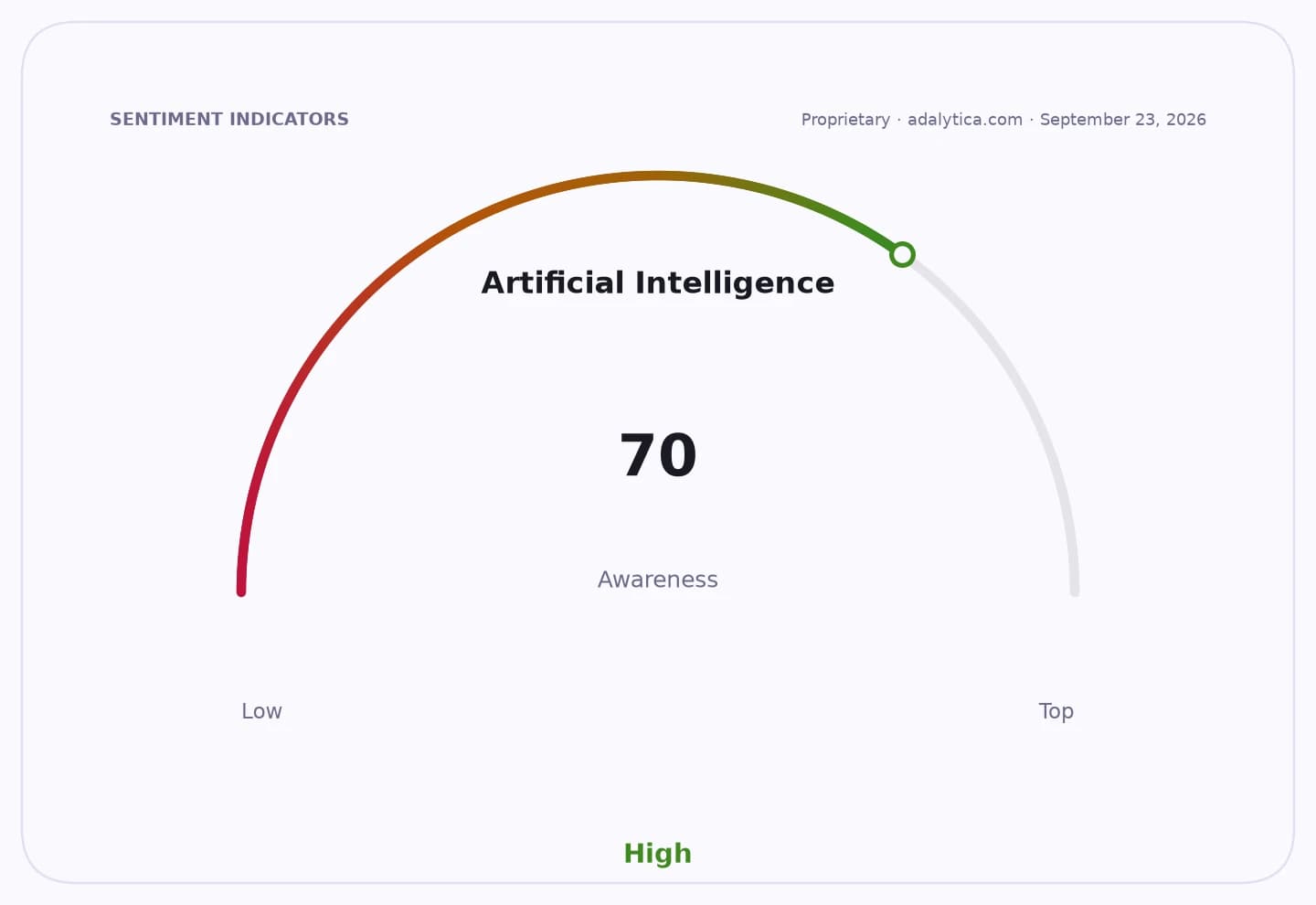
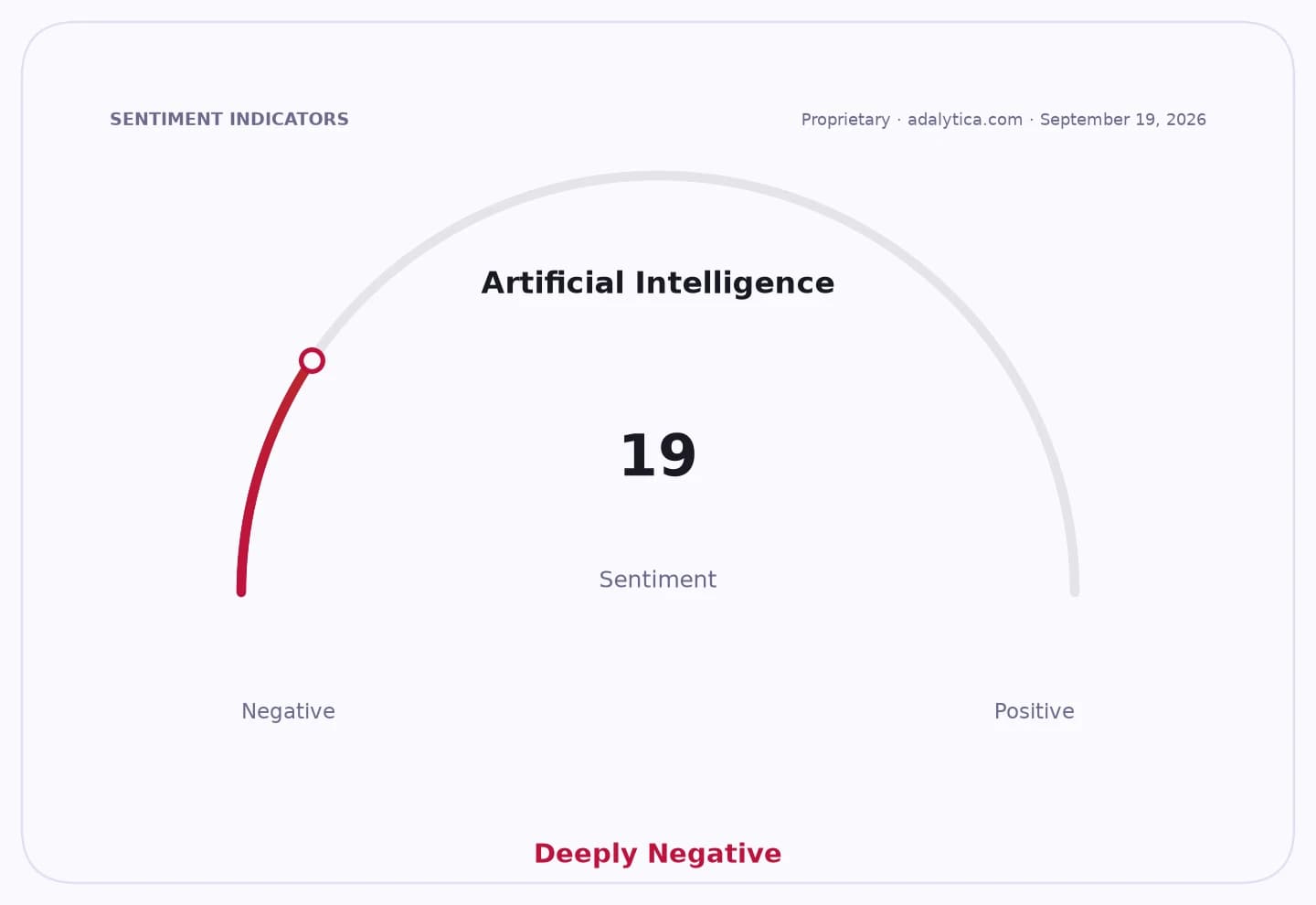
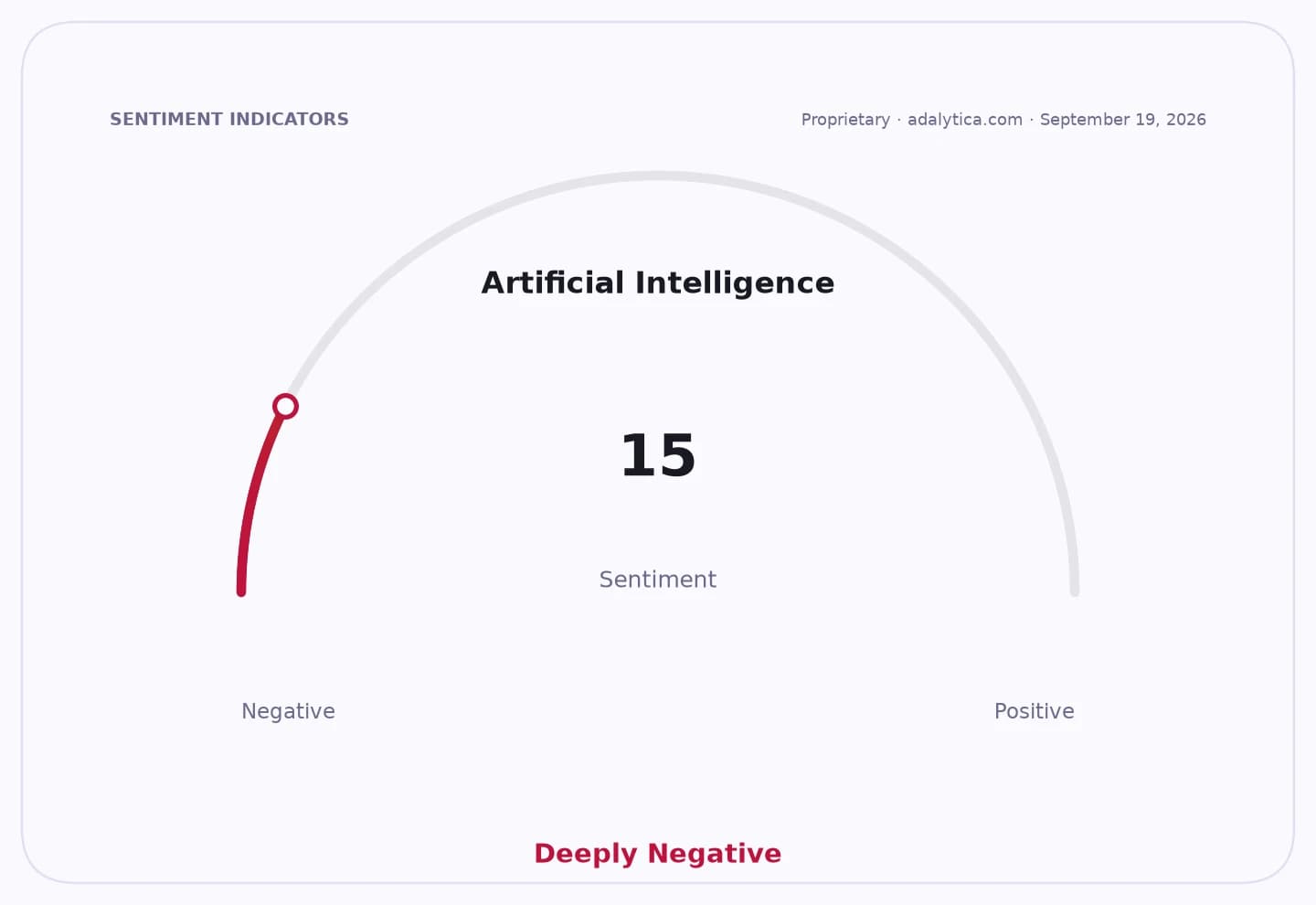
Adalytica.com’s AI sentiment gauge underscores the push and pull in the market itself: awareness is running at extreme greed while sentiment is in extreme fear. That is consistent with the labor story. Companies and investors know AI is powerful and unavoidable, but workers know the same technology can change job security faster than training systems can adapt. The next leg of the story will hinge on whether employers use AI mainly to augment workers or to replace entry-level tasks, and whether governments, schools and firms can build the retraining pipeline needed to keep the productivity gains from turning into a broader employment drag.
| Entity | Gains | Losses |
|---|---|---|
| Employers | ▲Lower task costs | ▼Workforce anxiety |
| AI platforms | ▲Higher demand | ▼Greater scrutiny |
| Entry-level workers | ▲New AI skills | ▼Fewer starter roles |
| Incumbent software vendors | ▲Faster adoption | ▼Pricing pressure |