Artificial intelligence is moving from the periphery of higher-education policy to the core of the debate on what schools are supposed to teach, and who — or what — should do the teaching.
AI in Education Debate Expands at Naples Conference
That is the economic and strategic significance of the Ren Research Education Network’s sixth conference opening in Naples: the event is gathering more than 400 speakers from 50 universities across 10 countries around a theme that reaches beyond simple digital adoption and into the question of whether AI can be integrated into education without weakening the human relationships that define it.
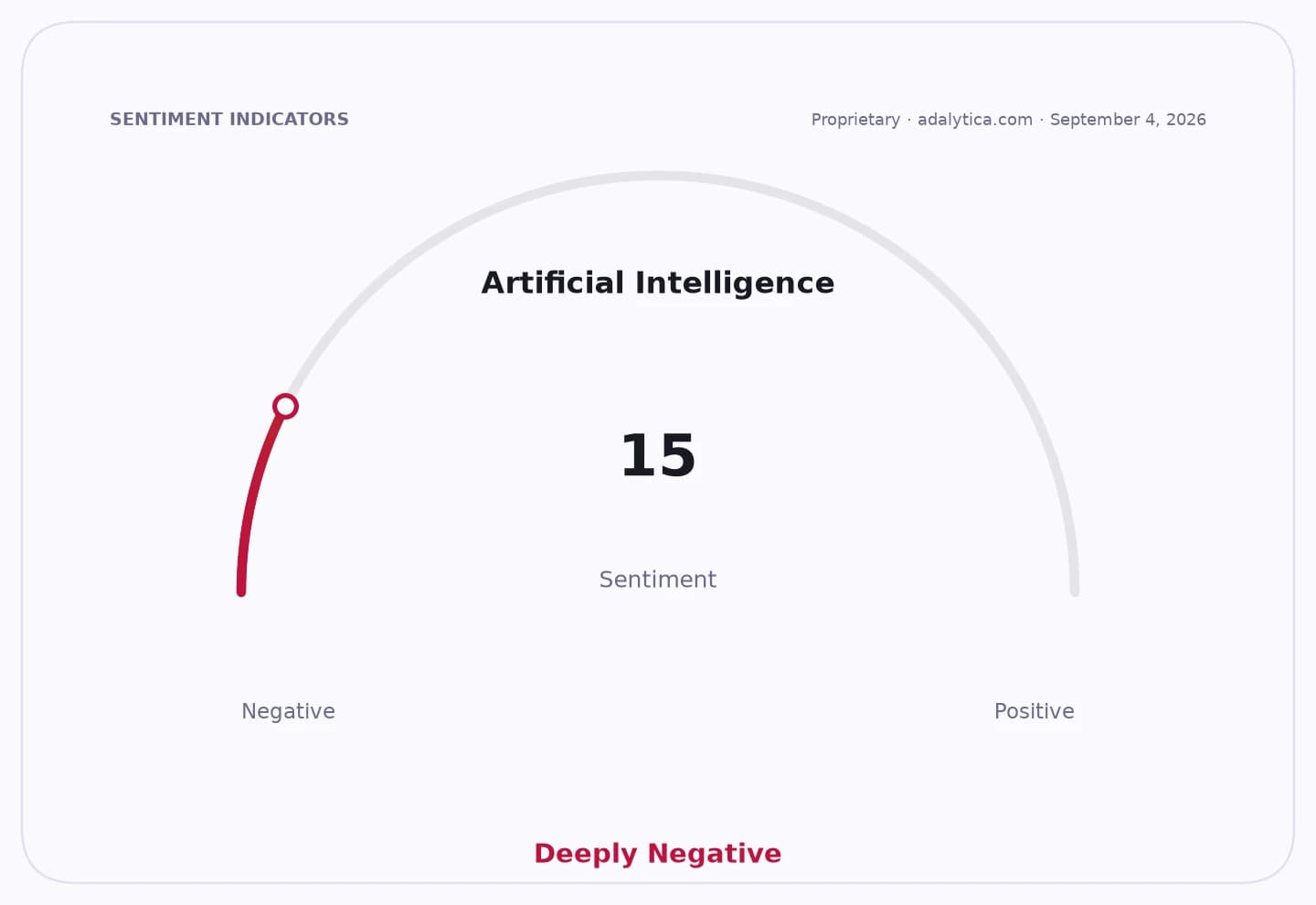
Sentiment IndicatorsⓘProprietary · adalytica.com · September 4, 2026
This is a snapshot — live sentiment, awareness and momentum for 130+ markets update continuously in the dashboard.Open AlphaPulse
For universities, the issue is no longer whether AI will enter classrooms. It already has, from writing tools to personalized learning systems and administrative automation. The more important question is how institutions manage the trade-off between efficiency and the value of human instruction, especially as governments, academic bodies and technology companies push for broader AI literacy. If AI can improve access, tailoring and scale, it could help institutions cope with tight budgets and rising expectations. If deployed badly, it risks eroding trust, widening inequality and commoditizing teaching.
The Naples conference underscores how quickly that debate has become institutional rather than theoretical. The agenda — “Battiti algoritmici: l’educazione all’affettività ai tempi della quarta rivoluzione” — places AI alongside affective education and social inclusion, signaling that the conversation in Italy is shifting from technical skills to the deeper social function of schools. That matters because education policy increasingly intersects with labor-market preparation, digital competitiveness and the social costs of automation. Teachers are not just content delivery systems; they are part of how societies build judgment, empathy and civic cohesion.
The scale of the conference also reflects a broader industry consolidation around education research as a policy input. The event, supported by Pegaso University, the University of Naples Parthenope and backed by scientific societies and the city of Naples, shows how Italian academia is trying to shape the national conversation before AI use becomes fully normalized in schools. That is particularly relevant as institutions seek guidance on where AI should assist learning — and where it should be kept at arm’s length.
For investors, the story matters because education is one of the next large end markets for AI software, cloud infrastructure and digital-learning platforms. Demand for AI tools in universities and training systems could support long-term usage of models, subscriptions and enterprise deployments, while also reinforcing the case for companies positioning themselves as responsible AI providers. But the same debate is a reminder that adoption will not be frictionless. Buyers will face procurement scrutiny, data-governance concerns and pressure to prove that AI products improve outcomes rather than just cut costs.
The bull case is that AI becomes a productivity layer across education, opening a recurring market in tutoring, assessment, content generation and student support. The bear case is that ethical concerns, regulation and faculty resistance slow uptake, leaving vendors to fight over budgets without proving durable educational impact. That tension is why the Naples meeting is more than an academic conference: it is part of a larger contest over how AI will be absorbed into public institutions.
The next catalyst will be whether these arguments translate into policy standards, pilot programs and procurement decisions. If they do, the education sector could become an early test case for how societies balance automation with human value — and how markets price that balance.
| Entity | Gains | Losses |
|---|---|---|
| AI education vendors | ▲Larger addressable market | ▼Higher scrutiny |
| Universities adopting AI | ▲Productivity gains | ▼Governance burden |
| Teachers and human-led pedagogy | ▲Greater emphasis on role | ▼Pressure from automation |
| Students and families | ▲More personalized learning | ▼Risk of weaker human contact |