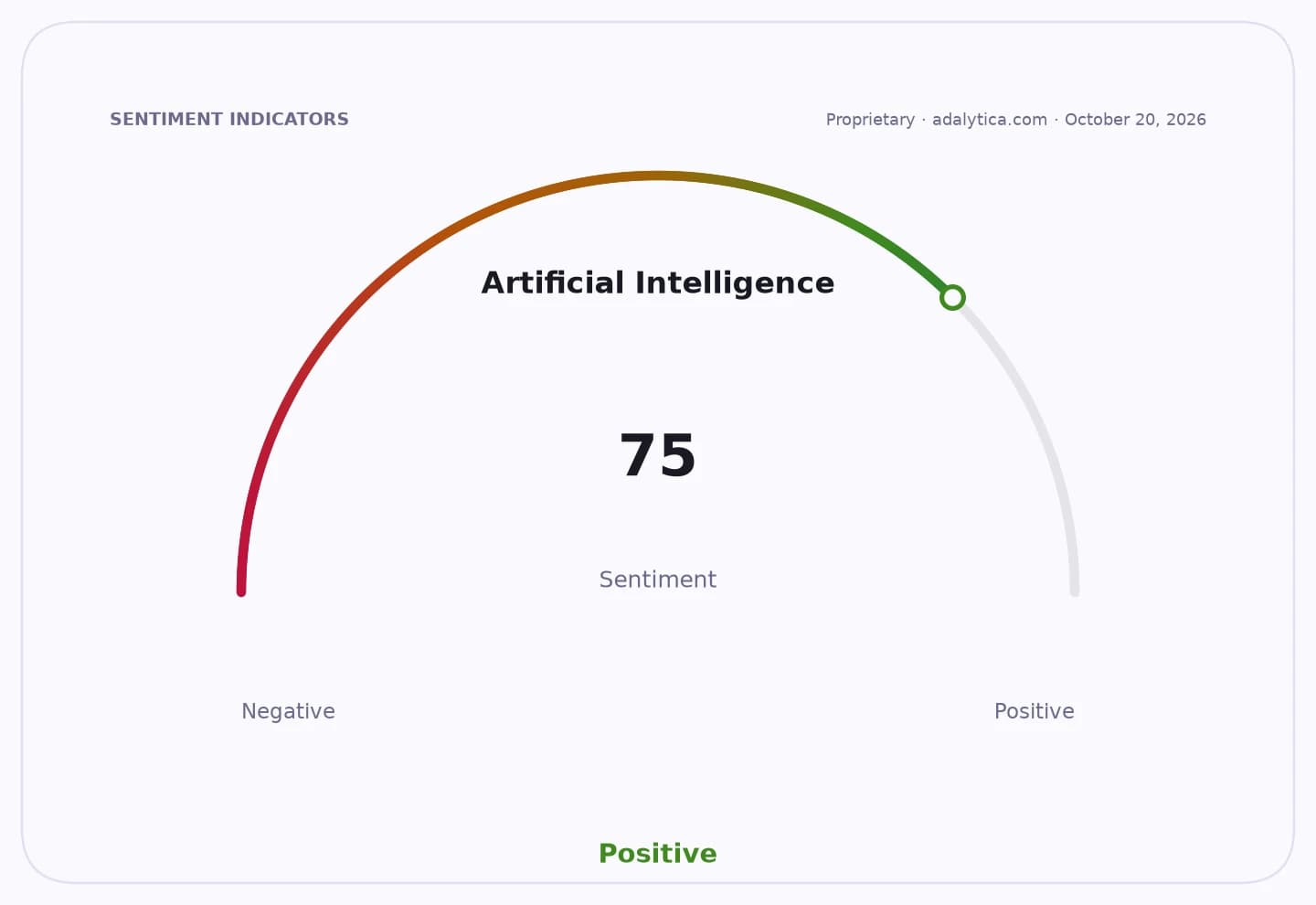
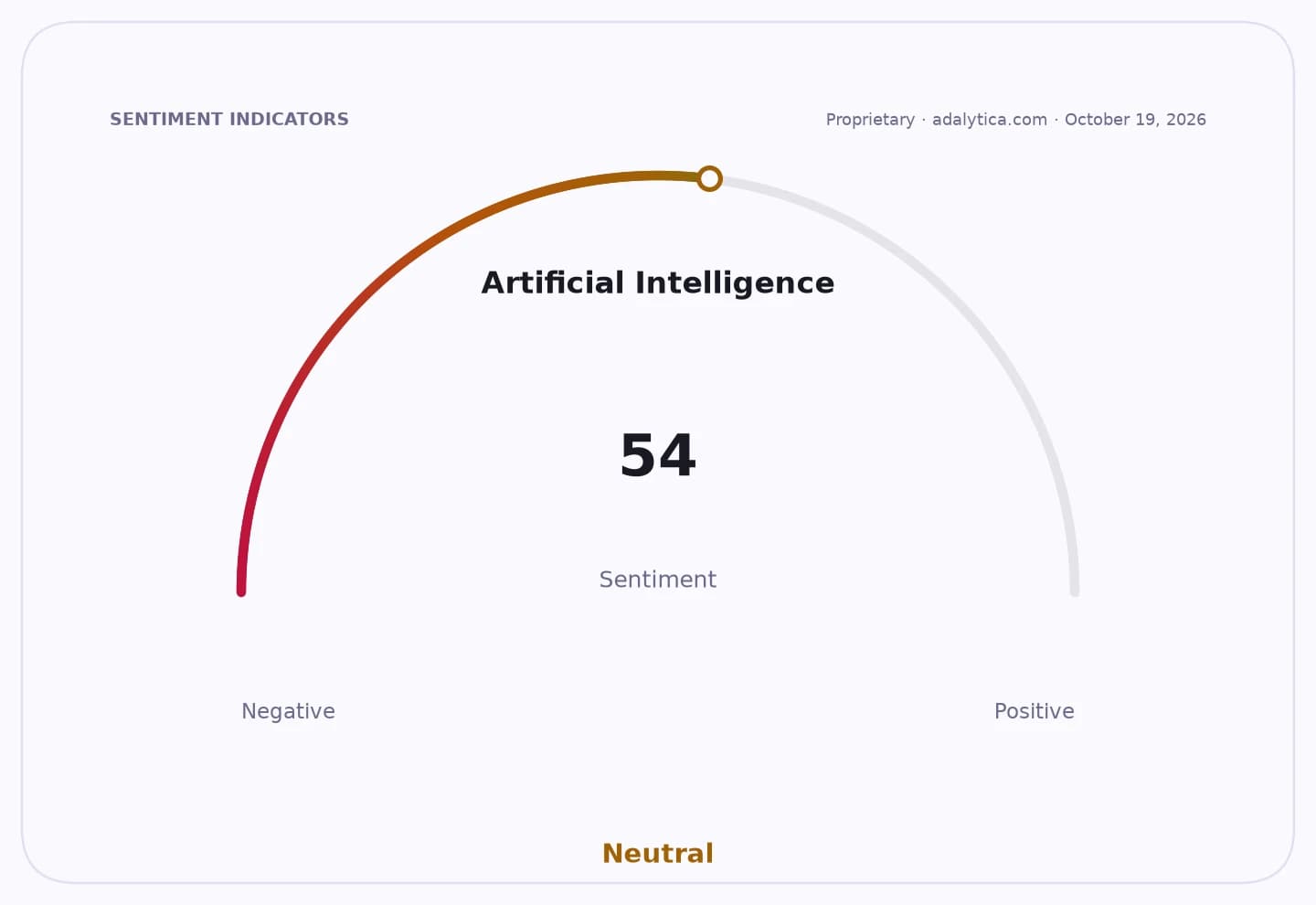
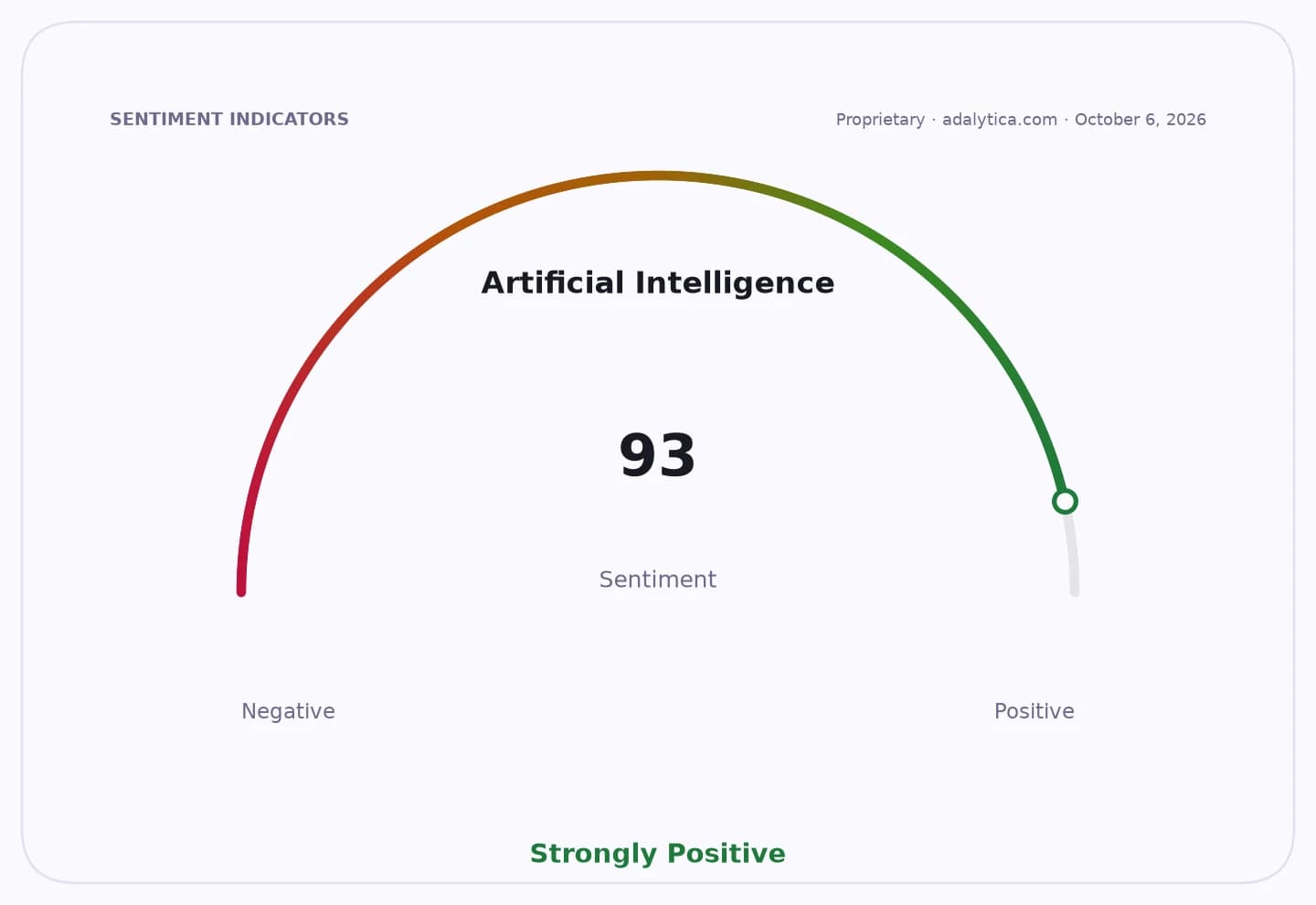
AI ETFs are no longer just a bet on Silicon Valley chipmakers. The real story is that the biggest thematic funds now sit on a much broader industrial stack, blending cloud software, networking, semiconductors and even two German names that quietly help make the AI boom work in the real world.
AI ETF holdings include SAP and Infineon
That matters because investors buying an AI ETF are often chasing the story of generative AI, but what they actually own is a portfolio of companies selling the picks and shovels of automation. In the Amundi MSCI Robotics & AI UCITS ETF, the largest holdings include AMD at 5.34%, Alphabet at 9.37%, Cisco at 4.22%, Broadcom at 3.94% and Nvidia at 3.70%. Then come SAP at 2.10% and Infineon at 2.07%, two “surprise guests” that show how global the AI supply chain really is.
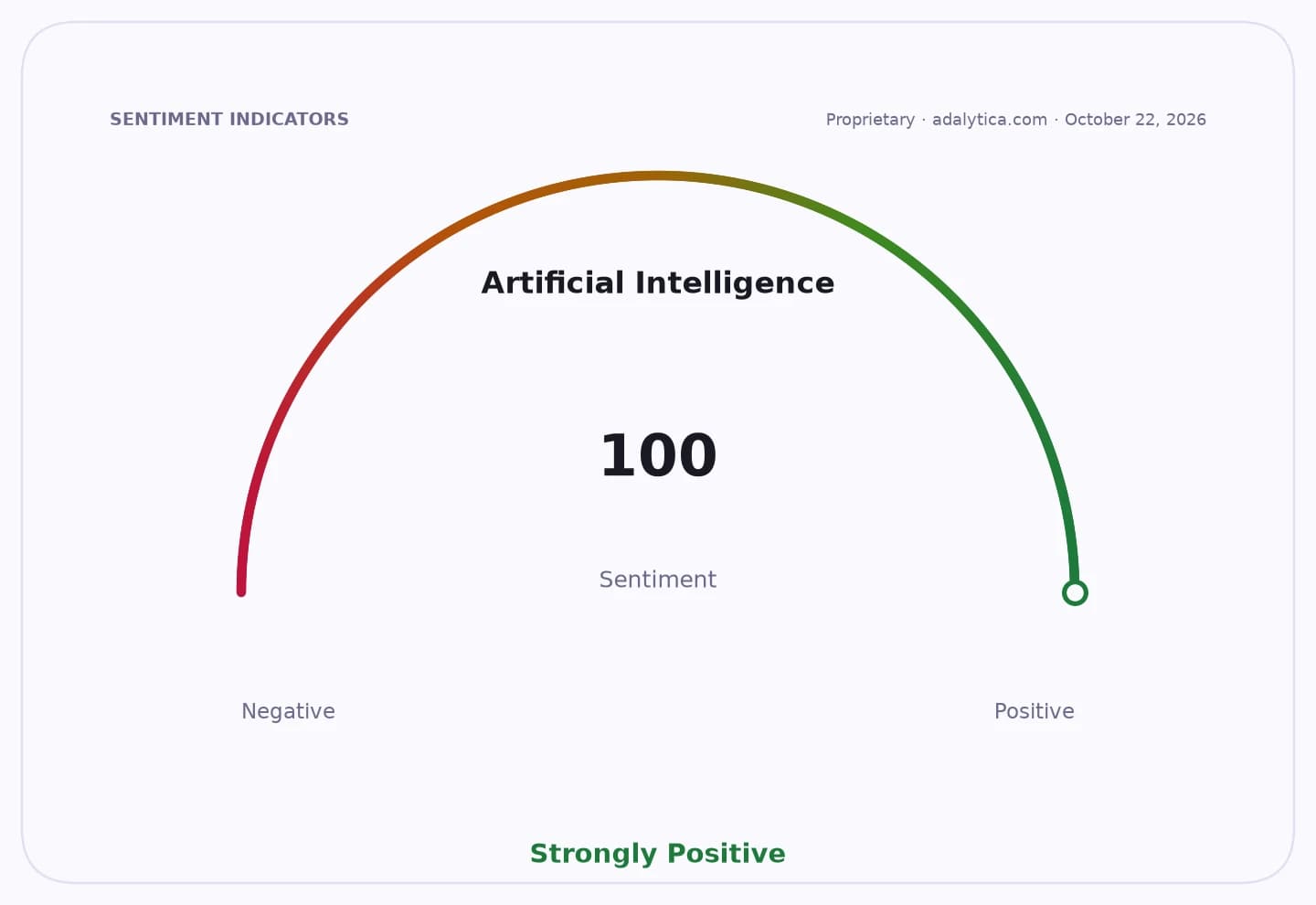
Sentiment IndicatorsⓘProprietary · adalytica.com · October 22, 2026
This is a snapshot — live sentiment, awareness and momentum for 130+ markets update continuously in the dashboard.Open AlphaPulse
For long-term investors, that mix is the point. The AI market was worth about $758 billion last year and is projected to reach $4.2 trillion by 2035, while the robot market could climb from $53.1 billion in 2025 to $257.5 billion by 2035. Those are not short-cycle trading themes; they are multi-year industrial shifts driven by automation, labor shortages, higher wages and the need for ever more computing power. If the trend plays out, the winners will not just be the most famous AI names, but also the firms providing software, networks, chips and factory-floor hardware.
The German positions are especially interesting. SAP is emerging as an AI platform for enterprises that want to plug artificial intelligence into existing workflows rather than build it from scratch. With more than 400,000 business customers, it has a sticky installed base that could make AI adoption easier to monetize over time. Infineon is even more underappreciated: it supplies the power semiconductors, sensors and microcontrollers that help robots, electric vehicles and industrial systems operate in the physical world. In other words, it benefits when AI leaves the data center and starts doing useful work.
The underlying holdings also tell you where the market thinks the money is really being made. Broadcom’s AI revenue jumped more than 100% last quarter to $8.4 billion, and management sees more than $100 billion in AI-chip revenue by 2027. Cisco said AI-related orders from hyperscalers reached $2.1 billion in a single quarter. Nvidia remains the symbolic leader, even if its weight in the ETF is smaller than many expect, and Adalytica’s AI earnings sentiment snapshot shows extreme greed around both Nvidia and Microsoft — a reminder that enthusiasm is already high and expectations are rich.
That is why ETF structure matters. The Amundi fund is physically replicated, has more than €1 billion in assets since launching in 2018 and charges a 0.40% fee. It is not a cheap broad-market fund, but thematic exposure never is. Investors should view it as a satellite holding, not a core portfolio anchor, because concentration risk is real and the sector can swing hard when sentiment cools or spending pauses.
Still, the bigger narrative is constructive. The next phase of the AI boom is likely to be less about a single superstar stock and more about a widening ecosystem of enablers. For investors willing to think in years, not weeks, that is exactly why big AI ETFs remain worth watching — and why the German names tucked inside them deserve more attention than they usually get.
| Entity | Gains | Losses |
|---|---|---|
| AI ETF investors | ▲Broad exposure to AI growth | ▼Higher concentration risk |
| Nvidia, AMD, Broadcom | ▲More demand for chips | ▼Valuation pressure if growth slips |
| SAP, Infineon | ▲AI adoption in enterprise and industry | ▼Less obvious than U.S. peers |
| Broad thematic ETFs | ▲Asset gathering from AI demand | ▼Broad-market diversification tradeoff |