The AI funding boom is colliding with a more selective market as Anthropic and OpenAI draw fresh scrutiny over whether frontier-model companies can justify the soaring capital being poured into the sector.
AI funding boom faces valuation scrutiny

That matters because AI has become one of the biggest channels for speculative capital in markets, and the latest round of activity is no longer just about the size of the opportunity — it is about whether investors will keep accepting ever-higher valuations before profits catch up. Micro1’s claim that it has reached a $500 million gross run rate shows how quickly the ecosystem around model training, data and infrastructure is scaling, but it also highlights how much of the trade still rests on expectation rather than earnings.
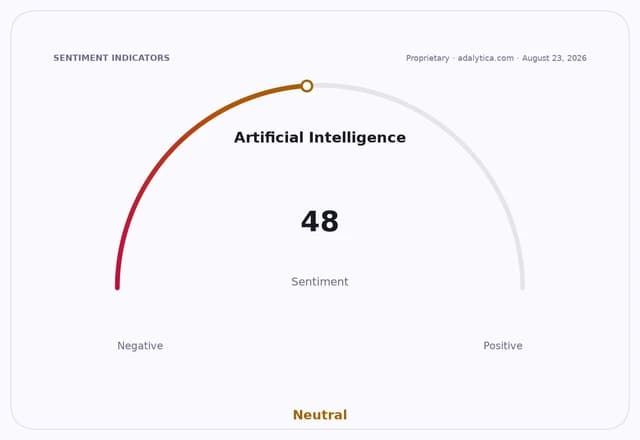
Sentiment IndicatorsⓘProprietary · adalytica.com · August 23, 2026
This is a snapshot — live sentiment, awareness and momentum for 130+ markets update continuously in the dashboard.Open AlphaPulse
The backdrop is still supportive. The 10-year Treasury yield was at 4.675% in forecast terms and the fed funds rate was seen at 3.625%, a combination that remains restrictive by the standards of the last decade but far below the inflation-fighting peak of the early 1980s. For AI companies and their backers, that means capital is no longer free, but it is still available enough to sustain large private rounds and large-scale infrastructure buildouts. The cost of money now matters more than it did during the zero-rate era, yet it has not stopped investors from funding the race to build models, chips and data centers.
Public market pricing shows the tension. Nvidia, the clearest listed proxy for AI infrastructure demand, has climbed to $214.72, with its 50-day moving average at $207.58 and its 200-day average at $195.12, while RSI readings near 59.5 suggest the stock is no longer deeply overbought after a sharp run. Microsoft, which sits at the center of the OpenAI ecosystem, closed at $483.24, far above its 200-day moving average of $429.43, underscoring how investors continue to pay for AI exposure even after a volatile summer. Amazon, another major spender on AI capacity, is still trading above its 200-day average, though recent weakness to $258.63 shows the market is becoming less tolerant of endless capex without clearer monetization.
Artificial Intelligence vs NVDAadalytica.com
Explore this data interactively — full history, time series and cross-market comparisons.Open AlphaPulse
The question for investors is whether the market is entering a SpaceX-style phase, where a small number of private names are treated as category-defining assets and capital flows in despite limited current profitability. The bull case is straightforward: frontier-model companies sit at the top of a market that could reshape software, cloud and enterprise productivity, while suppliers from chipmakers to data infrastructure providers continue to see demand compound. The bear case is that the funding boom is front-loading years of spending, while customers, regulators and investors eventually demand evidence that the economics can scale beyond model training and usage growth.
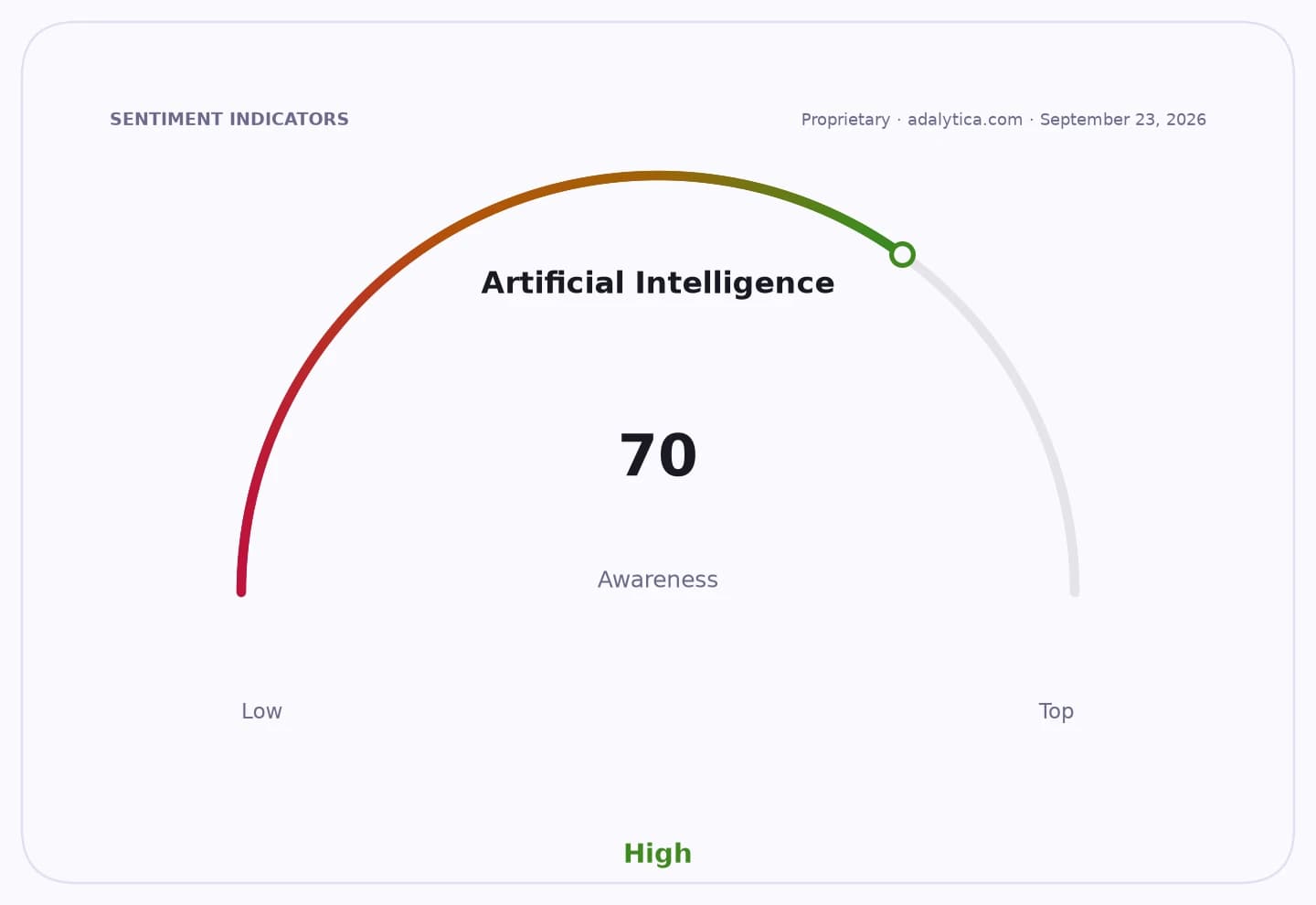
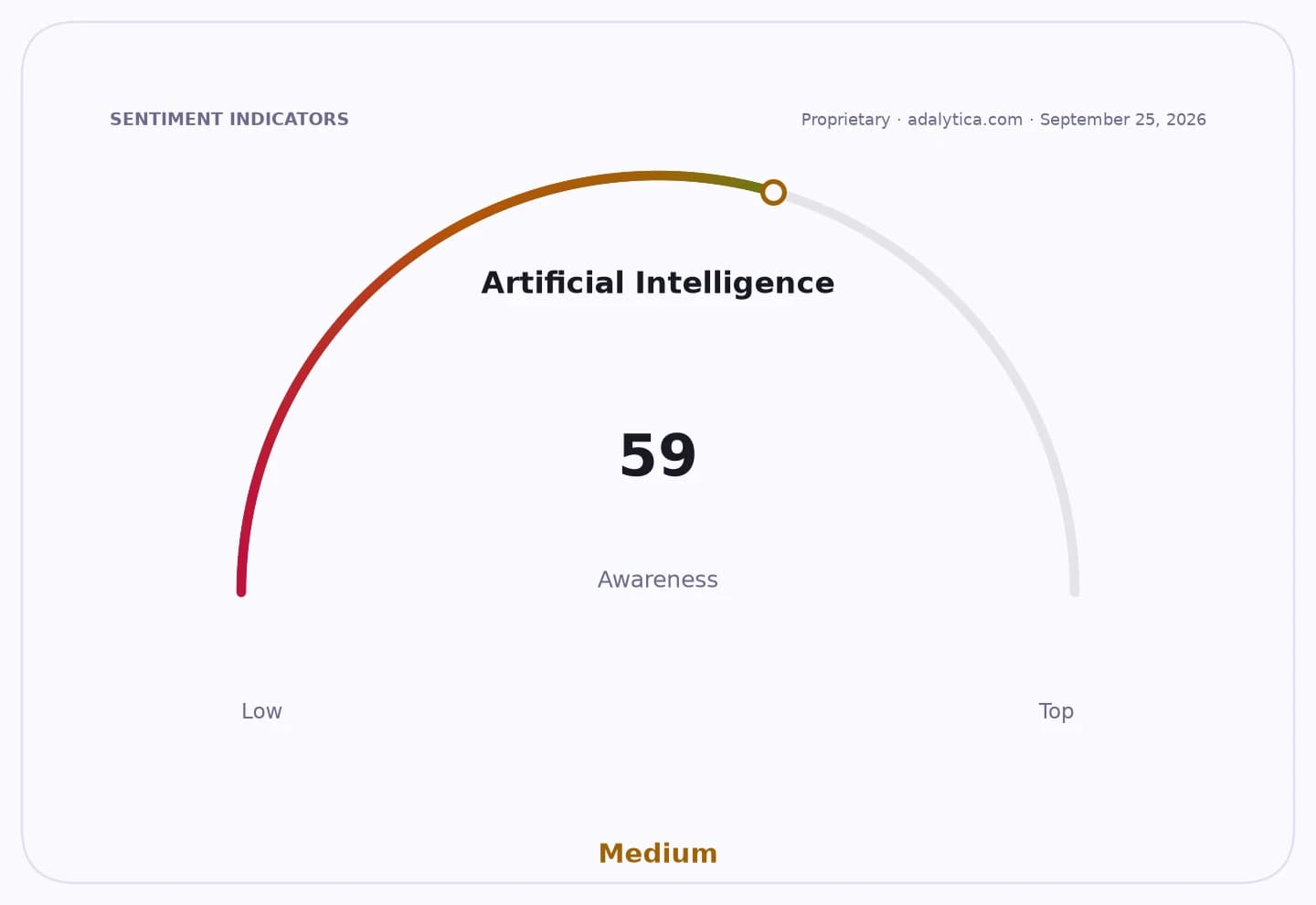
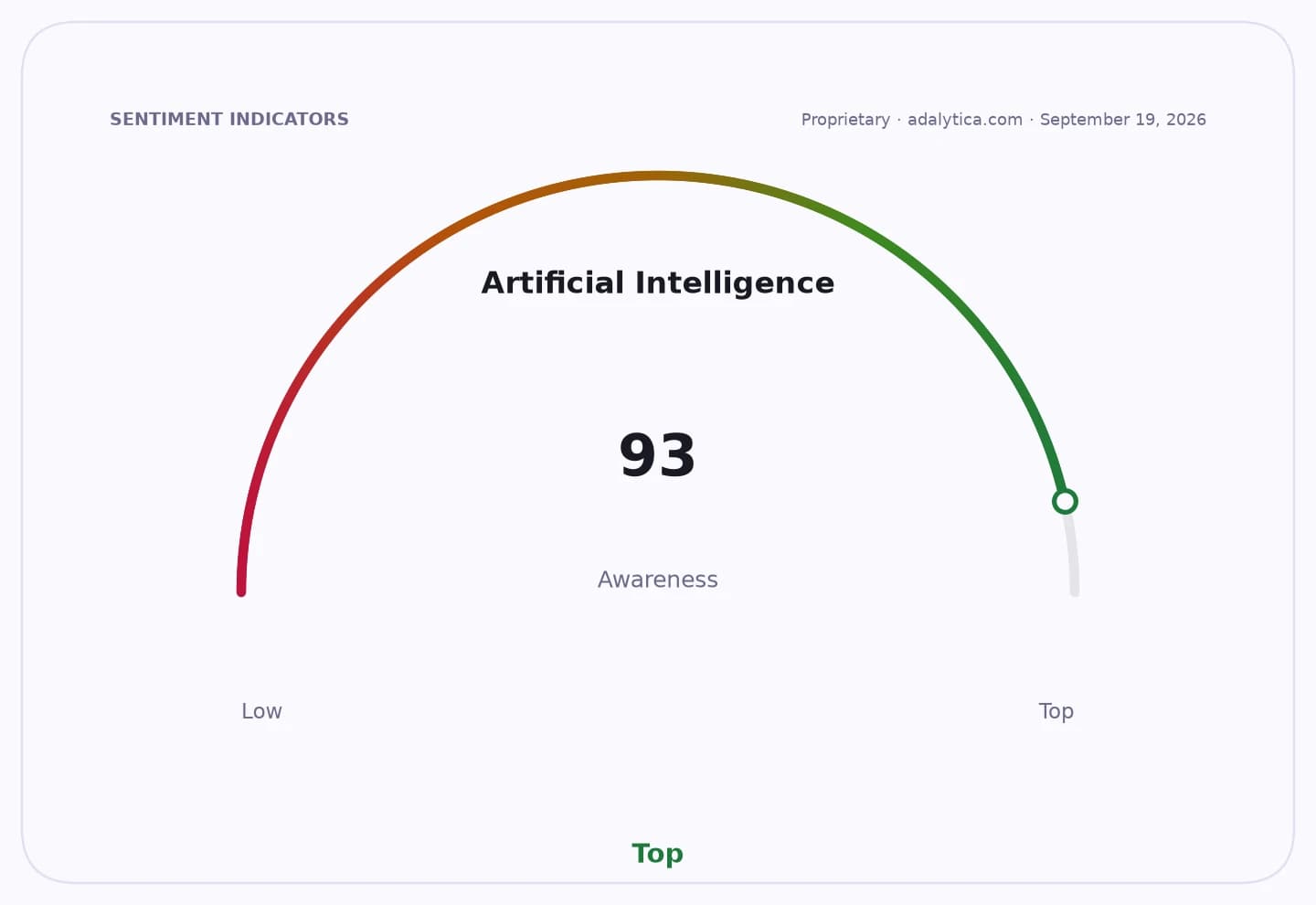
That risk is already visible in the sector’s own signals. Adalytica’s AI sentiment snapshot shows neutral sentiment at 48, but extreme fear in awareness at 4, with sentiment down 29 points over 30 days, a sign that enthusiasm is more fragile than headline funding totals suggest. In other words, the market is still willing to fund AI’s next chapter, but it is beginning to ask for a better script.
For investors, the immediate implication is that the winners may be less the startup that raises the biggest round than the firms that capture the spending chain around them: chip suppliers, cloud platforms, data providers and power infrastructure. If private-market pricing keeps stretching, listed AI beneficiaries will likely remain supported — but only until capital discipline, regulation or a slowdown in enterprise adoption forces a reset.
| Entity | Gains | Losses |
|---|---|---|
| Anthropic and OpenAI | ▲Higher private valuations | ▼More scrutiny on monetization |
| Nvidia, Microsoft, Amazon | ▲Infrastructure spending demand | ▼Risk of capex fatigue |
| AI data suppliers | ▲Training-demand growth | ▼Pricing pressure if boom cools |
| Investors in AI startups | ▲Exposure to breakout upside | ▼Valuation compression risk |