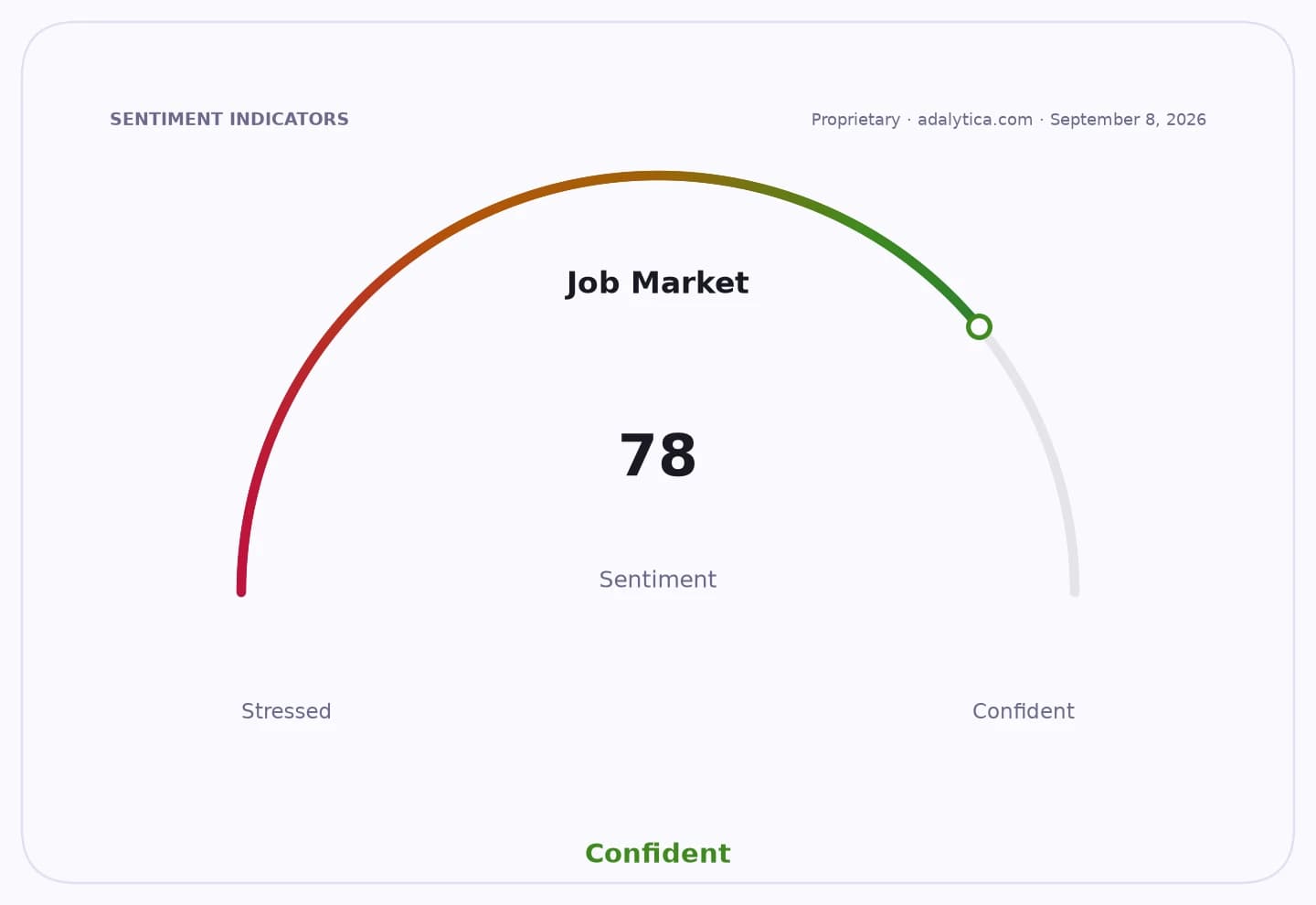
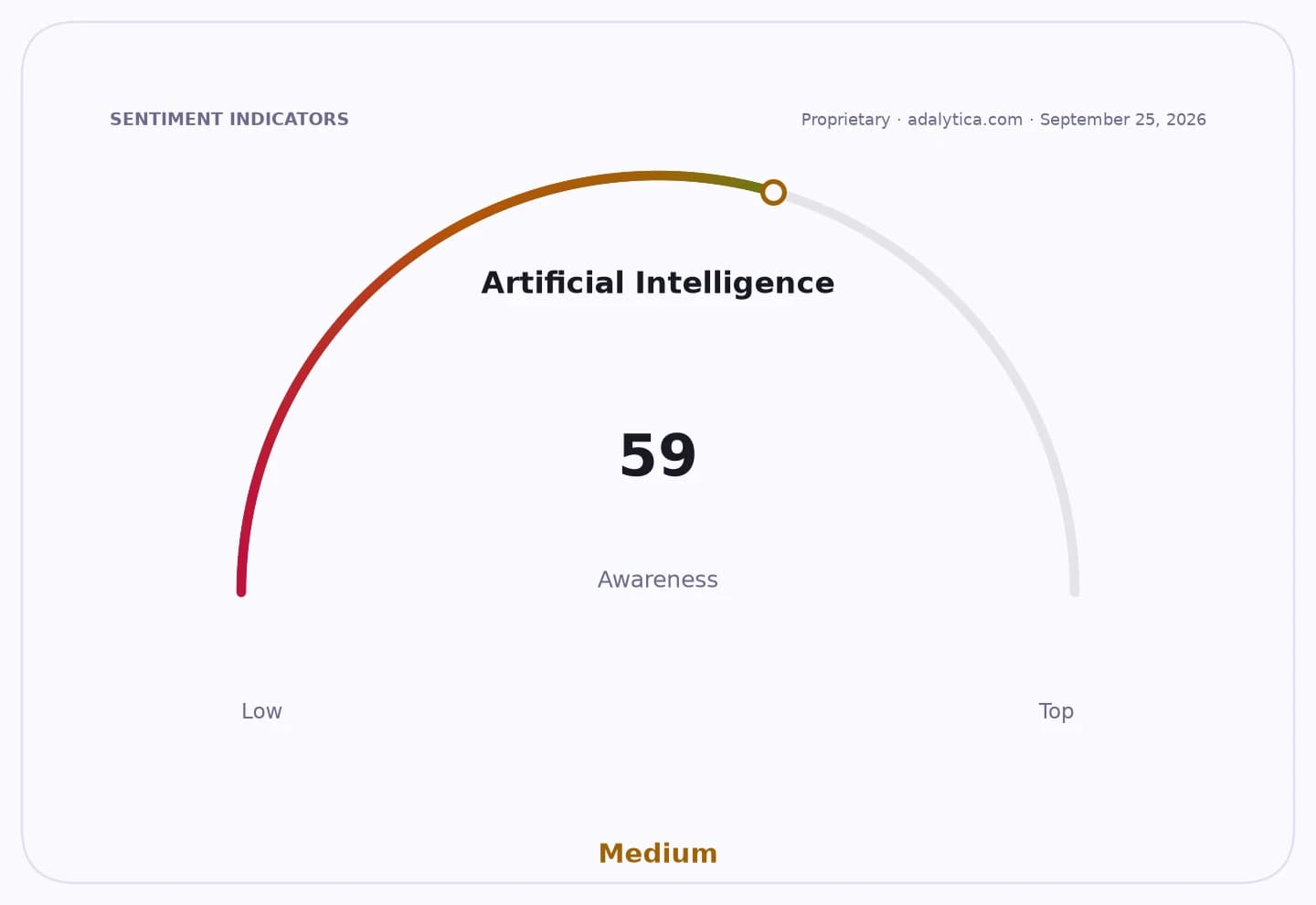
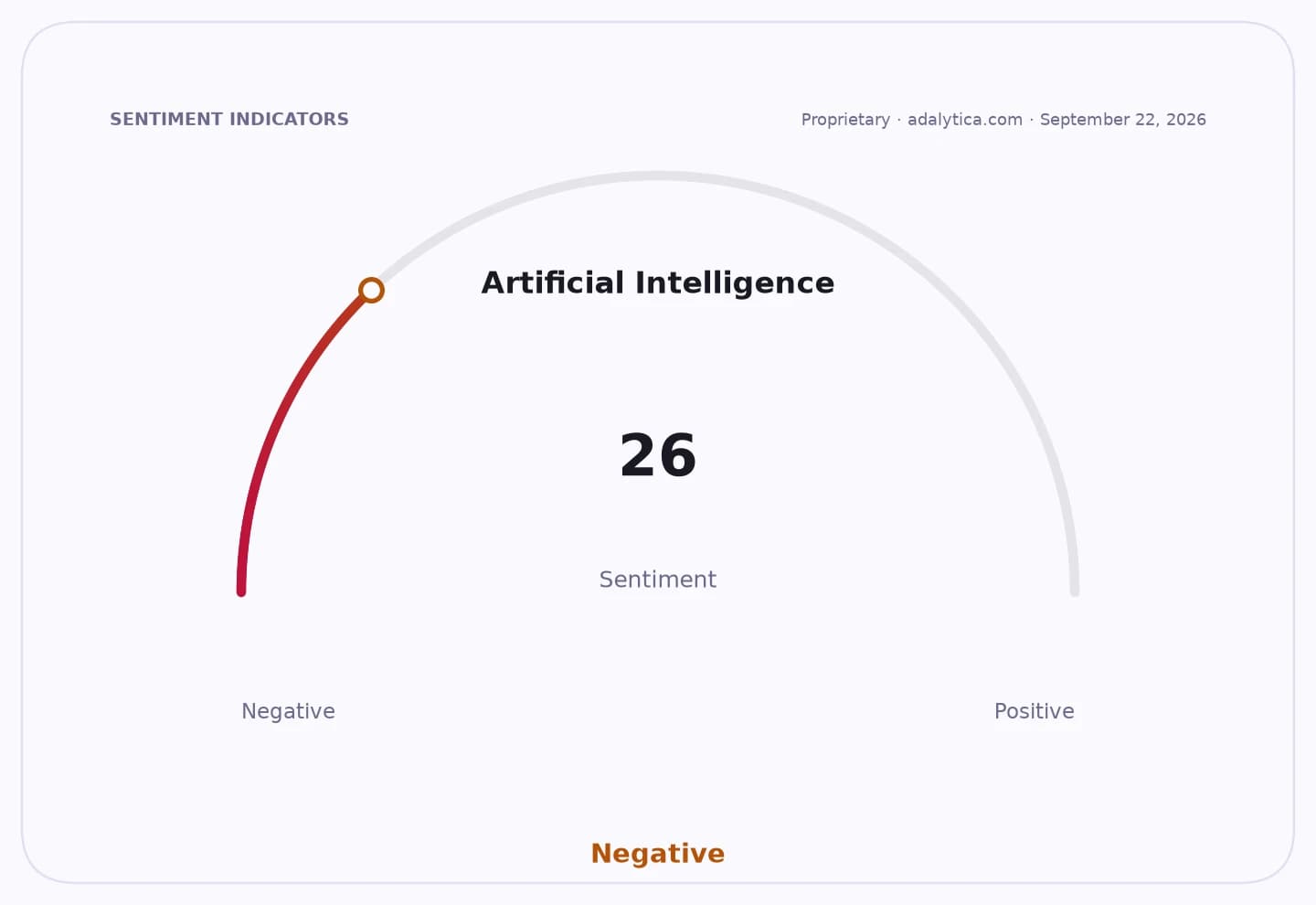
A Gurgaon software worker who quit an Rs 18 lakh package for a lower-paid bank role is now trying to get back into IT, a small personal move that captures a much larger shift: AI is not yet wiping out jobs, but it is making tech careers feel less secure, less linear and less richly priced than they were only a year ago.
AI pressures IT jobs and staffing in India
That matters because the labor market is often the first place a technology cycle shows up. When workers start trading upside for safety, it means the market is no longer paying just for growth in software and digital services — it is beginning to price in slower hiring, tighter promotion ladders and the possibility that AI will reshape staffing before it expands productivity enough to create fresh demand.
Sentiment IndicatorsⓘProprietary · adalytica.com · August 25, 2026
This is a snapshot — live sentiment, awareness and momentum for 130+ markets update continuously in the dashboard.Open AlphaPulse
The story is not that AI has triggered mass layoffs overnight. The more important change is that companies are using AI to freeze headcount, reorganize teams and ask the same people to do more. That is a classic margin lever for employers, but it is also a warning for investors: the next phase of AI may look less like broad labor destruction and more like relentless efficiency pressure across IT services, consulting and back-office work.
The market backdrop reinforces that tension. Microsoft shares are still well above their June lows, trading around $487 after rebounding from a steep selloff that pushed them near $352, but the stock has been volatile enough to show how quickly enthusiasm for AI can collide with concerns about spending, monetization and returns. Alphabet has also recovered from spring weakness, yet its latest trading pattern still reflects a market trying to reconcile massive AI capex with near-term earnings discipline. Accenture, a proxy for enterprise spending on digital transformation, has been hammered and then partially recovered, underscoring the same message: clients want AI, but they are increasingly using it to squeeze suppliers and redesign work rather than simply add payroll.
That is why this anecdote matters beyond one employee. In India and other outsourcing hubs, the risk is not just outright job loss. It is a slower, more corrosive squeeze on entry-level hiring, billing rates and career mobility as firms automate routine tasks and reserve human labor for higher-value work. For banks, that can mean efficiency gains and lower operating costs. For IT vendors and consultants, it means pricing pressure and a tougher fight to prove relevance. For workers, it means perceived security may now sit with sectors that used to rank below technology on pay.
There is also an investable angle here that the market may be missing. If AI keeps forcing companies to reprice labor, the real winners are not just the software platforms making the models. The better trade is often the “picks-and-shovels” layer: cloud infrastructure, data-center power, cybersecurity, systems integration and the firms that help enterprises implement AI without blowing up operations. Microsoft and Alphabet remain core AI infrastructure names, but investors should also watch Accenture for evidence of enterprise adoption, and financial stocks such as JPMorgan that can use automation to widen margins while keeping service quality intact.
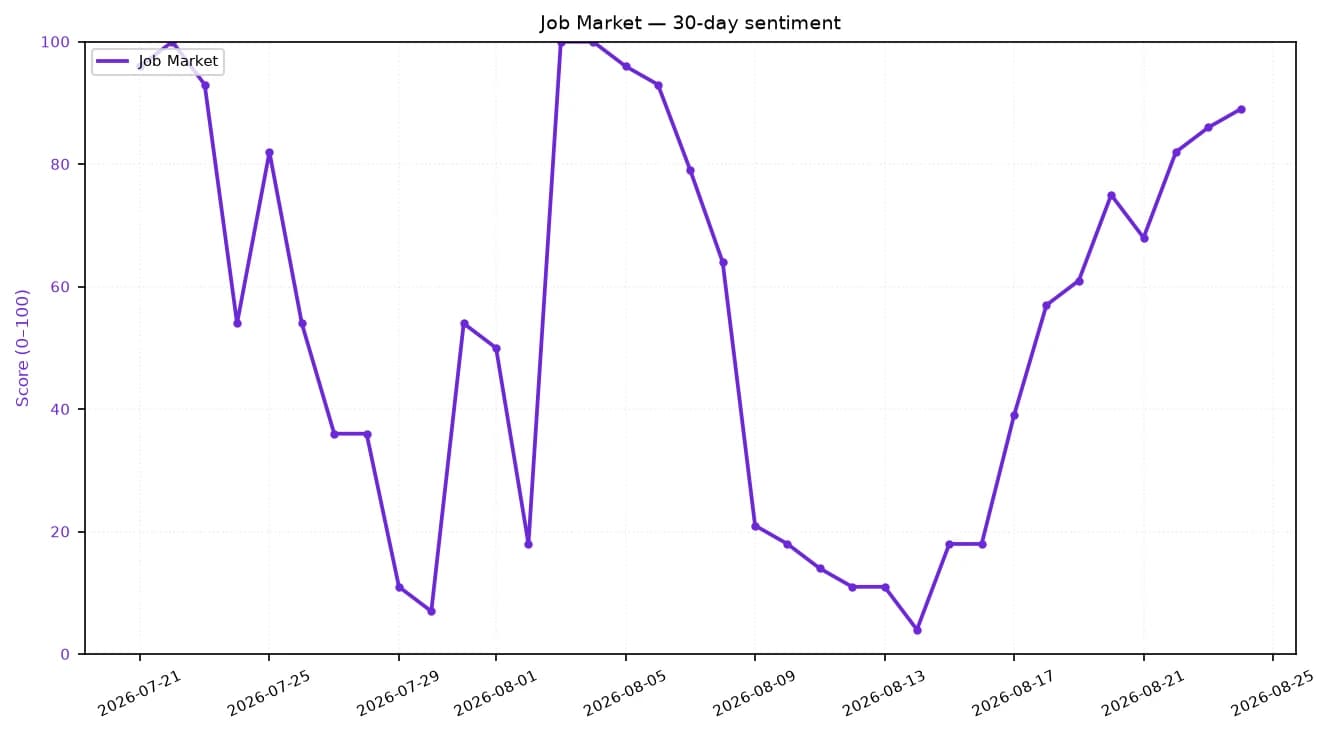
Adalytica’s Job Market Sentiment gauge sits at 89, in “Extreme Greed,” showing how quickly confidence can swing when workers and employers both start thinking the next move is to preserve optionality. That is exactly the kind of environment where long-duration bets on productivity, infrastructure and enterprise software can outperform while labor-dependent business models come under pressure.
The takeaway is straightforward: the Gurgaon worker’s regret is not a one-off anecdote, it is an early warning that AI is changing the value of job security itself. Investors should lean into the companies selling the tools, compute and implementation layers of this transition — and stay cautious on businesses whose margins still depend on abundant, cheap, replaceable tech labor.
| Entity | Gains | Losses |
|---|---|---|
| Microsoft, Alphabet | ▲AI infrastructure demand | ▼valuation if capex outruns payoff |
| Accenture | ▲automation consulting demand | ▼traditional labor-heavy delivery model |
| Banks and large lenders | ▲efficiency gains | ▼pressure to upskill staff quickly |
| IT workers and entry-level hires | ▲new AI skills premium | ▼wage growth and job security |