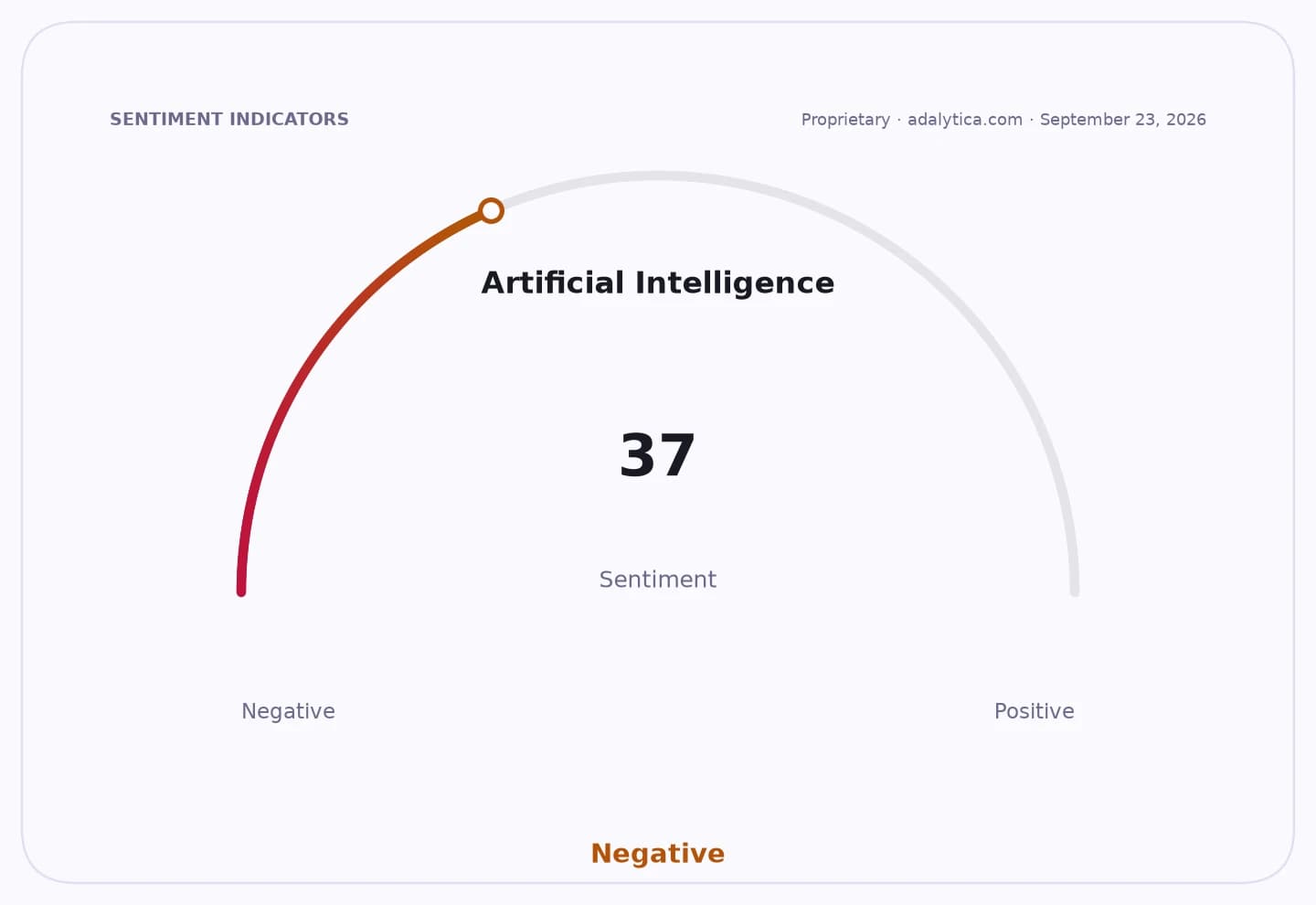
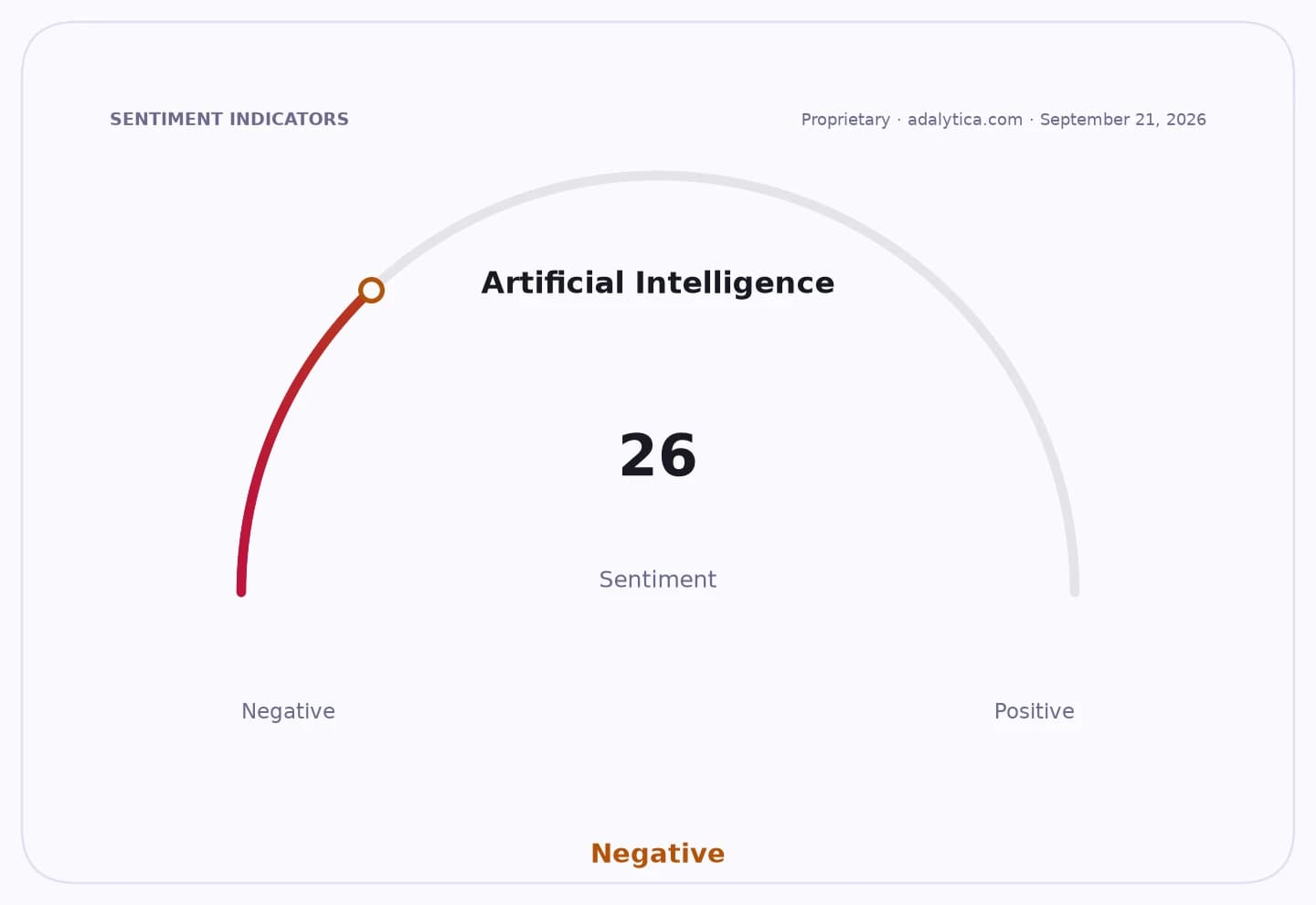
AI is moving deeper into everyday Swiss life, but the bigger story for investors and policymakers is the growing public belief that it will take jobs faster than it creates them.
AI Job Fears Rise in Switzerland

That fear matters because labor-market confidence shapes how quickly companies can automate, how aggressively workers push back, and how much political pressure builds around regulation, retraining and redistribution. In the Swiss “dialog” community, nearly two-thirds of respondents said artificial intelligence threatens jobs more than it raises productivity, with skepticism even stronger in French-speaking Switzerland, where about three-quarters saw AI as a labor risk versus roughly 60% in German-speaking regions.
Sentiment IndicatorsⓘProprietary · adalytica.com · September 6, 2026
This is a snapshot — live sentiment, awareness and momentum for 130+ markets update continuously in the dashboard.Open AlphaPulse
The divide is not just cultural. It points to a wider economic fault line: who captures the gains from AI, and who absorbs the disruption. Detractors in the community warned that productivity gains could enrich “the greedy” in business while leaving workers exposed, and some raised environmental concerns about the energy demands of AI infrastructure. That is the same pressure point showing up across developed economies, where the short-term incentive to automate is colliding with anxiety over job quality, wage bargaining and entry-level employment.
For markets, the message is straightforward: AI is no longer only a software story, it is a labor and capital-allocation story. If employers continue to deploy AI to strip out repetitive tasks, the winners are not just the model makers but the chip suppliers, cloud platforms, datacenter operators and industrial automation names that sit on the AI spending chain. Nvidia and Microsoft have already become the obvious proxies for that trade, with sentiment around Nvidia at “Extreme Greed” while Microsoft has flipped to “Extreme Fear” in Adalytica’s earnings snapshot, a reminder that investor enthusiasm can remain hot even as the social backlash intensifies.
The investable implication is that the next leg of the AI trade may favor the picks-and-shovels over the obvious consumer-facing winners. Infrastructure demand has to be built before productivity gains can be harvested, which means more capex for compute, power, networking and cooling. That supports the case for semiconductor leaders, data-center landlords, utilities tied to high-load demand and industrial firms selling automation equipment. The risk, meanwhile, sits with labor-intensive businesses that treat AI mainly as a cost-cutting tool without investing in reskilling or new workflows.
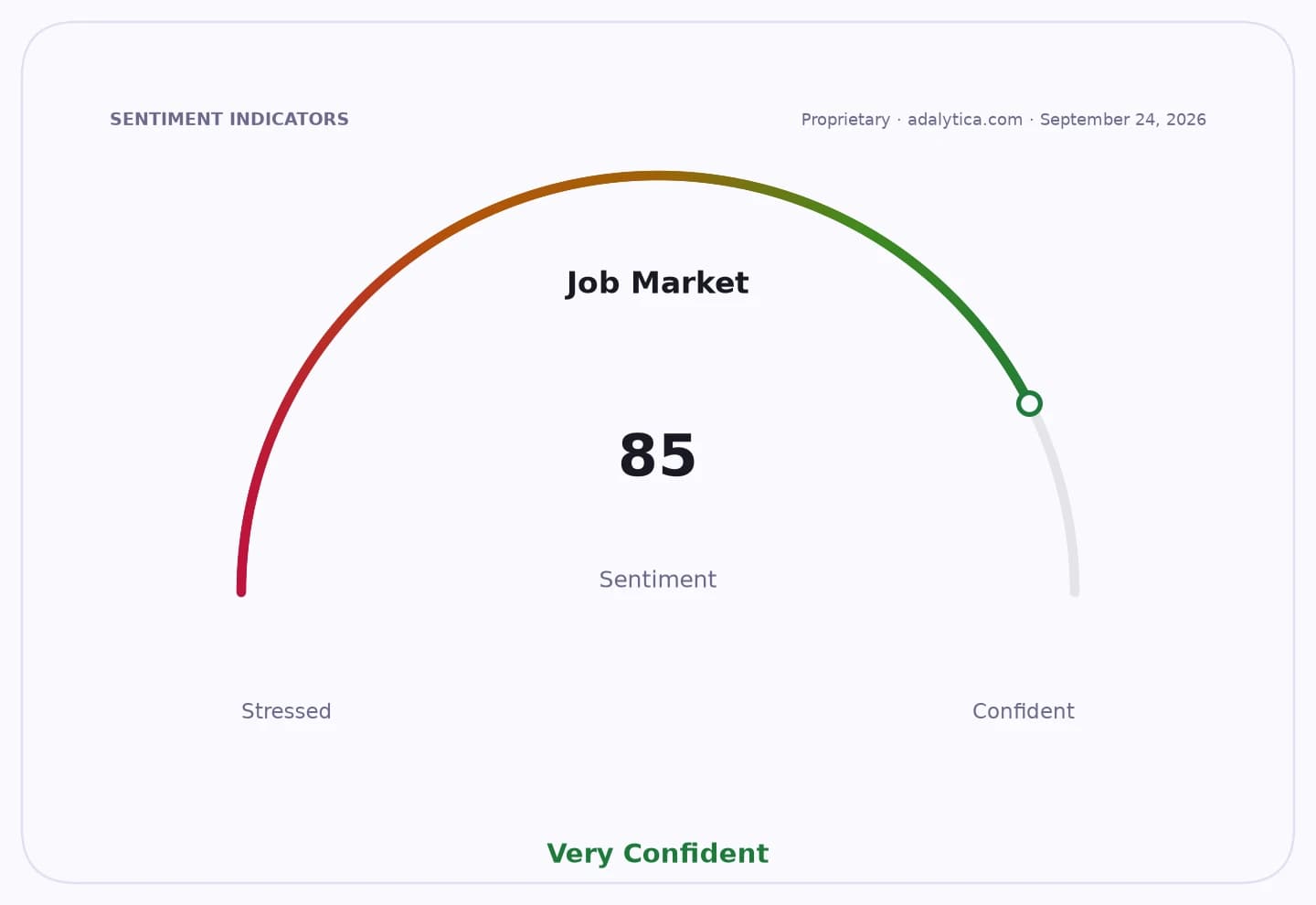
The broader macro context reinforces that tension. In the U.S., unemployment remains low by historical standards, at around 4.1%, and job openings still hover near 7.3 million, showing the labor market is not yet breaking. But the political economy of AI is changing faster than the aggregate data. Early signs of job creation may keep headline unemployment contained, yet the distributional effects — especially on young workers and routine office roles — could become the real market-moving story as companies push AI deeper into operations.
That is why investors should think beyond the headline fear. Public skepticism is often highest before adoption becomes durable, not after. If AI continues to prove it can raise output while compressing labor costs, the market underestimates how quickly capex, regulation and workforce redesign will accelerate. The best way to play that shift is to own the infrastructure that makes AI possible, not the rhetoric around it.
| Entity | Gains | Losses |
|---|---|---|
| AI infrastructure providers | ▲Rising capex demand | ▼Margin pressure from scrutiny |
| Nvidia and chip suppliers | ▲More compute spending | ▼Valuation risk if sentiment cools |
| Microsoft and cloud platforms | ▲Enterprise AI adoption | ▼Backlash over job replacement |
| Workers and job seekers | ▲Potential productivity tools | ▼Routine roles and entry-level jobs |