Asian shares mostly gained as traders stepped back from a sharp AI-led pullback that had hammered chip heavyweights in Japan and South Korea, but the bigger message is that the market is still repricing the whole artificial intelligence trade.
AI Selloff Spurs Rotation Into Infrastructure
That matters because this was never just a one-day wobble in Nvidia, Taiwan Semiconductor or Samsung Electronics. It was a stress test for the capital flows, earnings assumptions and supply-chain leaders that have carried global equities for much of the past two years. When the market questions AI valuations, it does not stop at Silicon Valley; it hits the foundries, memory makers, equipment suppliers and exchange-traded funds that have become the backbone of Asia’s equity rally.
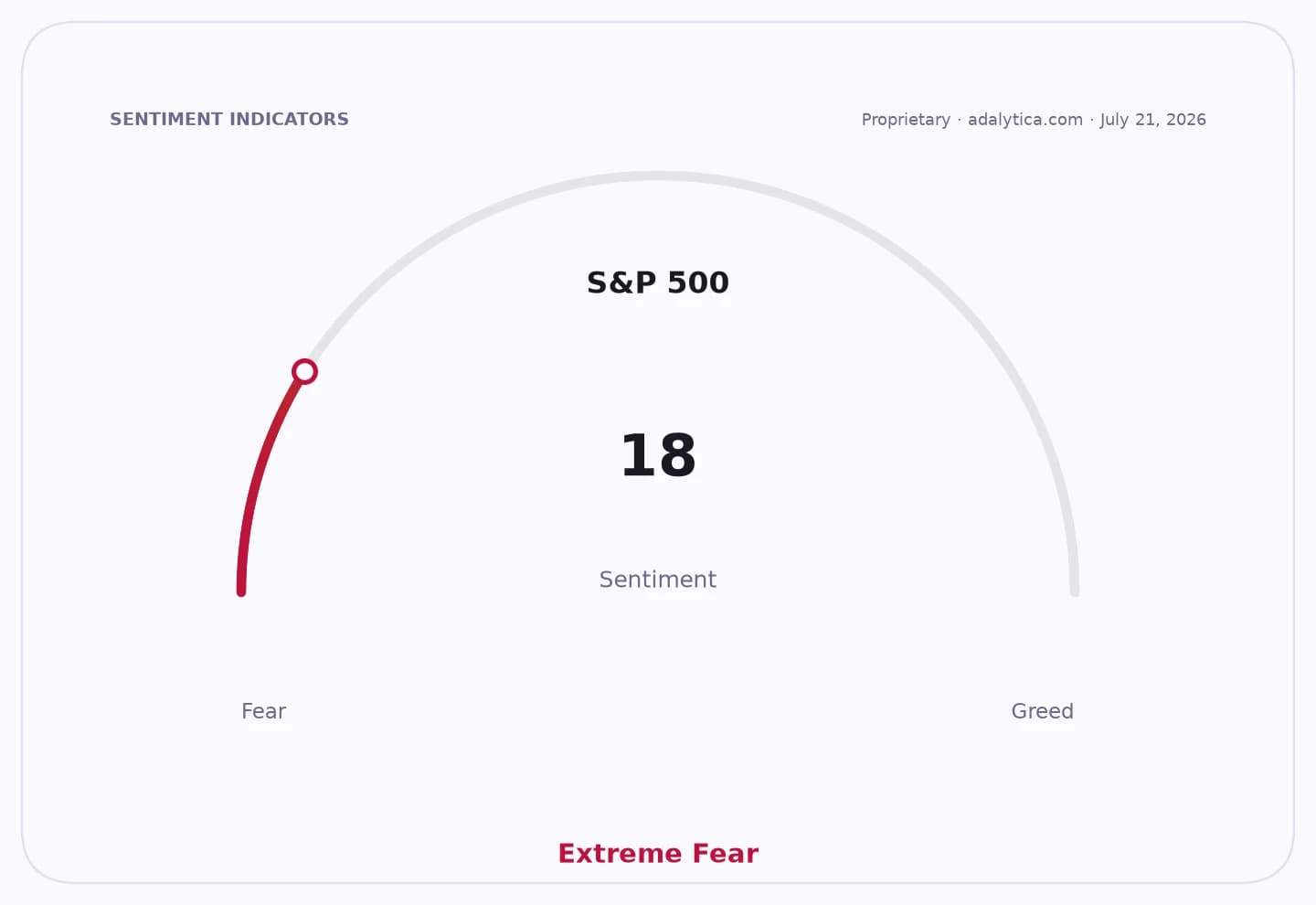
Sentiment IndicatorsⓘProprietary · adalytica.com · July 21, 2026
This is a snapshot — live sentiment, awareness and momentum for 130+ markets update continuously in the dashboard.Open AlphaPulse
The rebound in regional benchmarks suggests investors are not abandoning the theme so much as cutting risk after a crowded run. Nvidia’s recent trading shows why that caution is justified: the stock has swung from an overbought reading, with its RSI above 80 in early November, to a more neutral posture around the high 50s, while the price has slipped back toward its 50-day moving average. Taiwan Semiconductor has also pulled away from its highs, and Samsung Electronics is still far below its 50-day average after a steep slide, underscoring how quickly momentum can unwind when the AI trade gets questioned.
For investors, that creates a clear divide. The first-order losers are the mega-cap AI bellwethers and the late-cycle momentum buyers who chased them into the selloff. The second-order winners are the patients: capital-light beneficiaries that sell the picks and shovels of the AI buildout, from advanced packaging and foundry capacity to power, cooling and networking. Asia remains the global factory floor for that infrastructure, and any pullback in the leading names is more likely to rotate capital than destroy the structural demand story.
The macro backdrop makes the move more interesting. Adalytica’s S&P 500 trade signals show fear has jumped sharply over the past week, while the dollar remains mixed, a sign that this is still a risk-off phase rather than a clean exit from equities. That combination usually favors quality balance sheets, dominant market share and hard infrastructure over speculative growth. In other words, the market underestimates how durable the AI capex cycle can be even when valuation multiples compress.
That is why I believe this dip is less a verdict on AI and more a buying opportunity in the infrastructure layer. Nvidia, TSMC and Samsung remain central to the next phase of compute expansion, but the better risk-reward may sit one rung lower in the stack: semiconductor tooling, advanced memory, packaging, server power systems and network gear. When enthusiasm cools, the market tends to punish the obvious winners first and overlook the toll roads that collect fees on every dollar of capex.
The next catalyst is simple: earnings and capex guidance. If hyperscalers keep spending, the AI trade resumes. If they slow, the leadership will narrow, but the buildout does not stop. Either way, Asia’s chip complex remains one of the most important battlegrounds in global markets, and investors who buy the infrastructure, not just the headline names, are still early.
| Entity | Gains | Losses |
|---|---|---|
| Asian equities | ▲Broad relief rally | ▼Recent sellers |
| Nvidia / TSMC / Samsung | ▲Stabilization after selloff | ▼Momentum longs |
| AI infrastructure suppliers | ▲Continued capex demand | ▼Valuation compressed peers |
| Risk-off traders | ▲Lower entry points | ▼Crowded AI bulls |