AI is doing a disproportionate amount of the work in both the US economy and the stock market, and that concentration is what makes JPMorgan Asset & Wealth Management strategy chair Michael Cembalest’s warning matter for investors.
AI Spending Drives US Growth, Stocks, and Risk

The bank’s latest charts frame the American expansion as unusually dependent on artificial intelligence investment, with AI-linked spending supporting growth, corporate capital expenditure and equity returns at the same time. That leaves markets exposed if the AI buildout slows, disappoints on profits or runs into financing and capacity bottlenecks.
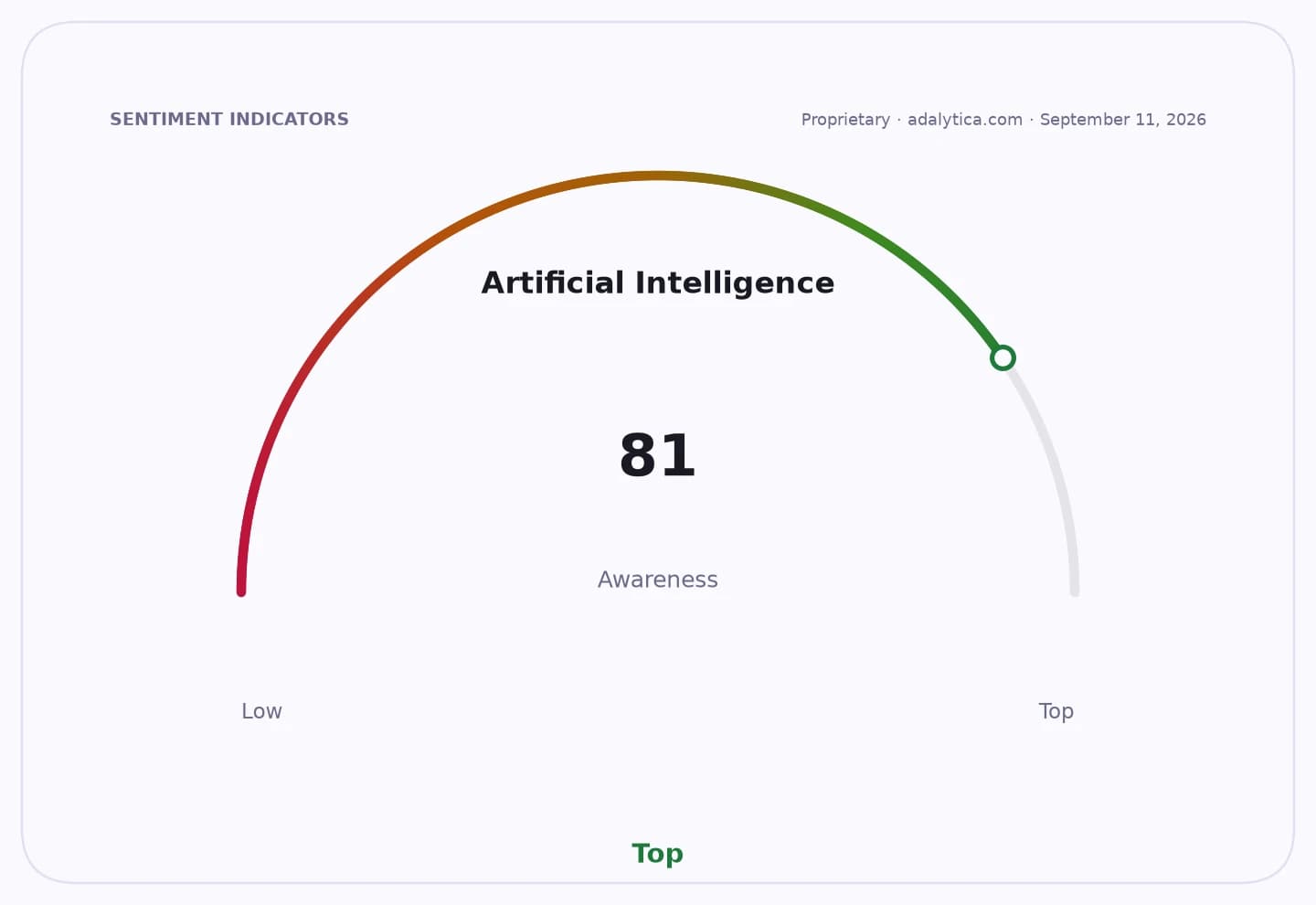
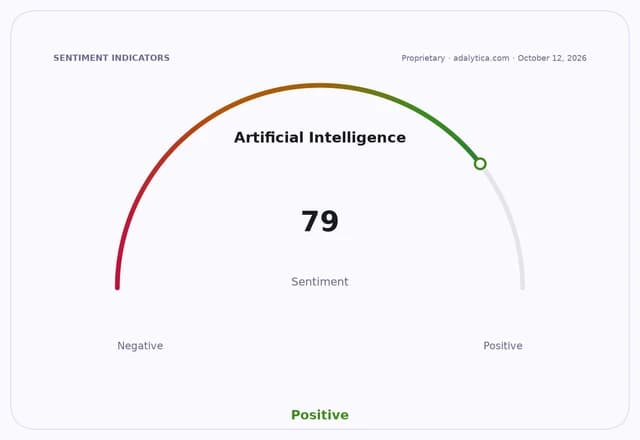
Sentiment IndicatorsⓘProprietary · adalytica.com · October 12, 2026
This is a snapshot — live sentiment, awareness and momentum for 130+ markets update continuously in the dashboard.Open AlphaPulse
The economic backdrop underscores the point. JPMorgan’s data shows US GDP rising from 31,462.5 billion in the fourth quarter of 2025 to 32,563.0 billion in the second quarter of 2026, with the bank forecasting 32,925.9 billion for the third quarter. Industrial production has also edged higher, reaching 103.07 in August from 102.84 in June, but the gains remain modest relative to the scale of the AI capex boom.
The market’s dependence is even clearer in the megacap technology names that dominate the indexes. Nvidia shares have swung sharply but ended the latest session at $229.28, above both the 50-day moving average of $221.94 and the 200-day moving average of $201.83, while Microsoft closed at $535.07, also comfortably above its 50-day and 200-day averages. The S&P 500 ETF SPY finished at $778.57, near its upper Bollinger Band, reflecting a market still priced for continued AI leadership.
Artificial Intelligence — 30-day sentimentadalytica.com
Explore this data interactively — full history, time series and cross-market comparisons.Open AlphaPulse

That concentration is the risk Cembalest is flagging. If AI infrastructure spending keeps driving only a small group of stocks and industries, any slowdown could ripple through earnings expectations, capital markets and broader growth. JPMorgan’s own filings note that demand for cloud and AI products is difficult to forecast and that overbuilding could leave infrastructure underused.
The investor implication is straightforward: the market is still trading as if AI can justify the spending and the growth narrative at the same time. If that breaks, the trade gets crowded fast, and the current winners — chipmakers, cloud platforms and benchmark index holders — become the most exposed.
| Entity | Gains | Losses |
|---|---|---|
| Nvidia | ▲AI infrastructure demand | ▼If capex cools |
| Microsoft | ▲Cloud and AI monetization | ▼Overbuild and demand risk |
| S&P 500/SPY holders | ▲Index gains from AI leaders | ▼Concentration risk |
| Broad economy | ▲Near-term growth lift | ▼Reliance on one growth engine |