AI is becoming a routine study tool for teenagers even as many users say they do not fully trust what it tells them, underscoring a growing gap between adoption and accuracy that matters for education, productivity and the companies building the software.
AI survey shows teens use chatbots, trust lags

That tension is the real economic story behind a new Internetstiftelsen survey cited by Swedish broadcaster SVT: nine in 10 people now use AI services, and teenagers make up the majority of users. The commentary from students in Luleå — including one who said a wrong answer was only caught after checking a textbook — captures the central problem for investors and institutions alike: AI is already embedded in everyday workflows, but verification remains costly, time-consuming and often incomplete.
Sentiment IndicatorsⓘProprietary · adalytica.com · October 22, 2026
This is a snapshot — live sentiment, awareness and momentum for 130+ markets update continuously in the dashboard.Open AlphaPulse

For schools, the issue is not simply that students are using AI, but that they may be outsourcing the first draft of learning to systems that can sound authoritative while being wrong. That raises the stakes for academic integrity, curriculum design and digital literacy, especially as younger users become the most intensive audience. If a generation grows comfortable with chatbots as a default source, the demand for human checking shifts from occasional safeguard to a permanent overhead.
For technology investors, the story cuts both ways. On one hand, broad usage is exactly what AI vendors want: the survey suggests the consumer adoption curve is no longer speculative. On the other, persistent source criticism points to a ceiling on monetization if users remain unwilling to treat AI outputs as reliable enough for high-stakes tasks without human review. That limits the software’s immediate replacement value in areas such as education, legal work and research, even as it boosts engagement in low-risk use cases.
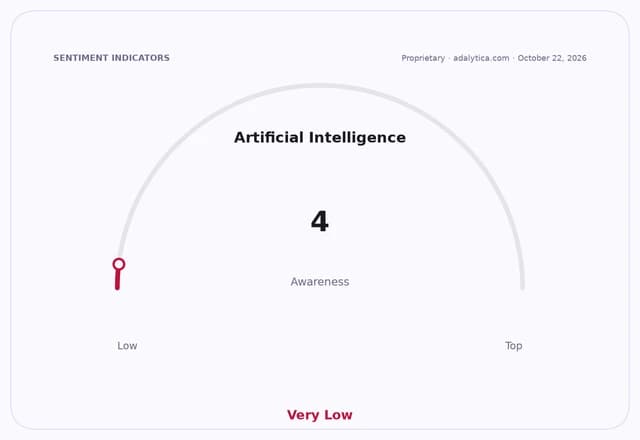
The broader market implication is that AI’s valuation case still rests more on scale than on proven precision. Microsoft, Nvidia and the wider AI complex continue to attract strong investor interest, but the commercial payoff depends on whether companies can convert experimentation into trusted, repeatable productivity gains. Technical readings on Microsoft and Nvidia show both stocks have pulled back from recent highs, even as market sentiment around AI remains elevated, suggesting investors are still trying to reconcile enthusiasm with the practical limits of the technology.
That leaves a familiar split in the AI trade. Bulls can point to near-universal adoption and rising dependence among younger users as evidence that AI has become a utility. Bears will argue that if users “can’t bear to check if it’s right,” as the seed headline puts it, then the category still lacks the reliability needed to justify full substitution for human judgment.
The next catalyst will be whether AI developers can reduce hallucinations, improve sourcing and make verification built into the product rather than a user burden. Until then, the market may keep rewarding AI’s reach even as its credibility remains unfinished.
| Entity | Gains | Losses |
|---|---|---|
| AI platform makers | ▲More users, higher engagement | ▼Trust premium at risk |
| Students and consumers | ▲Faster first drafts, convenience | ▼Accuracy, source confidence |
| Schools and educators | ▲New focus on digital literacy | ▼More verification burden |
| Microsoft/Nvidia AI trade | ▲Adoption supports revenue case | ▼Reliability doubts cap upside |