Cyprus’ minimum wage has fallen behind inflation, losing 2.8% of its buying power between July 2025 and July 2026, as a new European Commission report says the country’s tax and social policies are failing to protect low-paid workers from rising costs.
Cyprus Minimum Wage Lags Inflation, EU Says

That erosion matters because it means a pay floor that is supposed to shield the lowest earners is no longer keeping pace with the cost of basics, even as the government debates wider pension reform and labor protections. For households living close to the margin, the gap between nominal wage gains and real prices translates directly into weaker consumption and less financial resilience.
Sentiment IndicatorsⓘProprietary · adalytica.com · October 23, 2026
This is a snapshot — live sentiment, awareness and momentum for 130+ markets update continuously in the dashboard.Open AlphaPulse
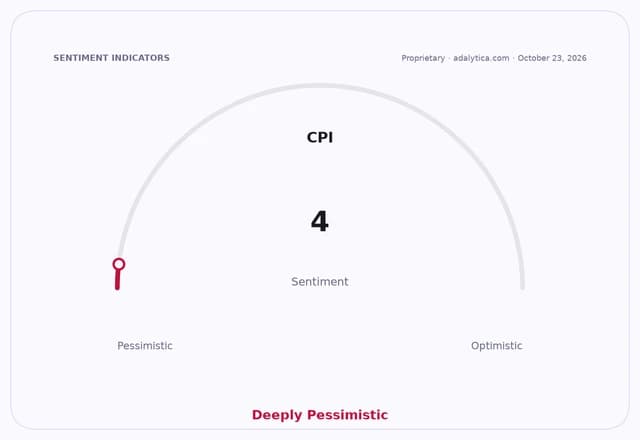
The Commission’s annual employment and social developments review also says Cyprus recorded the biggest negative impact among EU countries from tax and social policy changes on workers’ risk of poverty over 2019-2024. It blames the damage largely on the long absence of indexation for social benefits and tax parameters, allowing inflation to steadily erode support, while added compulsory healthcare contributions were not matched by tax relief or stronger benefits for low earners.
The minimum wage in Cyprus amounted to about 53% of median gross pay in 2025, below the EU’s indicative 60% reference level. Cyprus and Slovenia were the only EU members where the real value of the minimum wage declined in the year through July 2026, while Croatia, Lithuania and the Czech Republic posted real gains of 9.9%, 8.6% and 6.9% respectively.
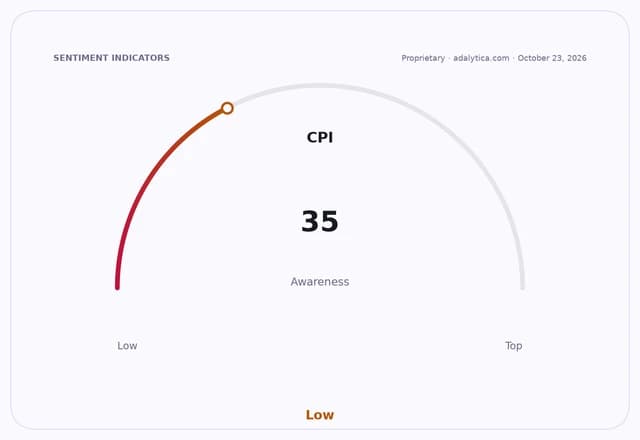
Investors and employers should also note the labor-market angle: only one in four workers in Cyprus is covered by collective agreements, far below the 80% threshold in the EU minimum-wage directive that can trigger an action plan to boost bargaining coverage. Fourteen of the 18 member states below that threshold had already drawn up plans, and Cyprus had not completed the process at the time of the report.
The weak wage floor sits alongside broader labor-market fragility. In manufacturing, 25.5% of workers are low paid, more than double the EU average of 10.4%. In personal care, involuntary temporary work reaches 75.5%, while 27.9% of workers are on long hours, both far above EU norms.
The report also highlights gaps in the safety net for self-employed workers, who in Cyprus are not covered for unemployment regardless of contributions, and says more than 15 million self-employed people across the EU still lack access to unemployment benefits. While Cyprus has an employment rate of 81.3% for people aged 20-64, above the EU average and already ahead of its 2030 target, the Commission says support for the unemployed remains thin, with participation in active labor measures below 10% in 2023.
For investors, the message is that headline employment strength is masking weak wage quality and fragile social protections, conditions that can restrain household spending, deepen inequality and keep pressure on the government to deliver reforms. The next watchpoint is whether Cyprus responds with stronger indexation, higher bargaining coverage and a credible action plan on minimum wages before the pension and labor talks intensify further.
| Entity | Gains | Losses |
|---|---|---|
| Low-paid workers | ▲Nominal wage floor | ▼Real purchasing power |
| Government | ▲High employment headline | ▼Credibility on social policy |
| Employers with low margins | ▲Labor cost stability | ▼Risk of wage pressure |
| Consumers | ▲None | ▼Spending power and savings |