The fastest-growing niche in generative AI may be software designed to make AI writing look less like AI, underscoring how quickly content creation has become a cat-and-mouse game between producers and detection systems.
AI humanizer tools grow as detection arms race expands

More than 200 tools now sit in the “AI humanizer” category on Toolify, according to the platform’s September count, as developers race to sell products that rewrite ChatGPT, Claude or Gemini output into text that reads more naturally and, in some cases, tries to bypass AI detectors. Turnitin, which sells plagiarism and AI-detection software, says it has seen a sharp rise in such tools over the past two years and released an update in August 2025 to catch text altered by “AI Bypasser” software.
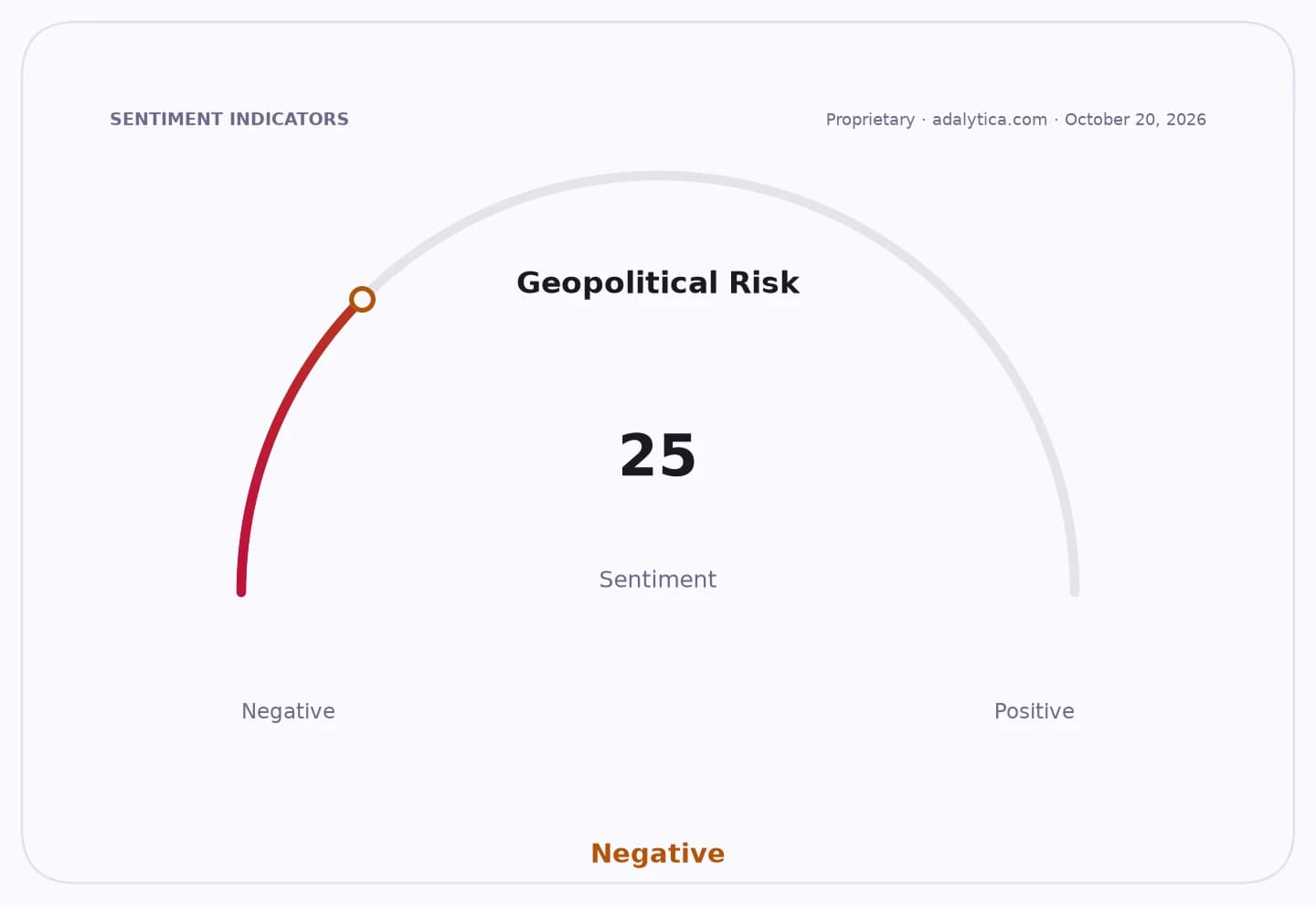
Sentiment IndicatorsⓘProprietary · adalytica.com · October 22, 2026
This is a snapshot — live sentiment, awareness and momentum for 130+ markets update continuously in the dashboard.Open AlphaPulse
That arms race matters economically because it exposes a real friction cost in the AI content market. Companies, students and publishers are all trying to extract productivity gains from large language models without triggering penalties for robotic writing, plagiarism or undisclosed AI use. The existence of a thriving humanizer market suggests the value of “acceptable” AI text is high enough to support subscription businesses, while the need to disguise machine output points to persistent trust gaps in education, marketing and regulated publishing.
The tools are mostly simple wrappers around the same large language models that power mainstream chatbots, but marketed with a different promise: more variation in sentence structure, less repetitive phrasing and, in some cases, deliberate imperfections. Some are free with tight usage caps; StealthWriter, for example, limits free users to 10 edits a day and 1,000 words per run before charging from $20 a month. That pricing shows the niche is not just experimental but commercial, even if the economics are thin and easily undercut by prompting ChatGPT or Claude directly to “sound more natural,” as some users already do.
For investors, the bigger takeaway is not that humanizer tools are a category unto themselves, but that generative AI is fragmenting into layers of demand: creation, editing, detection and compliance. That creates opportunity for SaaS vendors serving education and content governance, but it also raises legal and reputational risk for platforms whose models are used to evade safeguards. Turnitin’s experience is a reminder that as AI output becomes easier to polish, detection software must keep investing just to maintain parity.
The broader market implication is that the next phase of AI monetization may depend less on raw generation and more on control of workflow quality, authenticity and auditability. In English-language markets, where most of these tools perform best, the niche is likely to keep expanding; in Vietnamese and other non-English languages, adoption may be slower because the tools are still limited. Either way, the battle over what counts as “human” writing is becoming part of the commercial architecture of AI.
| Entity | Gains | Losses |
|---|---|---|
| AI humanizer vendors | ▲Subscription revenue | ▼Commoditization risk |
| Turnitin and detectors | ▲Demand for upgrades | ▼Higher R&D burden |
| Students and marketers | ▲Easier polishing | ▼Detection/compliance risk |
| Mainstream LLM platforms | ▲More usage cases | ▼Trust and abuse concerns |