AI is rapidly turning foreign-language translation from a specialized profession into a cheaper software feature, and that shift is already pressuring incomes for younger workers entering the field. For investors, the bigger story is not just one lost career path but a broader labor-market reset: when language becomes machine-assisted, the economic value moves away from basic translation and toward people skills, cultural fluency and higher-value judgment.
AI translation squeezes freelance translators
That matters because translation used to be one of the clearer ways for young people to turn years of study into earnings at home and abroad. Now companies increasingly feed translators machine-generated drafts and pay them to post-edit the output instead of writing from scratch. That lowers the amount of human labor required per assignment and pushes down fees, especially for freelancers.
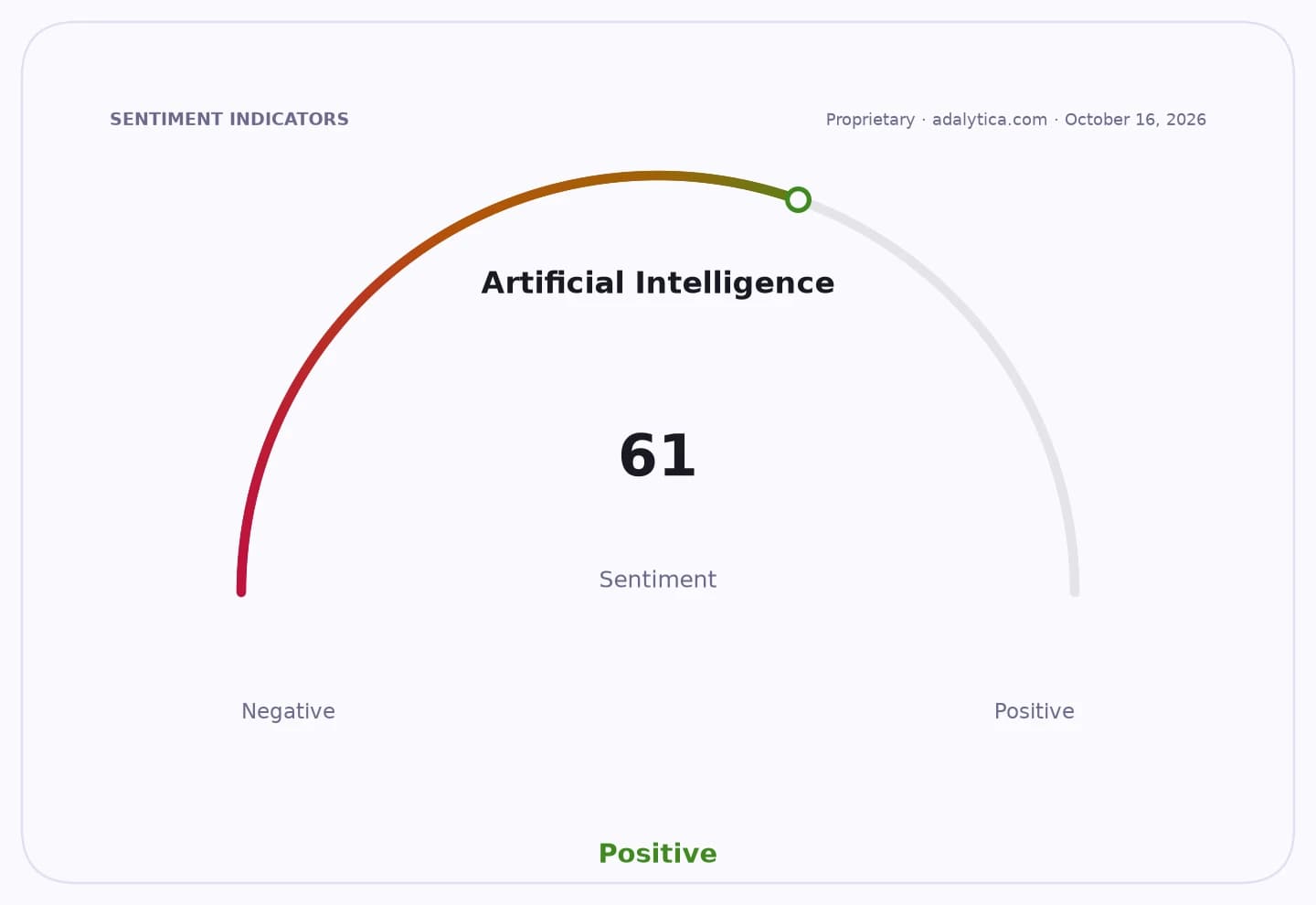
Sentiment IndicatorsⓘProprietary · adalytica.com · October 17, 2026
This is a snapshot — live sentiment, awareness and momentum for 130+ markets update continuously in the dashboard.Open AlphaPulse
The numbers in the data show how quickly confidence is breaking. In the European Language Industry Survey 2026, the share of freelance language professionals who believe they can sustain a long-term career fell to 41% from 64% in 2023. Seventeen percent are thinking about quitting freelance work altogether. In a separate survey by Mediterranean Editors and Translators, 62% of freelancers said their main income dropped over the past two years. In the UK, the Society of Authors found 36% of translators had lost work to generative AI and 43% reported lower income.
That is exactly the sort of disruption that tends to hit younger workers hardest. They are more likely to be starting out in routine, price-sensitive work, where clients care about speed and cost more than nuance. If AI can handle first drafts, then entry-level translation loses one of its biggest economic roles: serving as a stepping stone into a stable career. The risk is not just lower pay today, but a thinner pipeline of future professionals.
The market message is broader than translation. The data suggests that for every 1% increase in machine-translation use, job growth for translators and interpreters slows by about 0.7%. That is a reminder that AI adoption does not merely improve productivity; it can compress headcount growth in entire service categories. For investors, that matters across education, staffing, outsourcing, and software, because firms that automate language-heavy tasks can protect margins while workers absorb the income hit.
Still, this is not a simple story of human skills becoming obsolete. The best evidence in the context points to a split between translation as a technical task and language as a business capability. A manager at EssilorLuxottica studying Italian in Rome is a useful example: English and AI tools may be enough to finish the job, but they are not enough to build trust, read a room, or understand a local corporate culture. That distinction is where durable value remains.
That is why the long-term winners are likely to be workers and companies that move up the stack. Translators who reposition themselves as editors, cultural advisers, localization specialists or client-facing communicators should have more pricing power than those selling word-for-word conversion. Language schools and training providers that blend AI tutoring with real-world cultural immersion may also be better placed than programs built around memorization alone.
The investment takeaway is straightforward: AI translation is another sign that automation often starts by weakening the least differentiated workforces first. Young people in language-heavy careers are facing the first income squeeze, but the bigger shift is that the premium is moving from translation accuracy to context, persuasion and relationship-building. That is worth watching closely, because the same pattern is likely to spread into other white-collar fields.
| Entity | Gains | Losses |
|---|---|---|
| AI translation tools | ▲Faster adoption | ▼Human translation fees |
| Freelance translators | ▲Fewer routine tasks | ▼Lower income and career security |
| Young language workers | ▲New AI-assisted roles | ▼Entry-level career ladder |
| Employers using multilingual work | ▲Lower costs | ▼Need for human nuance |