Poland’s growing reliance on artificial intelligence for emotional support is a warning sign for companies, as a new survey suggests loneliness is already weighing on workplace satisfaction, collaboration and innovation.
Poland survey links AI use to loneliness
The finding that 43% of respondents believe people will eventually prefer speaking with an algorithm over another person points to a broader shift in how workers seek connection in an increasingly digital economy. That matters beyond sociology: if AI is beginning to substitute for human contact, firms may gain productivity tools but also inherit a more fragmented workforce, with weaker informal networks that often underpin creativity and execution.
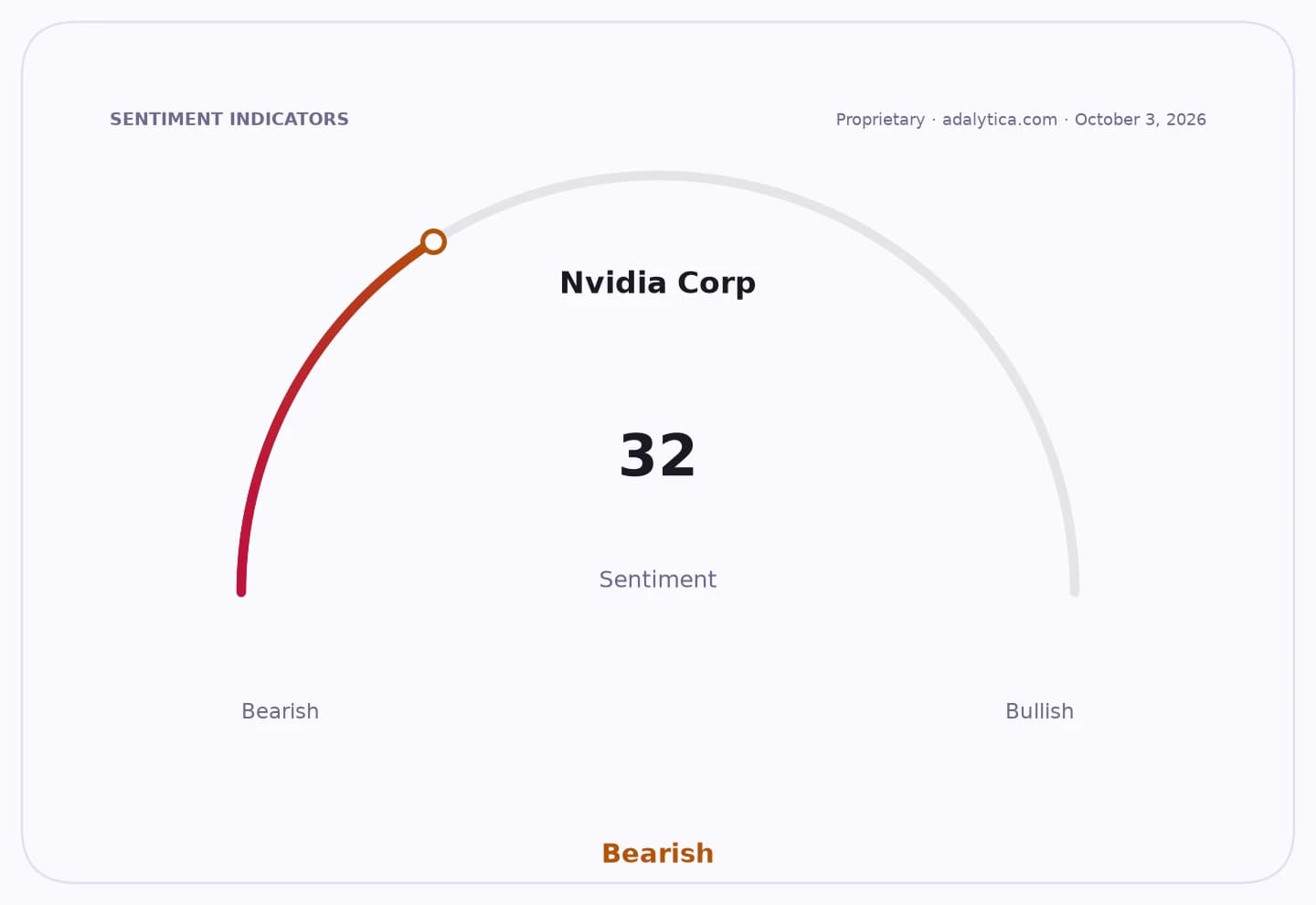
Sentiment IndicatorsⓘProprietary · adalytica.com · October 17, 2026
This is a snapshot — live sentiment, awareness and momentum for 130+ markets update continuously in the dashboard.Open AlphaPulse
The study, titled “Between loneliness and innovation. Human and the economy in the world of AI,” found that contact with AI has already been had by 86% of respondents, while nearly half use AI tools regularly and one in five talks to AI at least once a week. At the same time, more than half of single-person households say they lack closeness, and more than 70% do not hug anyone even once a week.
Those social indicators are linked directly to work outcomes. Only 48% of people living alone say they are satisfied with their jobs, versus 63% in two-person households. Two-thirds of respondents say loneliness hurts cooperation and 57% say it damages economic innovation. For employers, that is a material issue: collaborative problem-solving, knowledge sharing and trust are hard to automate, even as AI accelerates routine tasks.
The concern is not limited to Poland. The study notes that international research firms such as Gartner have already listed loneliness among the key economic risks for 2025, reinforcing the idea that social isolation is moving from a personal issue to a business one. Remote work, while efficient, can reduce the everyday interactions that sustain team cohesion and spur new ideas.
For investors, the message is twofold. AI adoption remains a powerful structural growth theme, but the winners may increasingly be those that deploy the technology without eroding human productivity and employee retention. That could favor software and services firms positioned around workflow automation, collaboration and workplace wellness, while businesses that rely heavily on creative teamwork may face a longer-term drag if isolation deepens.
The shift also raises a governance question for large employers: how much of the efficiency dividend from AI will be offset by weaker human capital? As companies expand digital tools and trim in-person interaction, the next battleground may be not just model performance or cost savings, but whether organizations can preserve the relational fabric that supports innovation.
| Entity | Gains | Losses |
|---|---|---|
| AI platforms | ▲Higher usage | ▼Human interaction share |
| Employers investing in AI | ▲Productivity gains | ▼Team cohesion |
| Lonely workers | ▲Easy access to support | ▼In-person connection |
| Innovation-heavy firms | ▲Faster workflows | ▼Collaboration quality |