Crude oil’s surge back toward $110 a barrel is the immediate catalyst for a fresh round of petrol and diesel inflation risks in Nigeria, where imported fuel pricing and transport costs are tightly linked to global energy markets.
Nigeria Fuel Prices Rise as Brent Nears $110

Brent rose to $109.90 a barrel while West Texas Intermediate climbed to $101.40, a move driven by escalating geopolitical tensions and attacks on energy infrastructure that have revived fears of supply disruption. That matters for Nigeria because the country’s pump prices do not move in isolation: they reflect crude feedstock costs, foreign exchange, freight, financing, regulatory charges and the price of replacing fuel in the open market.
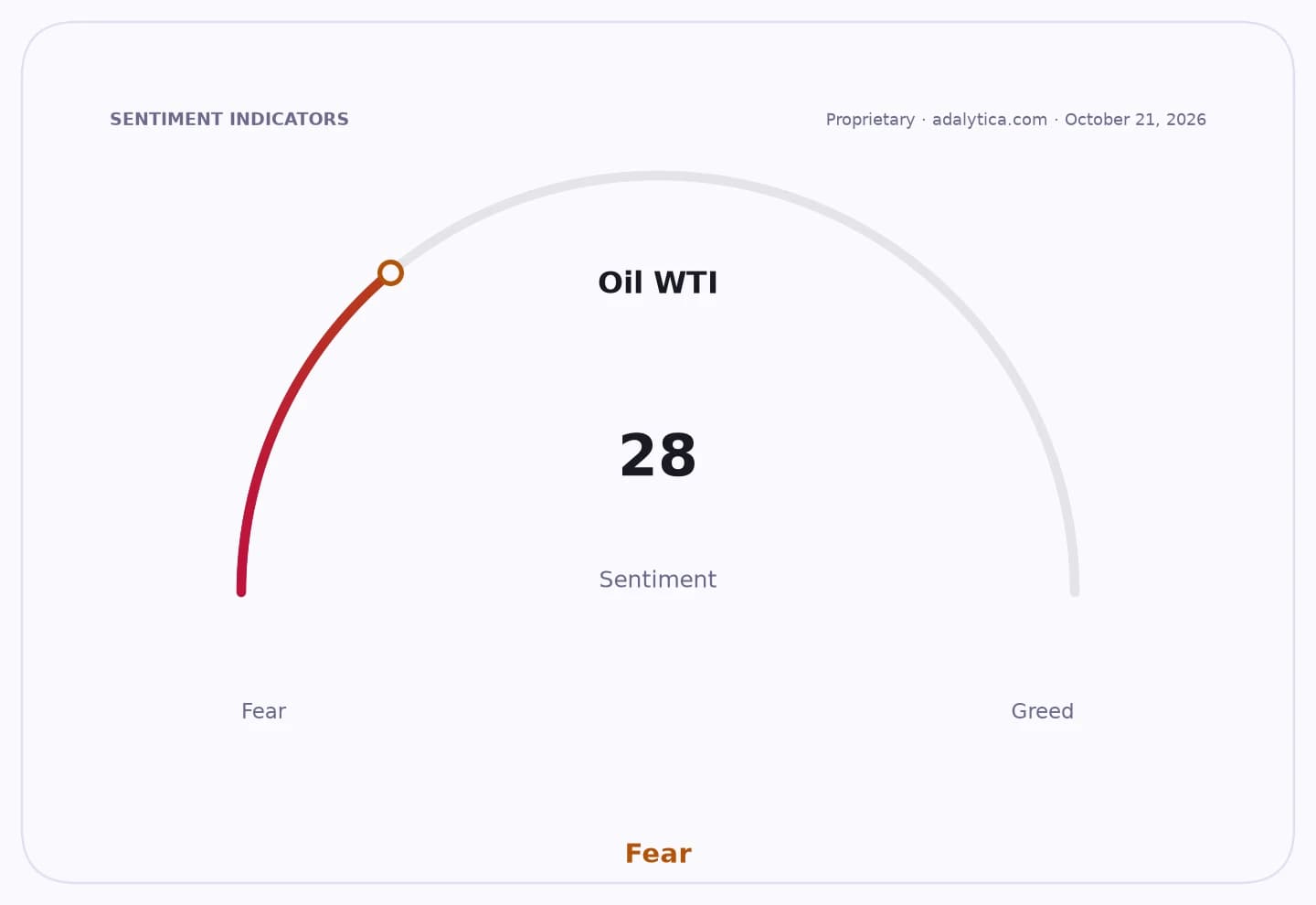
Sentiment IndicatorsⓘProprietary · adalytica.com · October 23, 2026
This is a snapshot — live sentiment, awareness and momentum for 130+ markets update continuously in the dashboard.Open AlphaPulse
The economic transmission is straightforward and painful. Higher crude raises the cost of refining, importing and distributing petroleum products, while diesel — a major input for road haulage, generators and depot operations — makes the entire supply chain more expensive. That can feed quickly into food inflation, industrial costs and household budgets in an economy that still relies heavily on self-generation for power and on road transport for goods movement.
Industry voices are already warning that the pain will not stop at the pump. The Crude Oil Refiners Association of Nigeria said higher crude can improve government oil earnings and foreign exchange receipts, but it does not insulate local refiners from global feedstock prices. The group argued that the naira-for-crude arrangement only changes the currency of payment, not the underlying price of oil, and called for commercially sustainable supply terms that cut logistics and financing costs.
DCOILWTICO vs CPIAUCSL — macro contextadalytica.com
Explore this data interactively — full history, time series and cross-market comparisons.Open AlphaPulse
The Major Energies Marketers Association of Nigeria made the same point from the downstream side: higher diesel prices raise the cost of moving fuel from depots to filling stations, tightening margins and lifting retail prices. Its call for more efficient distribution, transparent pricing and more predictable bulk supply arrangements underscores the central investor reality here — Nigeria’s fuel market remains exposed to external shocks even after reforms designed to reduce distortions.
For investors, the setup is a classic inflation and margin trade. Upstream producers benefit from firmer crude, but consumers, transport firms and fuel-intensive businesses take the hit. The beneficiaries also include companies tied to alternatives such as compressed natural gas, solar and electric mobility, which become more competitive when petrol and diesel rise. Meanwhile, refiners with secure crude access and efficient logistics gain strategic value, because supply reliability matters more when global prices spike.
The broader market implication is that this is not just a Nigeria story. With crude already near a five-month high and technical momentum still supportive, energy inflation is reasserting itself as a macro theme. If geopolitical risk persists, Nigeria’s effort to stabilize domestic fuel pricing will depend less on policy rhetoric than on supply discipline, FX stability and how quickly consumers shift toward cheaper energy substitutes. For now, the market should position for higher downstream costs, stronger upstream revenues and renewed demand for alternative-energy plays.
| Entity | Gains | Losses |
|---|---|---|
| Oil producers | ▲Higher realized prices | ▼None near term |
| Nigerian government | ▲Stronger oil revenue, FX inflow | ▼Higher subsidy/political pressure |
| Fuel marketers and consumers | ▲— | ▼Higher pump and transport costs |
| CNG, solar and EV providers | ▲Faster adoption demand | ▼Petrol/diesel incumbents |