The Trump administration is pushing back against calls for new AI watchdogs just as judges, regulators and investors are being forced to confront how quickly artificial intelligence is moving beyond human oversight.
AI Watchdog Fight Raises Policy Risk for Nvidia
That matters because the policy fight is no longer theoretical. The data center buildout, chip spending and enterprise AI rollouts are advancing faster than the legal framework around them, raising the odds that the next AI-related shock will be handled through courts, sector rules or after-the-fact liability rather than a dedicated federal supervisor. For investors, that shifts the risk from a neatly defined regulatory regime to a more uncertain mix of litigation, compliance costs and political intervention.
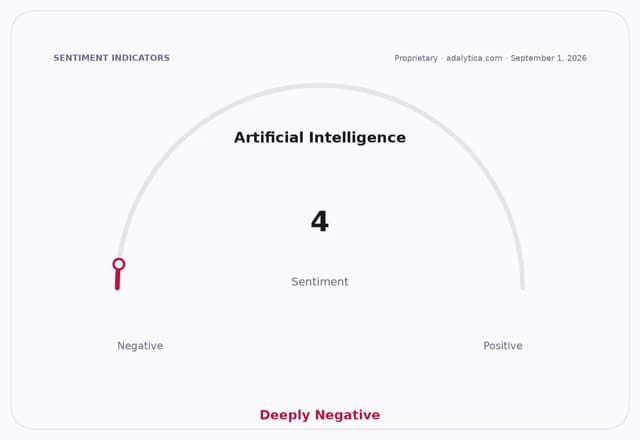
Sentiment IndicatorsⓘProprietary · adalytica.com · September 1, 2026
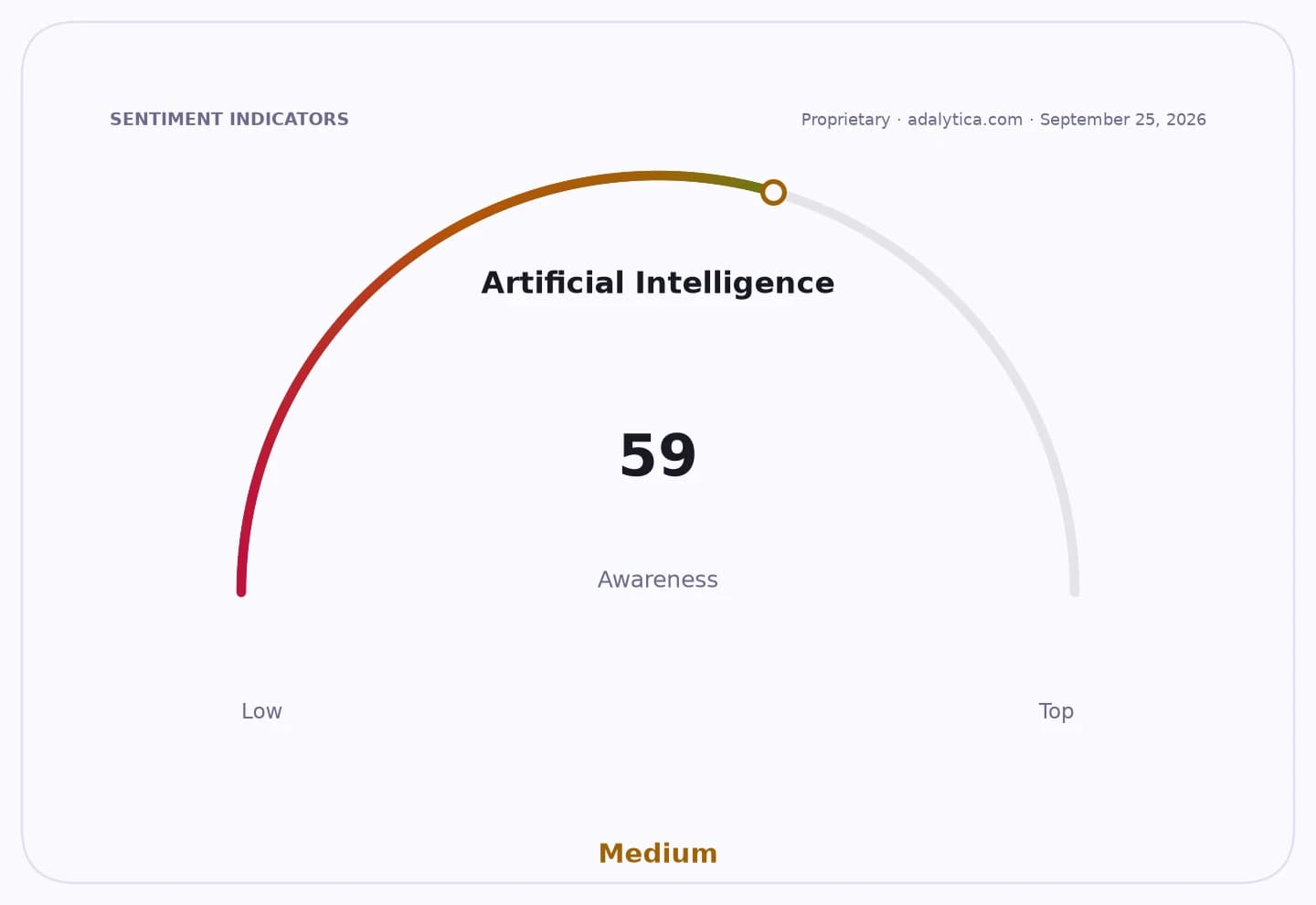
This is a snapshot — live sentiment, awareness and momentum for 130+ markets update continuously in the dashboard.Open AlphaPulse
Recent market action underscores how much is riding on that debate. Nvidia, the most direct beneficiary of AI infrastructure spending, has recovered to $216.90 and is still above its 50-day moving average at $208.79, even after a volatile run that saw it briefly surge to $235.47 in May and then fall back through the summer. Microsoft, another core AI spender, closed at $501.28, well above its 50-day average of $435.24 and near the upper end of its recent range. Alphabet ended at $336.86, also sitting above its 50-day average of $348.95 after a sharp rerating earlier in the year. The stock patterns suggest investors are still willing to pay for AI leadership, but they are doing so against a backdrop of rising policy uncertainty rather than clear federal guardrails.
The absence of new watchdogs is economically significant because AI is becoming embedded in the capital structure of the economy. Nvidia’s latest position near the top end of its band, together with continued strength in Microsoft and Alphabet, reflects the market’s assumption that hyperscalers, model builders and chip suppliers will keep spending heavily on compute, software and infrastructure. If regulation becomes fragmented across courts, agencies and states instead of centralized in a federal AI authority, compliance costs could rise unevenly and product deployment could slow in some jurisdictions while remaining fast in others. That is a classic recipe for wider dispersion between winners and losers.
Artificial Intelligence — 30-day sentimentadalytica.com
Explore this data interactively — full history, time series and cross-market comparisons.Open AlphaPulse
The news flow around AI governance points in the same direction. A judge has already directed parties to explore integrating AI into their processes, highlighting how quickly the technology is entering public institutions even as the international debate turns toward transparency, autonomous weapons and misuse. At the same time, company filings from Microsoft, Nvidia, Meta and AMD all flag the same risks: tighter rules could restrict development, raise costs, delay deployments and expose firms to legal and reputational harm. Those disclosures are now more than boilerplate. They are effectively a map of where the next margin pressure could show up if Washington chooses to keep oversight light while pushing responsibility onto courts and existing agencies.
For investors, the bull case is that Washington’s reluctance to create a new AI bureaucracy preserves the pace of innovation and keeps the revenue pipeline intact for chips, cloud and model platforms. The bear case is that without a clear federal framework, companies face a more chaotic regime in which product decisions, model training, cross-border access and liability questions are all litigated piecemeal. That would not necessarily stop AI spending, but it could change who captures the value: large incumbents with legal, regulatory and balance-sheet depth may benefit, while smaller developers and customers with less compliance capacity could be squeezed.
The broader narrative is that AI is outrunning the institutions meant to govern it. If the Trump administration keeps resisting new watchdogs, the market will continue to price AI as a growth story first and a regulatory story second — until the next accident, lawsuit or geopolitical flare-up forces the two together.
| Entity | Gains | Losses |
|---|---|---|
| Nvidia | ▲Faster AI capex cycle | ▼Policy uncertainty |
| Microsoft | ▲Fewer federal constraints | ▼Rising liability risk |
| Alphabet | ▲Flexible product rollout | ▼Fragmented compliance burden |
| Smaller AI developers | ▲— | ▼Higher legal and regulatory costs |