All In FutureTech Alliance is trying to turn itself from a speculative AI story into a more tangible application company, and that shift matters because the market is increasingly rewarding firms that can point to real product usage, distribution, and recurring venues for monetization rather than vague promises about models and chips.
AIFA Pivots to AI Education and Creator Tools
At its first annual conference in Las Vegas, AIFA said it will stay out of semiconductor development and foundational model building and instead focus on AI applications built on proprietary data, audience reach and user trust. That is the right strategic message for a company of its size: in AI, the economics increasingly belong to the layer that controls distribution and workflow, not just the layer that trains the model. If AIFA can secure a niche in education and creator tools, it can potentially build a defensible services business without the capital intensity and brutal competition of frontier AI.
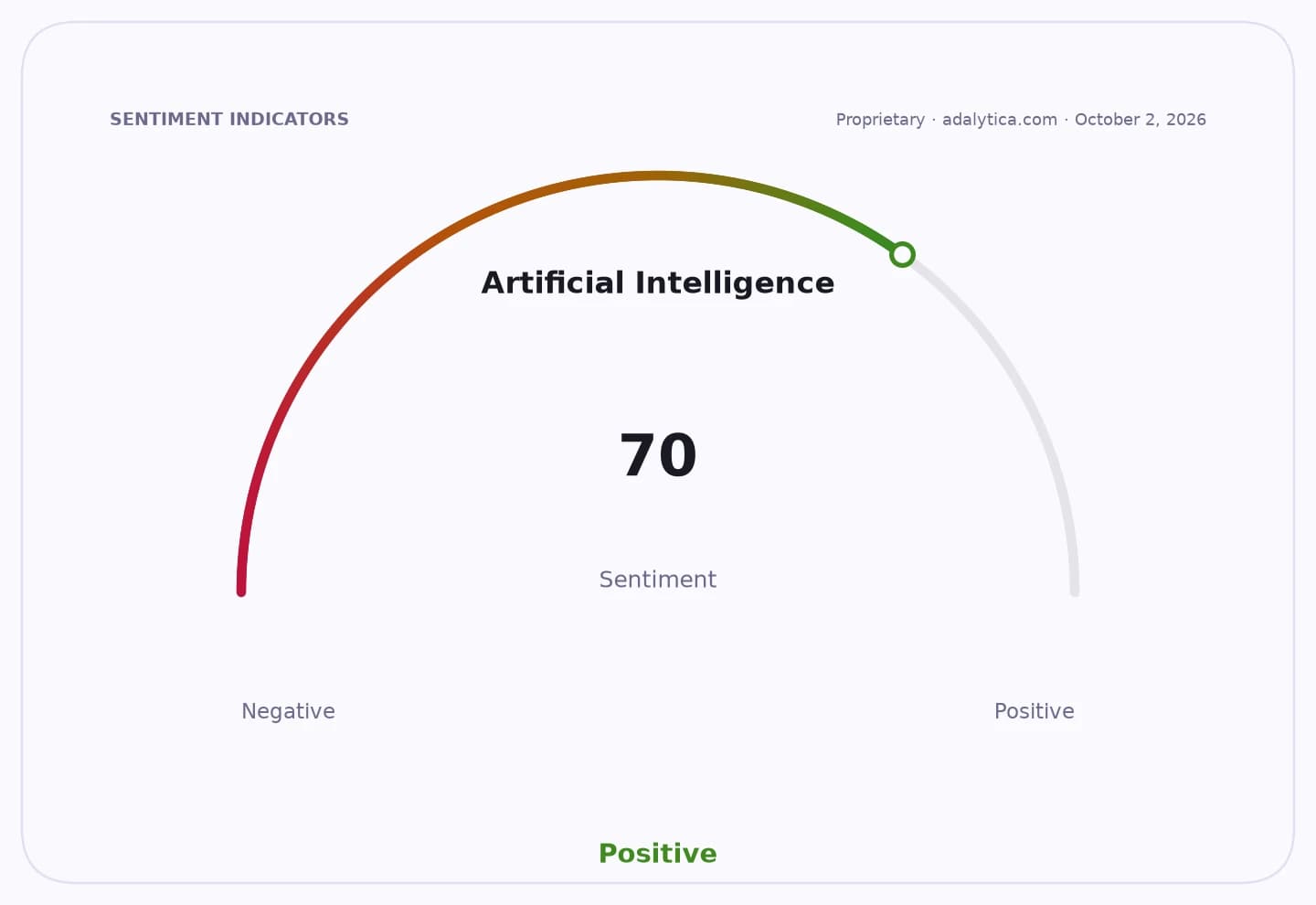
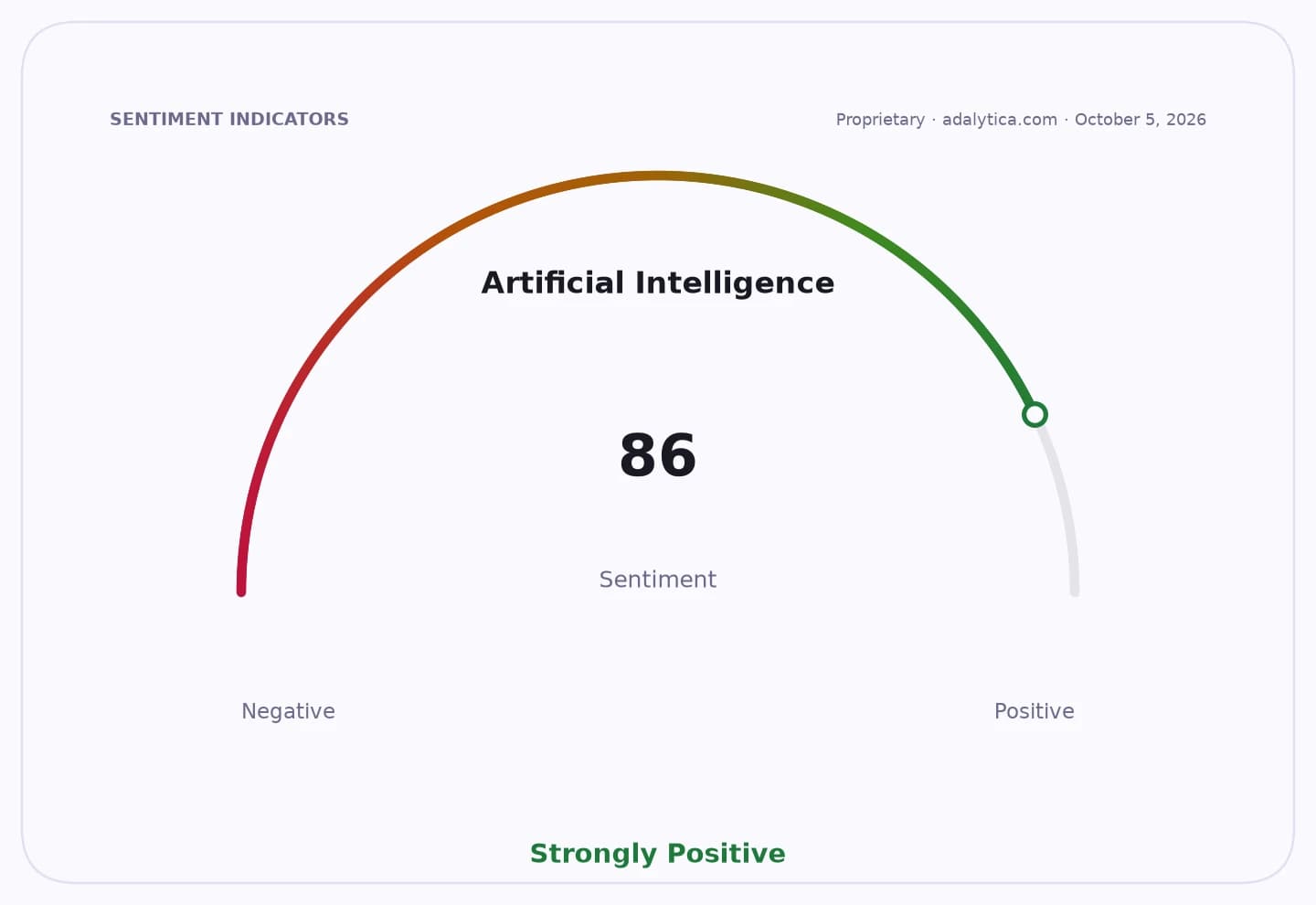
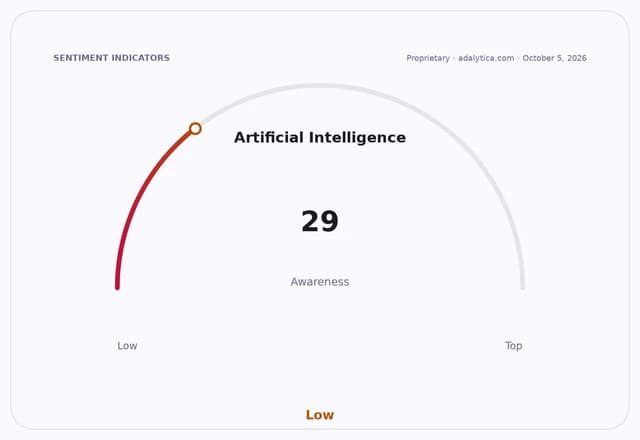
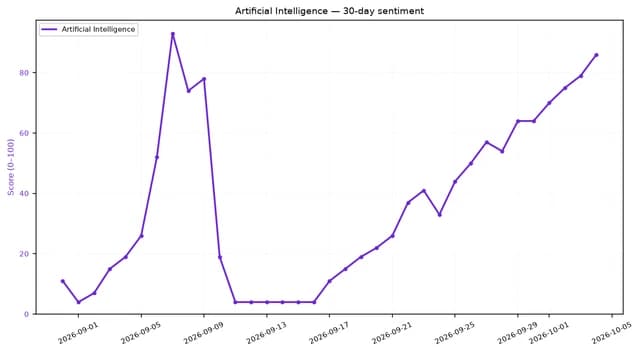
Sentiment IndicatorsⓘProprietary · adalytica.com · October 5, 2026
This is a snapshot — live sentiment, awareness and momentum for 130+ markets update continuously in the dashboard.Open AlphaPulse
The company’s emphasis on education is the most important near-term tell. AIFA said education is its primary focus and the first real-world scenario for its AI efforts, with Teach OS being developed as an AI operating system for educators, training providers and small education businesses. Two modules — customer acquisition and course creation — are already live, while four more are still under development. That matters because it gives investors something more concrete than strategy: a product roadmap, a use case and an eventual commercialization path. In a market crowded with “AI-enabled” labels, execution is what separates a tradable narrative from a durable business.
AIFA also said CreateAgent, its content-generation tool, is already being used internally and has started to reach external creators as well as real estate and insurance brokerage teams. That broadens the addressable market beyond education and supports the idea that the company is trying to build a portfolio of workflow products rather than a single feature. The economics here are attractive if adoption takes hold: software-like gross margins, low incremental delivery costs and cross-sell potential across education, content and professional services. The market underestimates how valuable a small but sticky AI workflow tool can become when it sits inside a larger distribution ecosystem.
The company’s plan to publish a white paper on an AI education certification standard next month is another piece of the same thesis. Standards can look minor at first, but they often become distribution tools. If AIFA can help define how AI is taught, used and delivered in education, it is not just selling software — it is trying to shape the category around its own platform. That kind of positioning can matter for institutional adoption, partnerships and eventually compliance-driven demand.
The Las Vegas venue is the other lever investors should watch. AIFA wants to turn it into a year-round showcase and market-entry platform for consumer electronics and technology brands looking to enter the U.S., with initial collaboration involving the China Electronics Chamber of Commerce and BayPort Digital Hub. It also plans to host visitors and delegations during CES 2027. That creates a physical commercialization channel that could give the company an edge in cross-border tech promotion, especially if it can convert demonstrations into business introductions and service relationships. For a small-cap company, real-world venue traffic can be a more credible monetization engine than broad AI branding.
The stock market appears to already be pricing in some of that optionality. AIFA has rallied sharply in recent sessions, closing at $4.47 on Oct. 2 after a series of gains, and the move has left the shares well above both the 50-day and 200-day moving averages. RSI readings around the mid-70s suggest the stock is technically extended, which is a reminder that momentum can outrun fundamentals in the short run. But momentum alone is not the story. The deeper story is that investors are hunting for AI exposure outside the obvious megacap names, and AIFA is offering a lower-liquidity, higher-beta way to express that view.
That is where the opportunity — and the risk — lies. AIFA is not trying to compete with Nvidia or the large foundational model builders. It is trying to assemble a narrower but potentially more monetizable stack: education, creator tools, events, cross-border distribution and service applications. If management can keep turning “in progress” into “live,” the company could become a small but differentiated beneficiary of the AI infrastructure boom without bearing the full cost of the arms race.
| Entity | Gains | Losses |
|---|---|---|
| AIFA | ▲product credibility | ▼hype-only valuation |
| Education users | ▲workflow automation | ▼manual operating costs |
| AI incumbents | ▲market validation | ▼easy narrative dominance |
| Short sellers | ▲volatility | ▼momentum squeeze |