Albania’s core inflation fell for a third straight month in September, strengthening the case that price pressures are easing even as the central bank grows more likely to raise interest rates again to defend the economy from imported inflation.
Albania Core Inflation Falls as Rate Hike Looms
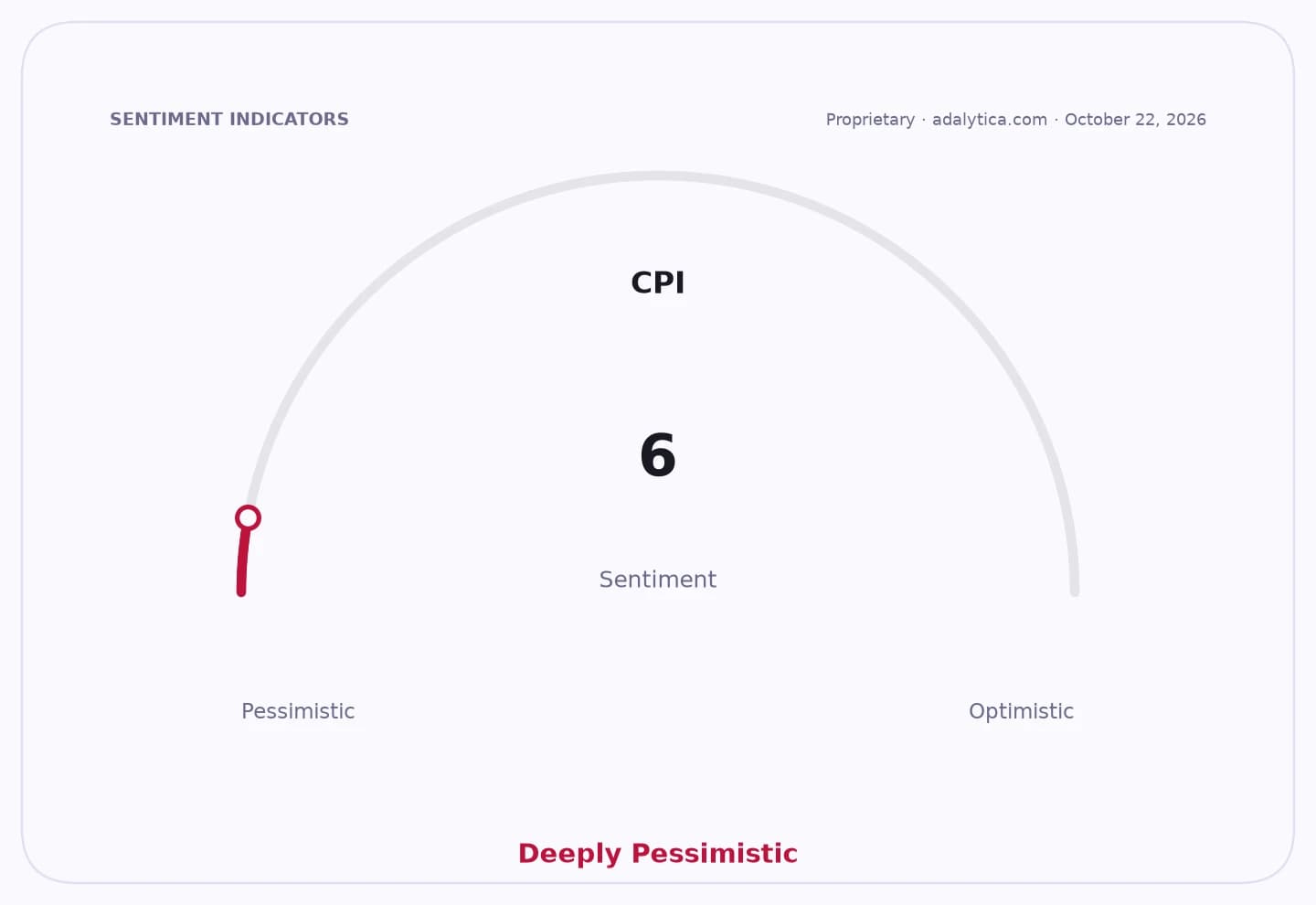
CPI
The Bank of Albania said annual core inflation dropped to 2.37% from 2.78% in the previous month and below the 3.07% recorded a year earlier. For the first time in years, core inflation has also stayed below headline inflation for three consecutive months, with overall consumer prices at 2.9% in September.
Sentiment Indicators
That matters because core inflation strips out volatile food and energy costs and gives policymakers a cleaner read on underlying demand. A softer core print usually argues for policy patience, but in Albania’s case the message is more complicated: the disinflation is being helped by base effects in rents, while fuel costs are still a live risk after months of elevated energy prices tied to geopolitical tensions.
The Bank of Albania said the slowdown in the rents sub-category was the main driver of the decline. Inflation in that component eased to 3.3% from 6.6% a year earlier, suggesting the recent surge is rolling out of the comparison base rather than reflecting a fresh collapse in demand. Net core inflation, which excludes even more food-related items, also fell sharply to 2.23% from 2.85% in August.
For investors, the key question is whether this is the beginning of a durable disinflation trend or just a temporary lull before energy and exchange-rate pressures feed through again. The lek has helped cushion imported inflation, but the central bank is signaling that policy may still need to tighten. That is a classic setup for higher local funding costs, a firmer currency, and potentially slower credit growth if inflation proves sticky.
The market underestimates how quickly a small open economy can swing from benign inflation to renewed policy tightening when energy prices stay elevated. If fuel costs continue to pass through to transport and production, the Bank of Albania could be forced to choose between supporting growth and anchoring expectations. That is why the latest data is bullish for bond vigilantes and bearish for borrowers who were hoping the easing in core prices would lock in lower rates.
For now, Albania’s inflation path looks contained, but not settled. If energy remains high and the lek loses some of its support, the next move from policymakers could be a rate hike rather than a pause — and investors should position for that possibility now.
| Entity | Gains | Losses |
|---|---|---|
| Bank of Albania | ▲Credibility on inflation | ▼Room for easier policy |
| Lek | ▲Support from tighter policy | ▼Risk from imported inflation |
| Borrowers | ▲Lower core inflation environment | ▼Higher rates and funding costs |
| Bond investors | ▲Tighter policy anchor | ▼Inflation surprise risk |