Albania’s drive to adopt the euro is more than a currency choice — it is a bid to lock in stability, cut transaction costs and pull the economy closer to the European core, a shift that could matter for banks, exporters, tourists and anyone pricing assets in the Balkans.
Albania Euro Ambitions Could Reprice Local Assets

For investors, the significance is clear: euroization would reduce foreign-exchange risk in a small, open economy that still leans heavily on remittances, tourism and trade with the euro zone. That can lower borrowing costs over time, support credit demand and make Albania more investable for long-duration capital that has largely treated the country as a frontier-market outlier.
Sentiment IndicatorsⓘProprietary · adalytica.com · July 16, 2026
This is a snapshot — live sentiment, awareness and momentum for 130+ markets update continuously in the dashboard.Open AlphaPulse
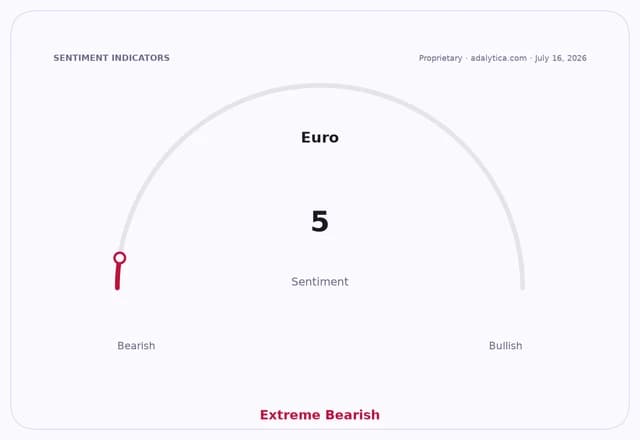
The market is already telling part of the story. The euro has been trading near 1.14 against the dollar, well below its recent highs, while conventional technical indicators show the currency has lost momentum after a brief summer rebound. The 50-day moving average for EUR/USD sits around 1.15 and the 200-day near 1.16, with RSI readings in the low 60s on the latest print — a sign the single currency has recovered from oversold levels but is not yet in a decisive trend. That matters because Albania’s euro ambitions are being framed in an environment where the bloc’s currency is stable, not euphoric, making the policy case about structural integration rather than short-term FX gains.
The deeper economic logic is about credibility. A move toward the euro would effectively import the European Central Bank’s monetary discipline, which can be attractive for economies with a history of volatile inflation expectations and limited policy bandwidth. Albania would be giving up currency flexibility, but in exchange it could gain a lower-risk funding profile and a more predictable price environment for households and businesses.
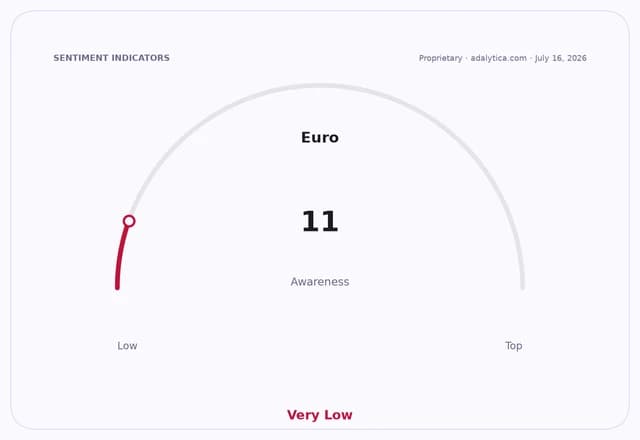
That is where the investable opportunity begins. The biggest winners would likely be domestic banks, lenders to import-heavy businesses and companies exposed to cross-border payments, because a euro-denominated system would reduce hedging friction and make balance sheets easier to manage. Tourism operators, developers and retail chains that rely on euro-linked spending could also benefit from lower currency mismatch. The losers would be businesses and borrowers that have profited from a weaker lek, as well as speculators betting on repeated local-currency swings.
The policy backdrop is also supportive. Adalytica’s ECB policy sentiment gauge shows extreme greed around the European Central Bank, suggesting markets expect the euro area to remain a source of stability even as growth remains patchy. By contrast, Adalytica’s euro trade sentiment sits in extreme fear, which is often the kind of positioning that creates upside if the macro narrative turns more constructive. In plain terms, the market is not crowded into the euro trade, even as a new euro-adjacent story is building on Europe’s periphery.
That combination makes Albania worth watching as a small-country macro trade with outsized strategic implications. If the country keeps advancing toward the euro, the biggest payoff may not come from the currency itself but from the re-rating of Albanian assets that can suddenly be priced as part of Europe’s monetary architecture rather than as a frontier-market bet.
For investors, the thesis is straightforward: look for the second-order beneficiaries of euro adoption — local banks, infrastructure, consumer and tourism names with euro revenues — and treat any weakness in Balkan frontier assets as a chance to position early in a longer integration story.
| Entity | Gains | Losses |
|---|---|---|
| Albanian banks | ▲Lower FX risk | ▼Currency hedging revenue |
| Euro-linked exporters/tourism firms | ▲Easier pricing and payments | ▼Weak-lek advantage |
| Households and borrowers | ▲More stable purchasing power | ▼Monetary flexibility |
| Lek speculators | ▲— | ▼Reduced currency volatility |