Albania’s inflation has climbed back above the central bank’s 3% target, with October consumer prices rising 3.4% from a year earlier as food and transport costs once again took the biggest bite out of household budgets.
Albania inflation rises above 3% target in October
That matters because the move is not just a statistical uptick. It points to a renewed squeeze on real incomes in an economy where basic spending categories dominate family budgets and where imported price pressures, especially from energy and fuel, are still feeding through to shops and transport operators.
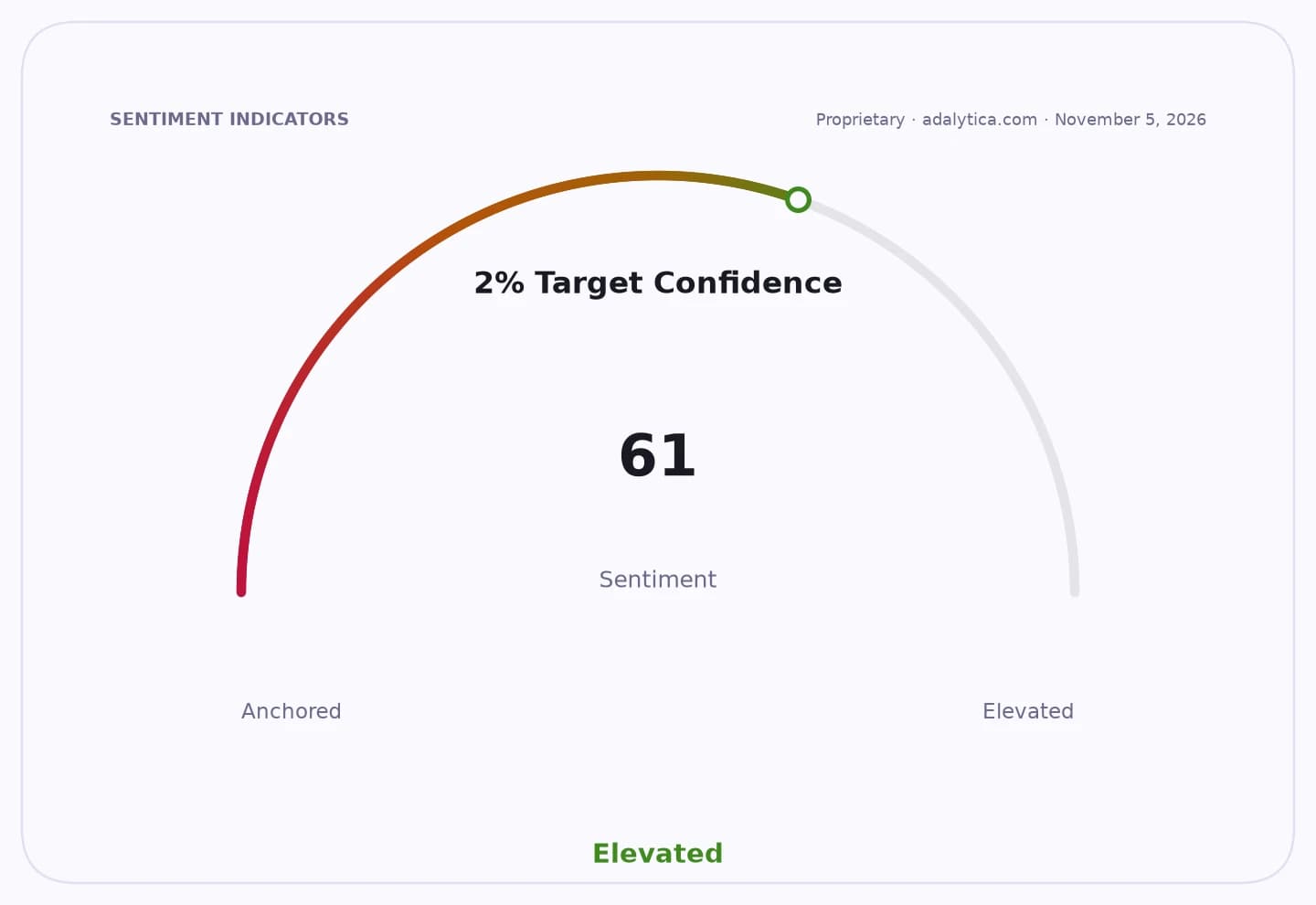
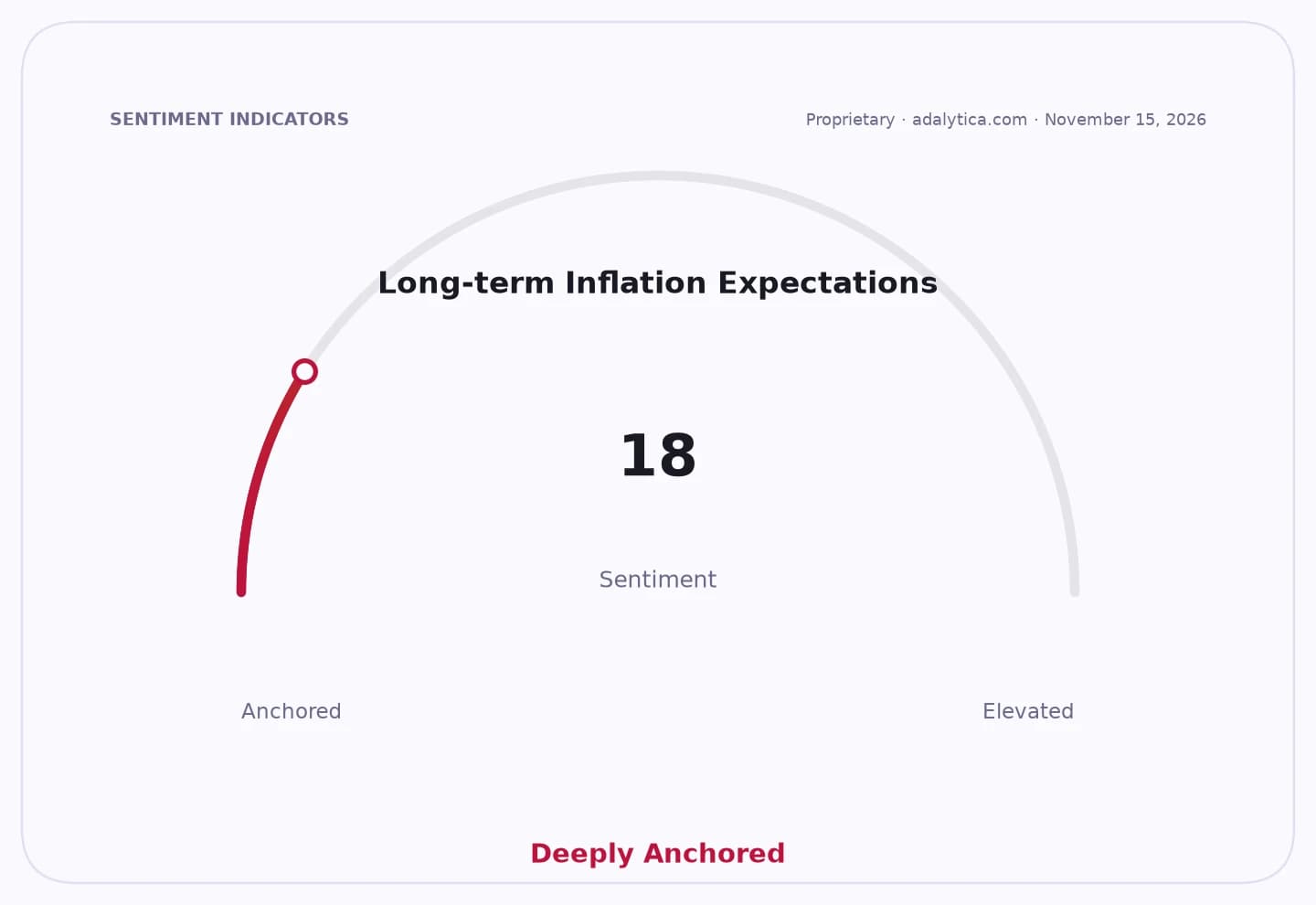
Sentiment Indicators
INSTAT said food and non-alcoholic drinks rose 4% on the year and 1.2% in the month, making them the biggest driver of inflation. Transport costs jumped 11.4% year on year, while housing-related expenses, including rent, water, electricity, gas and other fuels, increased 2.8%. Together, those three groups accounted for about 78% of October’s annual inflation rate, underscoring how concentrated the price pressure remains.
For consumers, the mix is especially painful because food carries a 34.1% weight in INSTAT’s basket. Food alone contributed 1.36 percentage points to headline inflation, transport added 0.73 points and housing-related items 0.56 points. In other words, the inflation shock is coming from the categories households can least avoid, not from discretionary spending.
The figures also sharpen the policy problem for the Bank of Albania. On Nov. 3, the central bank left its benchmark rate unchanged at 2.5%, saying it expected inflation to move temporarily above target before gradually converging back toward it by 2028. Governor Gent Sejko has already pointed to higher international oil and energy prices as a source of imported inflation, partially offset by the stronger lek but not eliminated.
October’s data make that stance harder to dismiss. The central bank does not react to one month alone, but a second look above target after inflation had eased to 2.9% in September raises the odds that policymakers will stay cautious. If price pressures persist, the bank may eventually have to tighten again, lifting borrowing costs for households and businesses and making variable-rate loans more expensive to service.
The broader backdrop is not helping. Eurozone inflation also accelerated to 4% in October in preliminary data, with energy prices up 20.8% year on year, reinforcing the risk that higher import and transport costs will continue to filter into smaller economies such as Albania. That external channel matters because Albania remains exposed to imported goods and fuel, even if a stronger currency blunts part of the pass-through.
For investors and lenders, the immediate implication is that Albania’s disinflation story has become less reliable. Higher inflation can support nominal revenue growth and budget collections, but it also erodes purchasing power, complicates consumer demand and raises the risk that monetary policy stays tighter for longer than markets had hoped. If the current mix of food and fuel inflation persists, the central bank’s room to keep rates unchanged will narrow.
The key question now is whether October was a temporary rebound or the start of a more persistent inflation floor. A sustained rise in food and transport costs would leave Albanian households with less disposable income, force businesses to absorb or pass through higher input costs, and keep policymakers focused on imported inflation rather than domestic demand.
| Entity | Gains | Losses |
|---|---|---|
| Central bank hawks | ▲Tighter policy case | ▼Rate cuts |
| Savers | ▲Higher real-rate support | ▼Purchasing power erosion |
| Borrowers | ▲Stable rates for now | ▼Higher debt-service risk |
| Households | ▲None | ▼Food and transport budgets |