Albania’s central bank says inflation is likely to stay above its target in the coming quarters as higher fuel and food prices feed through the economy, even as it keeps the benchmark interest rate unchanged at 2.5%.
Albania Keeps Rate at 2.5% as Inflation Stays High
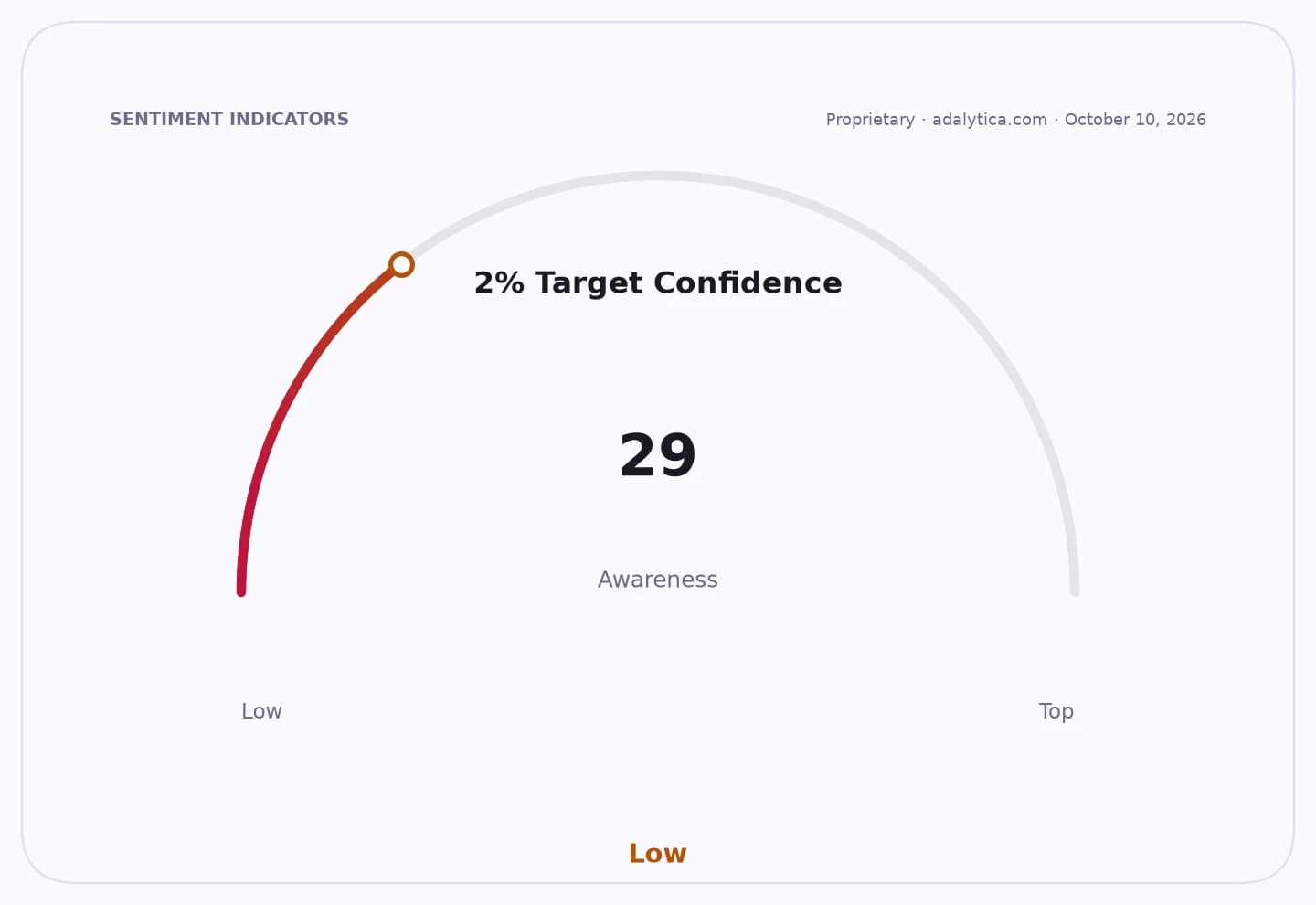
2% Target Confidence
The warning matters because it points to a longer stretch of above-target price pressure just as households are already feeling the strain from more expensive transport and staples. Governor Gent Sejko said inflation rose to 3.2% in the third quarter from 3% in the second, and the Bank of Albania now expects prices to remain slightly above target in the short term before returning closer to it over the medium horizon, with convergence seen around 2028.
Sentiment Indicators
The message from policymakers is one of resilience, but also of persistence. The central bank said the economy grew 3.6% in the first half, broadly matching last year’s pace, supported by consumption, investment and exports, particularly tourism and electricity output. That suggests demand has not weakened enough to offset imported price pressures from global markets, especially energy and some unprocessed foods.
For investors and borrowers, the key point is that the policy stance is not shifting yet. By holding rates at 2.5%, the central bank is signaling that current inflation is still manageable and does not require an immediate tightening response. But if fuel costs remain volatile and food inflation stays sticky, expectations for future easing would fade, keeping financing conditions tighter for longer.
The bank also noted that uncertainty around the outlook has increased, which is a cautionary signal for inflation-sensitive sectors such as retail, transport and consumer lending. A prolonged period above target could erode real incomes, weigh on private consumption and complicate fiscal planning, even if growth remains near potential.
In the near term, the balance of risks still tilts toward imported inflation rather than domestic overheating. That leaves Albania’s monetary authorities watching external energy markets, food supply disruptions and tourism demand, all of which will shape whether inflation settles back faster or stays elevated into next year.
| Entity | Gains | Losses |
|---|---|---|
| Albanian households | ▲Smoother growth outlook | ▼Higher fuel and food bills |
| Bank of Albania | ▲Policy flexibility | ▼Inflation credibility if pressures persist |
| Fuel retailers and importers | ▲Higher nominal sales | ▼Margin pressure if volatility stays high |
| Borrowers and consumer sectors | ▲Stable policy rate | ▼Weaker real purchasing power |