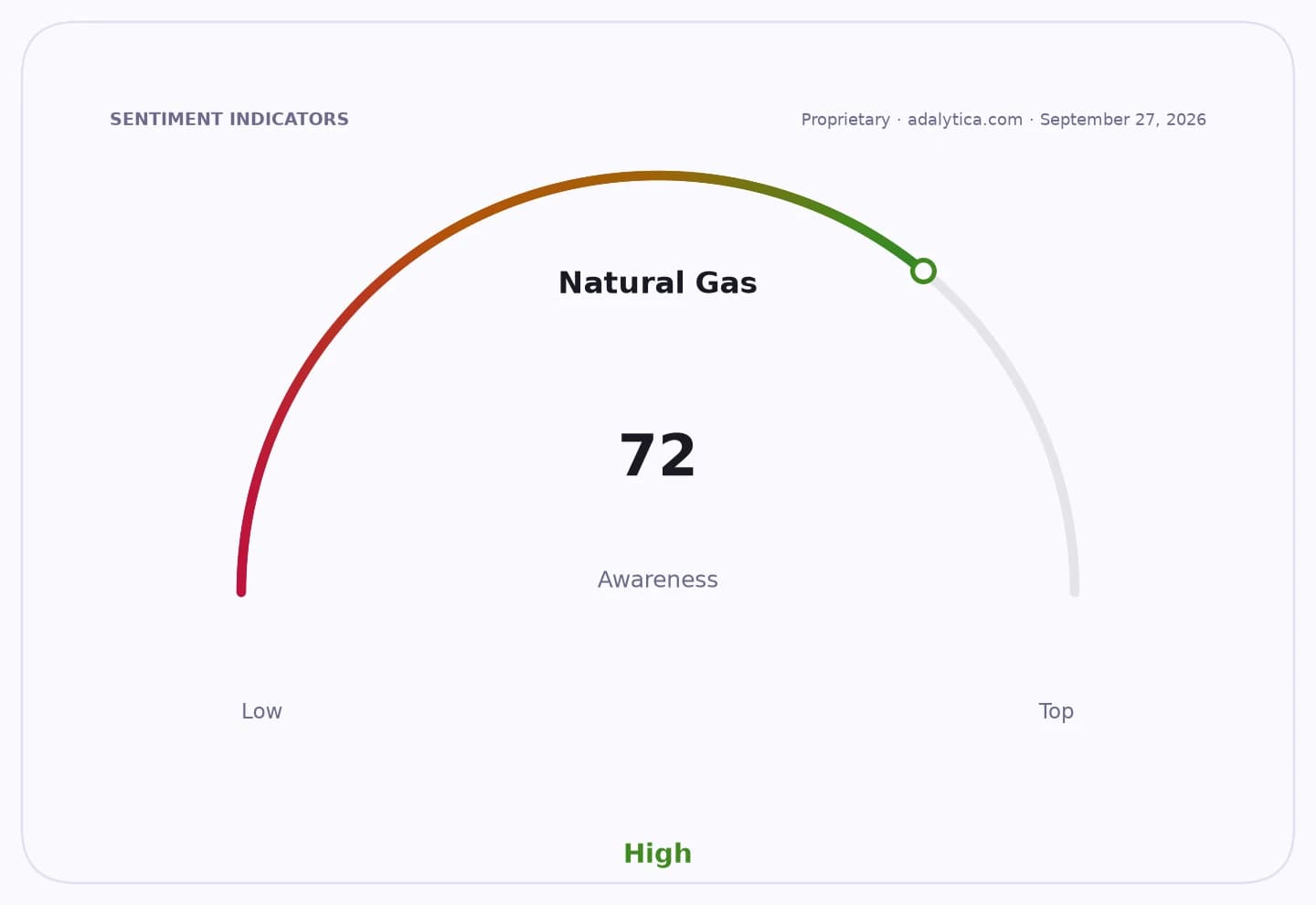
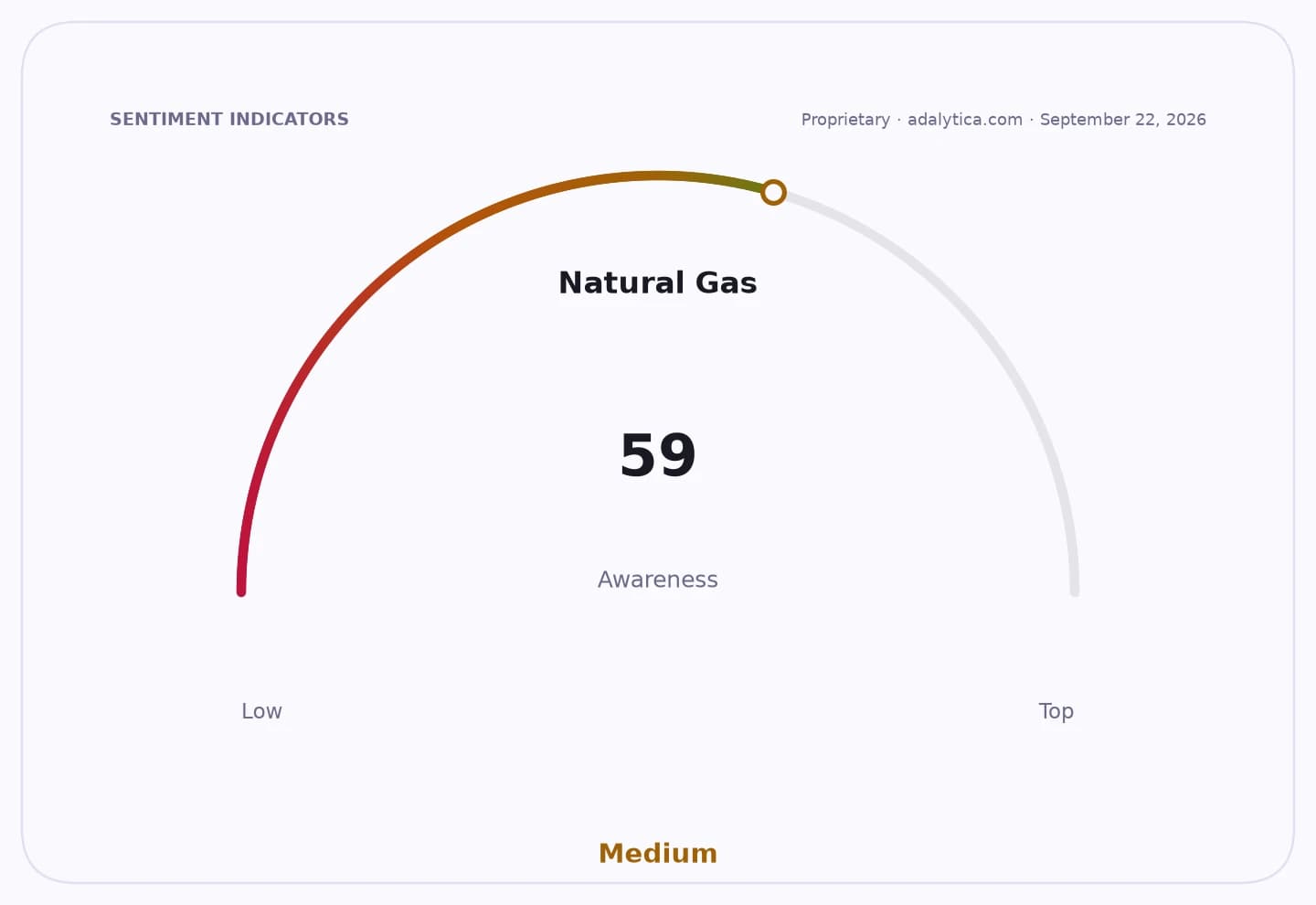
Algeria’s natural gas production is climbing, but the bigger market story is that record summer electricity demand is pulling more fuel into domestic power plants and leaving less for export — a shift that matters for global LNG buyers, regional gas flows and investor exposure to the energy complex.
Algeria gas output rises as domestic demand surges
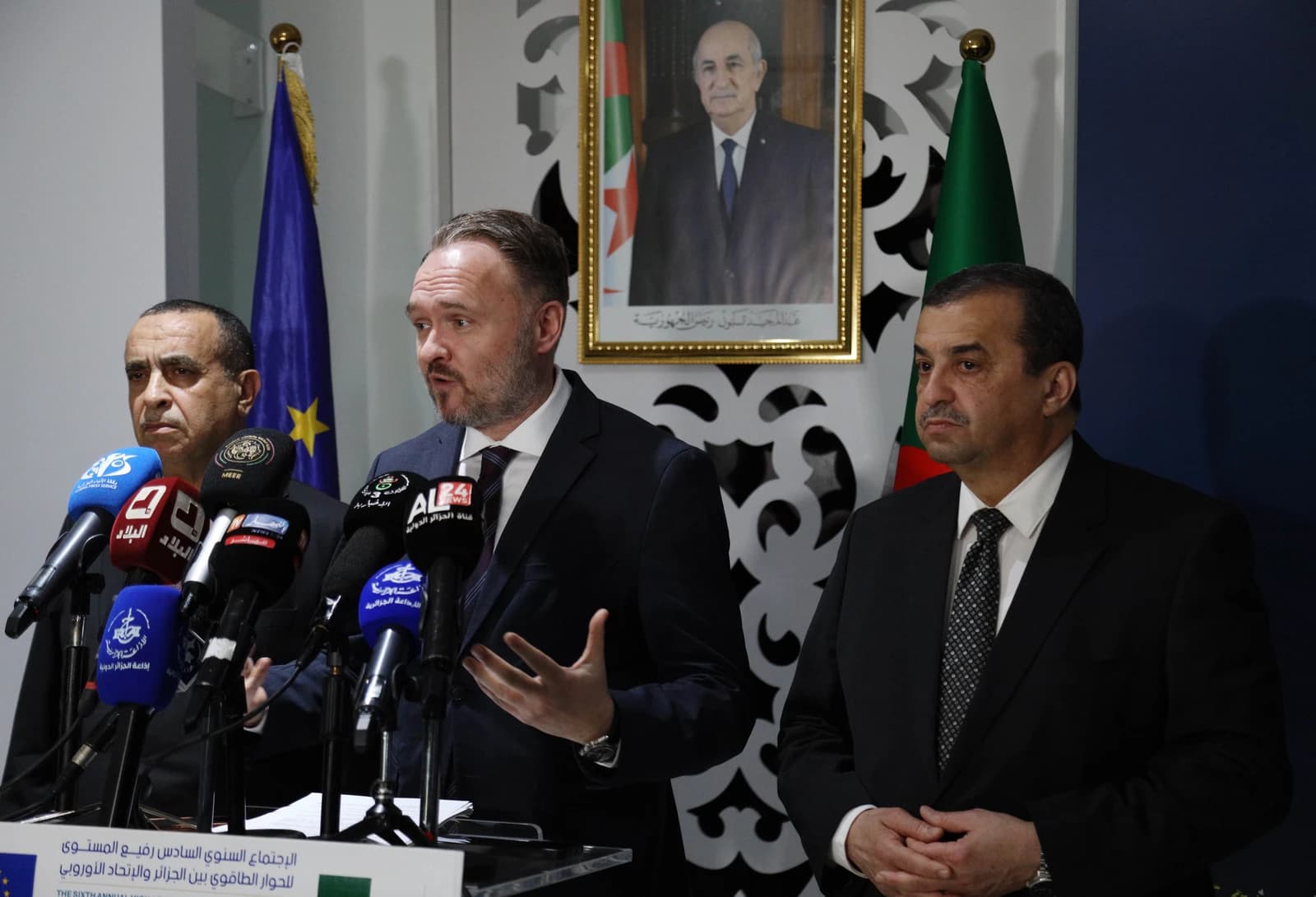
Production rose 3% in July from a year earlier to 8.612 billion cubic meters, while output for the first seven months of 2026 increased 4% to 62.621 billion cubic meters, according to analysis from Ettaqa. That gain is being absorbed by a sharp increase in internal consumption, especially from electricity generators that burned 3.208 billion cubic meters in July, nearly double the level a year earlier and roughly 69% of total gas use that month.
Sentiment IndicatorsⓘProprietary · adalytica.com · September 29, 2026
This is a snapshot — live sentiment, awareness and momentum for 130+ markets update continuously in the dashboard.Open AlphaPulse
The reason is straightforward: Algeria’s grid has been pushed to repeated records by heat. Power demand hit 21,378 MW on July 13 and then 21,727 MW on Aug. 18, underscoring how fast air-conditioning load is reshaping energy demand in North Africa. For an economy where gas accounts for about 99% of the electricity mix in the first half of the year, higher power demand translates almost directly into higher gas burn.
That creates an uncomfortable trade-off. Domestic gas consumption rose 7% in the first seven months of 2026 to 33.149 billion cubic meters, while exports in July fell more than 5% to 3.764 billion cubic meters. LNG shipments were hit hardest, dropping to 0.580 billion cubic meters from 1.032 billion a year earlier. In other words, Algeria is producing more, but the marginal molecule is increasingly being consumed at home rather than sold abroad.
For investors, that matters because Algeria is still one of Europe’s important gas suppliers and a key source of LNG and pipeline volumes into a market that remains sensitive to any supply loss. The immediate winners are domestic utilities and power generators that benefit from fuel security, while the losers are export-oriented gas buyers that need stable Algerian cargoes, particularly during peak summer and winter demand windows.
It also reinforces a broader thesis the market continues to underprice: climate-driven electricity demand can be just as important for gas prices and LNG availability as geopolitics. When heat waves lift power load, gas is the balancing fuel, and exporting nations with gas-heavy power systems often find their overseas sales squeezed first. That is a structural headwind for countries like Algeria that rely on hydrocarbon exports for foreign currency and fiscal support.
The investment takeaway is to watch for a tighter exportable gas balance from North Africa, not just higher production headlines. If record temperatures keep driving power demand higher, Algeria’s gas will stay increasingly captive to its domestic grid — a dynamic that supports the long thesis on LNG scarcity and the broader energy infrastructure trade, while pressuring buyers that depend on flexible supply.
| Entity | Gains | Losses |
|---|---|---|
| Algerian power generators | ▲More fuel security | ▼Higher gas burn |
| Algeria domestic consumers | ▲Fewer supply disruptions | ▼Less export revenue |
| European gas buyers | ▲— | ▼Tighter Algerian supply |
| LNG producers/exporters | ▲Higher scarcity pricing | ▼Lower Algerian cargoes |