China’s aggressive drive into artificial intelligence is not translating into an across-the-board windfall for its biggest tech groups, with Alibaba and Baidu showing how Beijing’s AI ambitions can coexist with weaker market positioning and rising execution risk.
Alibaba, Baidu close below 200-day averages on Aug. 7
That matters economically because China is trying to use AI to lift productivity, offset sluggish domestic demand and strengthen its hand in strategic technologies. But the country’s ability to turn that into durable profit growth remains constrained by limited global access to leading chips, ongoing policy intervention and a tech sector that is still playing catch-up with U.S. rivals on core infrastructure and model quality.
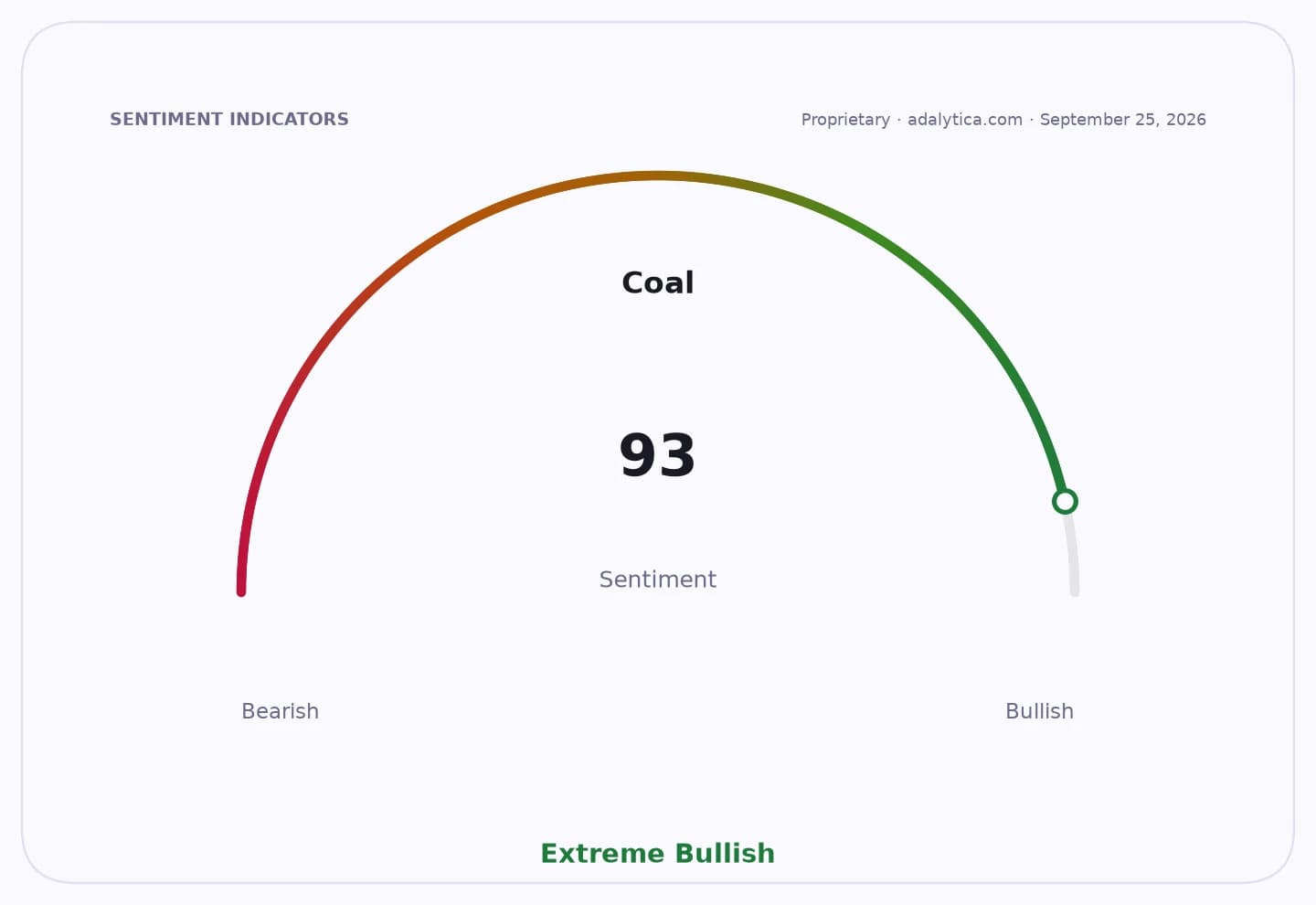
Sentiment IndicatorsⓘProprietary · adalytica.com · August 7, 2026
This is a snapshot — live sentiment, awareness and momentum for 130+ markets update continuously in the dashboard.Open AlphaPulse
For investors, the mismatch is the key issue. Alibaba’s shares closed at $128.41 on Aug. 7, up sharply from $128.53 a day earlier after a volatile year that saw the stock touch $175.57 in January and fall as low as $128.69 in March. The latest move leaves it well below its January peak and below its 200-day moving average of $139.02, even after a rebound from oversold readings earlier in the year. Baidu, meanwhile, ended at $109.71, also under its 200-day average of $125.30, underscoring how Chinese AI exposure has not yet earned the kind of premium investors have assigned to U.S. names tied to the same theme.
The price action reflects a broader tension in China’s technology story: enthusiasm for AI as a policy priority versus concern that domestic companies may struggle to convert that policy support into sustainable margins. Alibaba remains a key proxy for Chinese cloud and AI spending, while Baidu has leaned heavily on AI as it battles slower advertising growth and tougher competition in search and cloud.
Tencent, which has also been pushing AI across its ecosystem, closed at $61.92, holding above its 50-day moving average of $57.92 but still far below its 200-day average of $67.54. The group’s steadier chart suggests investors are rewarding scale and cash generation more than pure AI ambition.
Adalytica’s China CCP Policy Direction Sentiment gauge showed “Greed” at 82 with awareness at 100, while China Economic Growth Target Sentiment sat at 75, also in “Greed,” indicating strong market attention to Beijing’s policy push. But the same backdrop can cut both ways for shareholders: stronger official backing for AI may support spending, yet it can also keep competition intense and returns uneven.
The investment case now hinges on whether China can close the infrastructure gap fast enough to turn AI from a strategic slogan into a profit engine. For Alibaba, Baidu and Tencent, the next catalyst is whether upcoming product launches, cloud demand and policy support can offset the drag from slower consumer growth and geopolitical restrictions on advanced semiconductors.
| Entity | Gains | Losses |
|---|---|---|
| Chinese policymakers | ▲Productivity boost narrative | ▼Pressure to deliver returns |
| Alibaba | ▲AI/cloud relevance | ▼Valuation premium gap |
| Baidu | ▲AI monetization potential | ▼Search and cloud weakness |
| U.S. chipmakers | ▲Export-control leverage | ▼China demand uncertainty |