Alibaba is widening its cloud footprint in Europe with new regions in Finland, the Netherlands and Turkey, a move that deepens the Chinese group’s push into overseas AI infrastructure at a time when access to computing power is becoming a key battleground for global tech.
Alibaba expands cloud regions in Europe and Turkey
The expansion matters because cloud regions are the backbone of AI services, giving Alibaba a way to sell storage, compute and model access closer to customers while reducing latency and regulatory friction. It also shows the company is still spending aggressively to build out capacity even as U.S.-China technology restrictions limit its access to the most advanced chips.
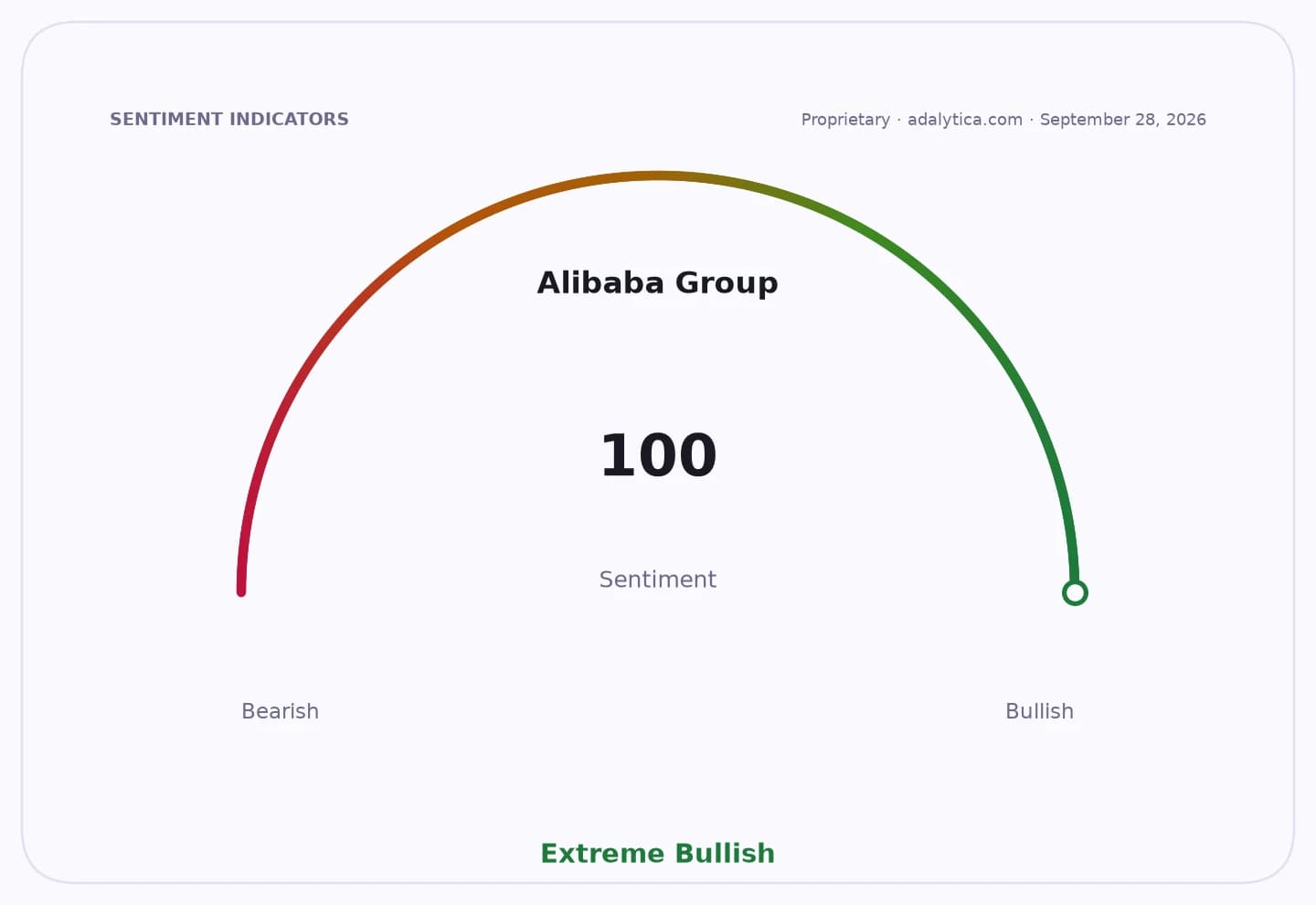
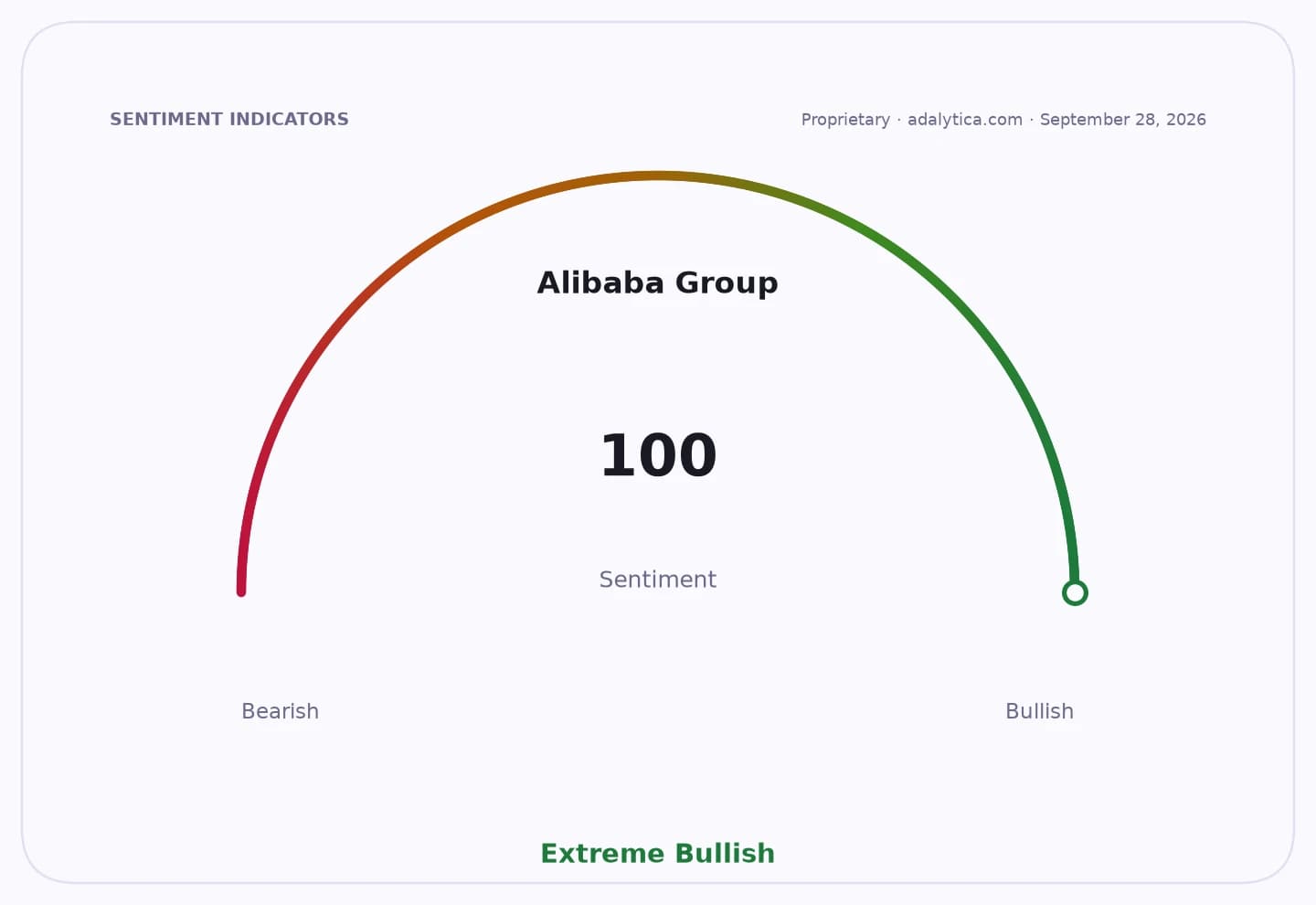
Sentiment IndicatorsⓘProprietary · adalytica.com · September 28, 2026
This is a snapshot — live sentiment, awareness and momentum for 130+ markets update continuously in the dashboard.Open AlphaPulse
Alibaba said it will establish its first cloud regions in the three countries over the next 12 months and expand data-centre capacity in Germany, France, the United Arab Emirates, Malaysia and Hong Kong. Chief Executive Eddie Wu said the company aims for global data-centre capacity operated by Alibaba Cloud to exceed 20 gigawatts by 2032, underscoring how central infrastructure has become to its long-term AI strategy.
The new regions come alongside a stronger push in AI. Alibaba said its Qwen models are among the world’s most downloaded AI systems, and Wu said the company is preparing versions with five trillion to 10 trillion parameters, which would put them well beyond the size of its current Chinese-language rivals. That points to a more direct challenge not only to domestic competitors, but also to Western cloud and model providers courting global enterprise customers.
Alibaba also unveiled a new Zhenwu V900 AI chip, which Wu described as “the most powerful AI chip in China today.” The chip, widely seen as roughly twice as powerful as Nvidia’s H20 for China, arrives as Beijing pushes companies to rely more on domestic alternatives after Washington tightened export controls on advanced semiconductors.
For investors, the announcement reinforces Alibaba’s case as both a cloud infrastructure play and an AI model developer, even as the stock has been volatile. U.S.-listed shares have been trading well below recent highs, and the technical picture remains mixed, with the stock still under its 50-day and 200-day moving averages and momentum indicators pointing to a weak trend despite a recent rebound from oversold levels. Adalytica’s Alibaba earnings sentiment snapshot, however, shows extreme greed, reflecting heightened market interest ahead of more AI and cloud disclosures.
The bigger test is execution. Alibaba now has to convert its overseas buildout into demand from enterprises and developers while navigating a fragmented geopolitical backdrop, especially as China-U.S. trade talks and chip restrictions remain in focus. The next catalysts will be progress on new cloud regions, uptake of Qwen models and any further detail on the company’s AI chip roadmap.
| Entity | Gains | Losses |
|---|---|---|
| Alibaba Cloud | ▲More global capacity | ▼Higher capital spending |
| Qwen models | ▲Wider enterprise reach | ▼Rival AI platforms |
| Chinese AI ecosystem | ▲Stronger domestic alternatives | ▼Dependence on U.S. chips |
| Nvidia and U.S. chipmakers | ▲ | ▼Loss of China exposure |