A residential construction company in Altach has entered bankruptcy with debts of about 9.8 million euros, a reminder that the strain in housing markets is now showing up not just in weaker demand, but in the finances of smaller builders.
Altach homebuilder files for bankruptcy with 9.8m debt
The case matters because construction is one of the first sectors to feel the pinch when borrowing costs stay high, buyers hesitate and project financing gets harder to secure. For a regional homebuilder, even a relatively modest debt load can become unsustainable if sales slow, input costs stay elevated or customers delay payments. That is why this insolvency is bigger than a single company story: it is a sign of how quickly liquidity pressure can work its way through the housing supply chain.
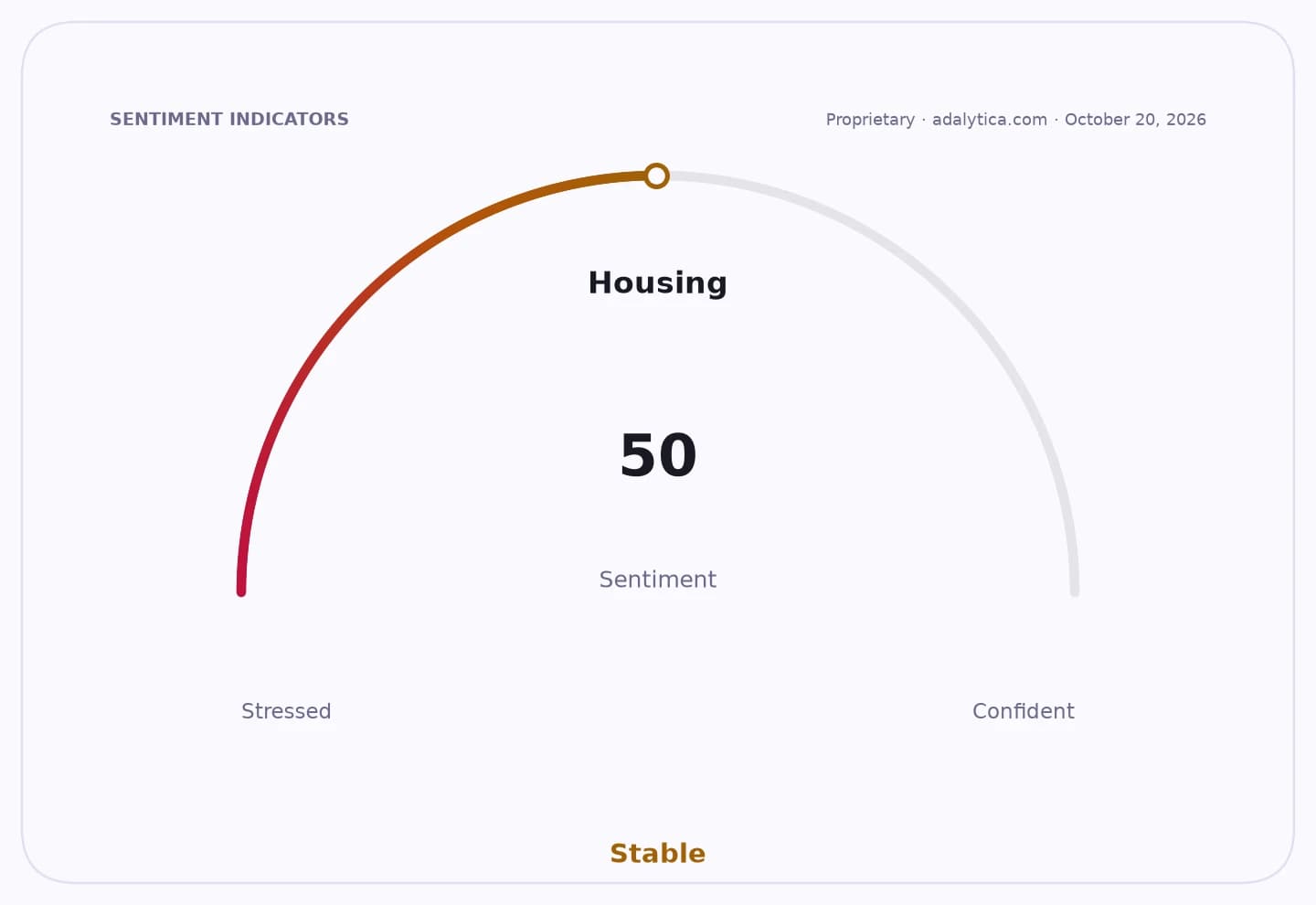
Sentiment IndicatorsⓘProprietary · adalytica.com · October 19, 2026
This is a snapshot — live sentiment, awareness and momentum for 130+ markets update continuously in the dashboard.Open AlphaPulse
The Altach company’s failure also fits a broader pattern investors should watch closely. Residential construction is highly sensitive to rates, credit availability and local housing demand, and when one builder buckles it can ripple to subcontractors, suppliers and lenders. Twenty creditors are affected, showing that the pain is shared across the ecosystem rather than confined to management and shareholders. In a sector built on advance funding and future cash flow, confidence can unravel fast.
For long-term investors, the takeaway is not that housing is broken everywhere, but that the weakest operators are vulnerable when financing conditions normalize from the ultra-cheap money era. Bigger, better-capitalized builders with strong land banks, disciplined balance sheets and recurring demand should be better positioned to survive the cycle. Smaller private firms often do not have that cushion.
That is why this insolvency should be read as a warning sign for the construction sector more than a one-off headline. If credit remains tight and housing affordability stays stretched, more highly leveraged builders could struggle to bridge the gap between signed projects and realized cash. Investors with exposure to homebuilding and construction suppliers should keep an eye on balance-sheet strength, not just sales volume.
| Entity | Gains | Losses |
|---|---|---|
| Larger, well-capitalized builders | ▲Gain market share | ▼Face less pressure |
| Small regional contractors | ▲Little benefit | ▼Debt stress, insolvency risk |
| Creditors and suppliers | ▲Some recovery prospects | ▼Payment losses and delays |
| Housing buyers | ▲Potentially more disciplined supply | ▼Fewer local builders operating |