The U.S. aluminium industry is pressing Washington to exempt aluminium hydroxide from tariffs, arguing that the chemical is a critical input to keep domestic supply chains running and avoid adding to costs already weighing on producers.
Aluminium hydroxide tariff exemption could aid U.S. producers
The request matters because it cuts to the core tension in U.S. trade policy: protecting domestic metalmakers while not choking off the feedstocks they need to operate. Aluminium hydroxide is used in the production chain that supports alumina and primary aluminium output, so tariffing it can raise costs for smelters and processors without materially helping domestic capacity if the U.S. cannot source enough of the material at home. For an industry already facing volatile energy costs, global price swings and thin downstream margins, the exemption plea is less about a single chemical than about preserving competitiveness.
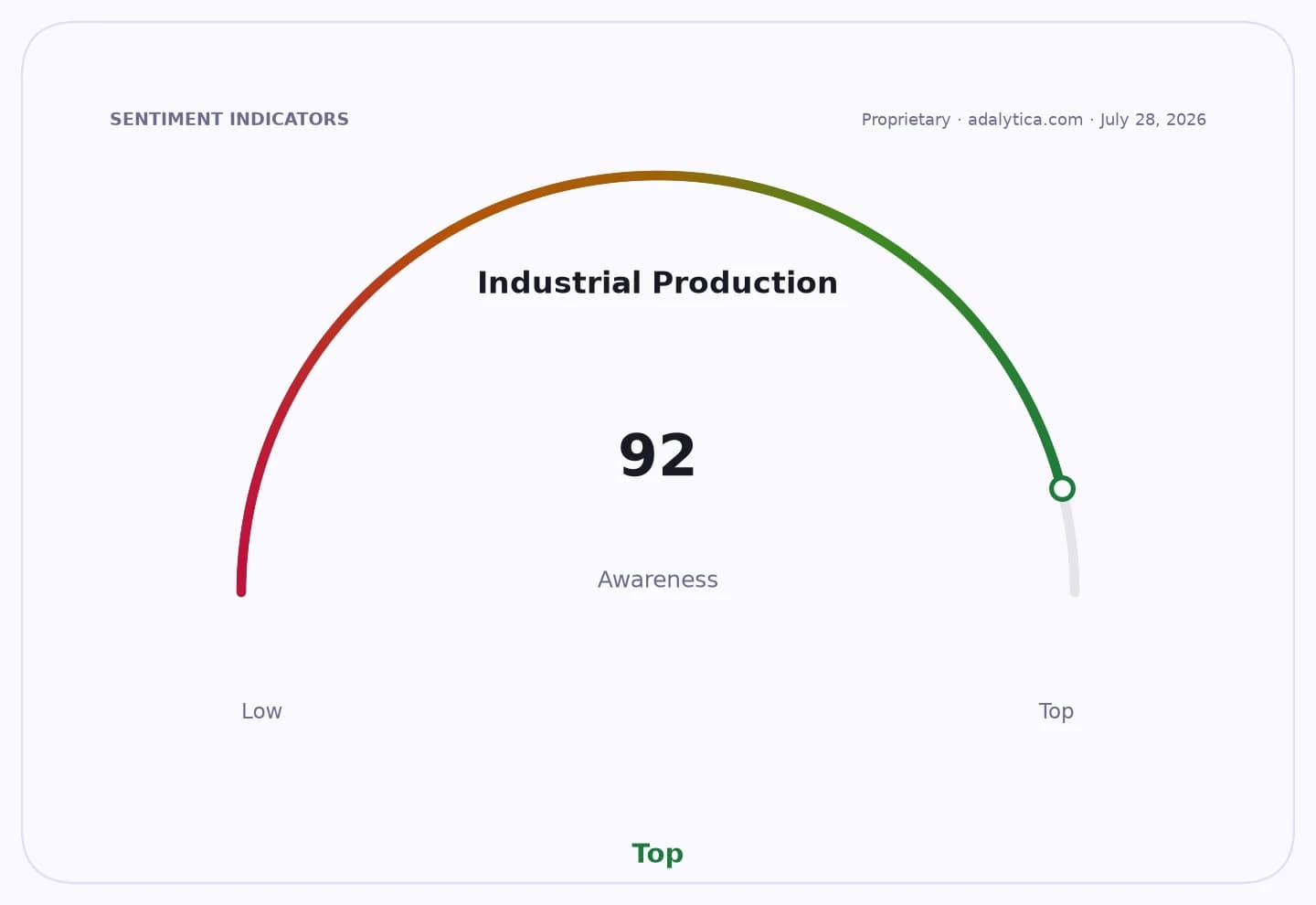
Sentiment IndicatorsⓘProprietary · adalytica.com · July 28, 2026
This is a snapshot — live sentiment, awareness and momentum for 130+ markets update continuously in the dashboard.Open AlphaPulse
That case has gained urgency as U.S. industrial signals point to a firm but uneven backdrop. The Federal Reserve’s industrial production reading is expected to edge up to 102.94 in July from 102.64 in June, while the producer price index for all commodities is forecast to rise to 295.84 from 286.83, underscoring that manufacturing input inflation has not fully cooled. Ten-year Treasury yields have also climbed back toward 4.74%, keeping financing costs elevated for capital-intensive producers. In that environment, even modest tariff frictions can ripple through operating expenses, inventory decisions and investment plans.
The market has already been pricing aluminium policy risk into the sector. Alcoa shares have swung sharply, with the stock dropping to $44.08 on July 27 from $83.79 in early June, while Century Aluminum has fallen to $44.87 from a June 2 peak of $68.77. Both names remain tied to the policy debate because U.S. tariffs and exemptions can alter realised margins, import flows and the economics of domestic production. Kaiser Aluminum, which sits further downstream and is more exposed to fabrication demand, has also given back gains after a strong spring run, reflecting investor caution that tariff relief for one part of the chain may not translate into stronger end-market demand.
The industry’s argument is straightforward: exemptions would reduce the risk of bottlenecks in a market where the U.S. still relies on imports and where global supply chains remain vulnerable to geopolitics, freight disruption and trade retaliation. The bear case is that broad exemptions can weaken the policy shield that is supposed to encourage domestic investment, leaving U.S. producers exposed to lower-cost foreign material. But if tariffs land on inputs that are not available in sufficient quantity domestically, they can effectively become a tax on U.S. manufacturing rather than a barrier to imports.
That is why the aluminium hydroxide fight is being watched beyond the sector itself. If Washington grants an exemption, it would signal a more surgical approach to tariffs, one that prioritises supply-chain continuity over blanket protection. If it does not, investors may have to assume higher input costs, more volatile margins and a greater risk that downstream demand remains pressured even as trade policy tries to support domestic metal output.
| Entity | Gains | Losses |
|---|---|---|
| U.S. aluminium producers | ▲Lower input costs | ▼Less policy protection |
| Importers of aluminium hydroxide | ▲Tariff relief | ▼Regulatory uncertainty |
| Domestic smelters and processors | ▲Better supply access | ▼Higher costs if exemption denied |
| Foreign suppliers | ▲Preserved market access | ▼Tariff barriers |