Amazon is pushing the ASUS ROG Strix B850-G Gaming WiFi motherboard to a record-low $210, a 19% discount that shows how aggressively retailers are clearing gaming hardware inventory as demand stays selective and holiday-style promotions widen across consumer tech.
Amazon Discounts ASUS ROG Strix B850-G to $210
That matters because motherboard pricing is a clean read on the PC upgrade cycle: when premium AM5 boards with PCIe 5.0 and Wi‑Fi 7 get marked down this hard, it usually means retailers are prioritizing inventory turnover over margin. For investors, that tends to favor the channel and bargain-hunting consumers in the near term, while pressuring suppliers and brands that rely on full-price sell-through to protect gross profit.
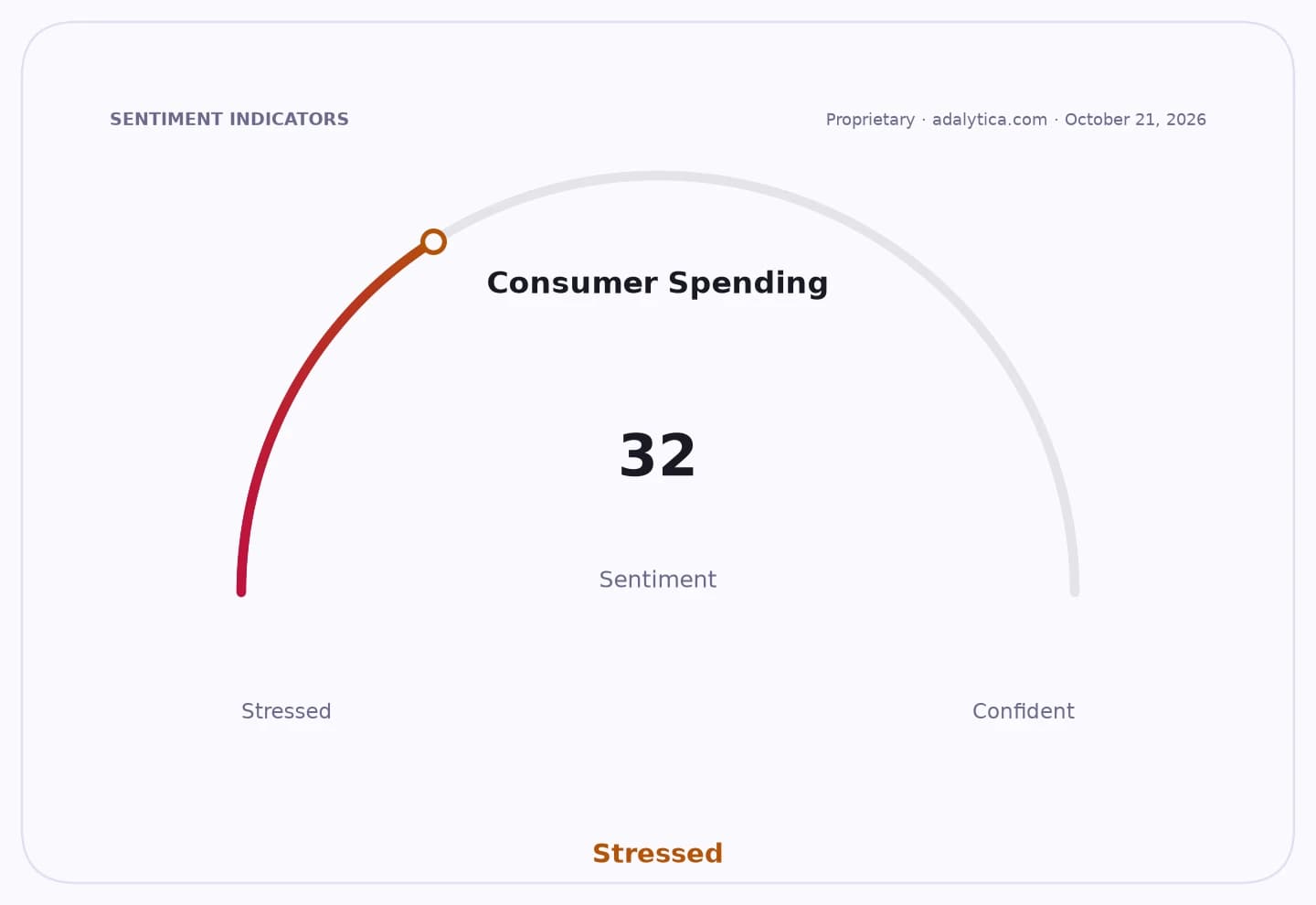
Sentiment IndicatorsⓘProprietary · adalytica.com · October 19, 2026
This is a snapshot — live sentiment, awareness and momentum for 130+ markets update continuously in the dashboard.Open AlphaPulse
The ASUS board is aimed squarely at enthusiast buyers building compact Ryzen 7000- and 9000-series systems, with four M.2 slots, DDR5 support, PCIe 5.0 for graphics and storage, and DIY-friendly features such as Q-Release and BIOS FlashBack. On paper, it is a high-spec, premium product. On Amazon, it is a clearance item.
That disconnect is the story. When a premium motherboard moves from feature-led marketing to discount-led merchandising, it tells you the market is still digesting excess inventory across the gaming ecosystem. The pressure is not isolated to one board. It fits a broader pattern of aggressive promotions across consumer goods, where retailers are leaning on markdowns to convert stock into cash rather than waiting for demand to normalize.
For Amazon, that is a traffic and conversion win even if unit economics are slimmer. For the wider gaming hardware chain, it is more complicated. ASUS benefits from channel inventory clearing if it resets demand for newer AM5 platforms, but the pricing also reinforces a tougher backdrop for component makers, distributors and competing peripheral brands that now have to defend share with discounts of their own.
The investable takeaway is straightforward: the opportunity is not in chasing full-price gaming hardware, but in owning the platforms that profit from the upgrade cycle and the retailers best positioned to move inventory. If this clearance trend deepens, expect margin pressure to persist in gaming components even as Amazon and other large channels capture the volume.
| Entity | Gains | Losses |
|---|---|---|
| Amazon | ▲Higher traffic, faster inventory turns | ▼Lower unit margins |
| ASUS | ▲Clears stock, supports newer platform demand | ▼Premium pricing power |
| Gamers/PC builders | ▲Record-low entry price | ▼None |
| Gaming component peers | ▲Share gains if they discount first | ▼Gross margin pressure |