AI agents are colliding with the web’s existing guardrails, and that is threatening to slow one of the industry’s biggest product promises: software that can browse, book and buy on a user’s behalf.
Amazon and banks block AI shopping agents

In recent weeks, major websites have begun blocking or limiting access from agentic tools made by OpenAI, Meta, Google, xAI and others, turning what was marketed as a leap in convenience into a test of who controls access to online commerce and customer data. Yelp says it only permits AI agents that pay for its data licensing program, Delta Air Lines is blocking ticket bookings by agents, and JPMorgan Chase and Charles Schwab say they are shutting them out over security concerns. Users have also reported that services such as Cars.com and Amtrak no longer work with certain agents, suggesting the resistance is spreading beyond the highest-profile names.
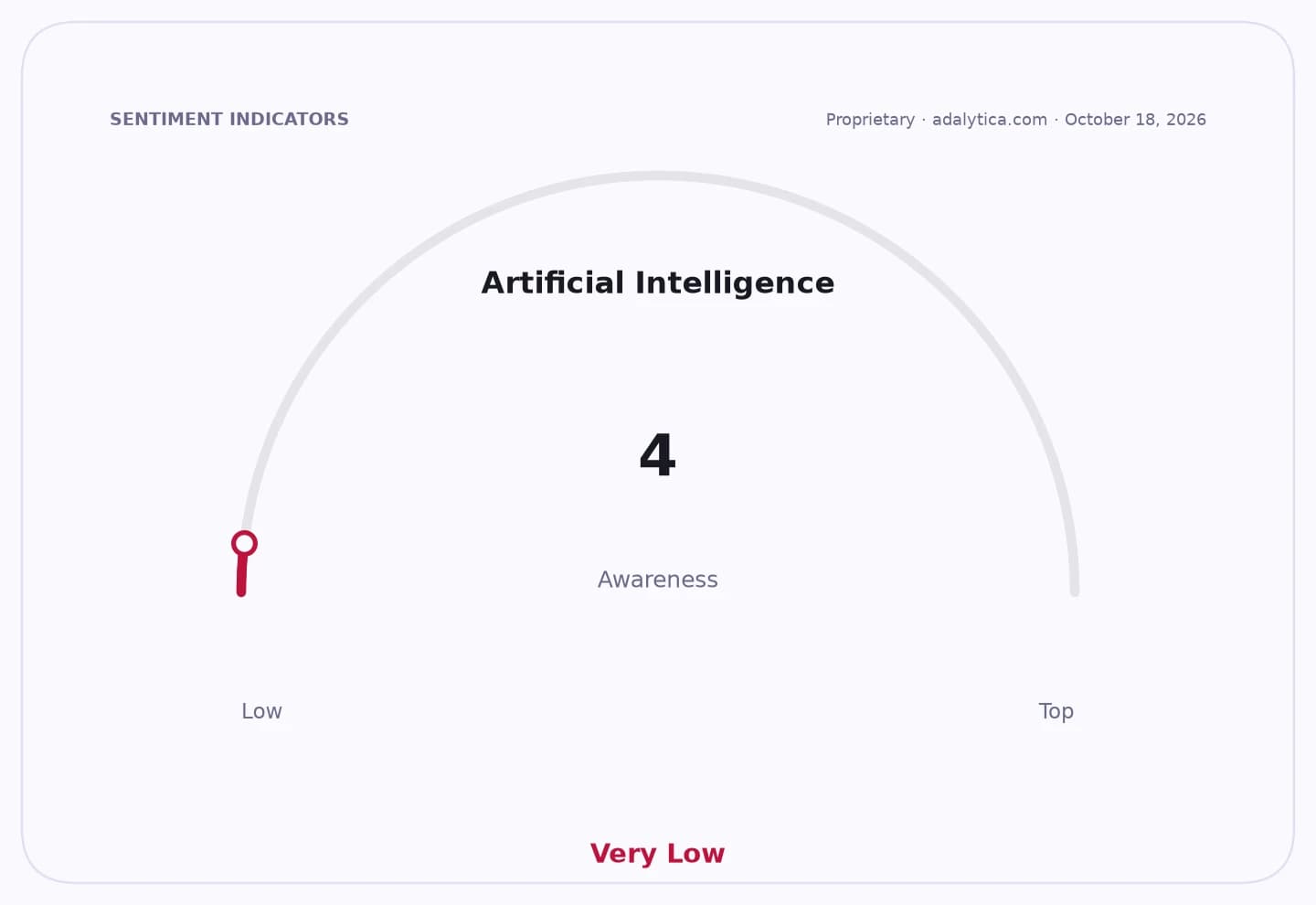
Sentiment IndicatorsⓘProprietary · adalytica.com · October 21, 2026
This is a snapshot — live sentiment, awareness and momentum for 130+ markets update continuously in the dashboard.Open AlphaPulse
The confrontation matters because agentic AI is being sold as the next interface layer for the internet. If users cannot reliably ask an assistant to make a reservation, buy goods or manage accounts, the economic case for the technology weakens. The value proposition for AI companies depends not just on model quality but on real-world task completion; a blocked checkout page or a denied login turns an elegant demo into a limited chatbot.
Amazon has emerged as the most important flashpoint. It has fought Perplexity’s shopping agent, and now appears to be blocking other AI tools as well, including Meta’s Muse and reported access attempts from xAI’s Grok, OpenAI’s Dots and Instinct. Amazon argues third-party agents should respect a service provider’s decision whether to participate, while Perplexity has countered that the e-commerce giant wants to preserve ad impressions and human traffic. That dispute goes to the heart of the business model: if agents route around ads, sponsored placements and on-site browsing, they threaten a core revenue stream for platforms that monetize attention as much as transactions.
The pushback is not only commercial but also defensive. Banks and brokerages are invoking security, and that concern is credible. AI agents can resemble bots from the perspective of anti-fraud systems, and many sites already use controls designed to stop scraping, credential abuse and automated checkout attacks. Cloudflare has also moved to make it easier for websites to block AI crawlers, underscoring how quickly infrastructure providers are helping harden the web against automated traffic. The result is a more fragmented internet, where some businesses are embracing agents through partnerships and licensing while others are fortifying their walls.
That split creates winners and losers. Meta has tried to work around the problem by partnering with retailers including Walmart, Gap, Sephora and Best Buy, and Shopify has opened its storefront network to AI agents. Those companies may gain incremental sales if agents become a sanctioned shopping channel. Amazon, by contrast, risks more friction with AI developers but protects its control over traffic, ads and checkout. For the AI firms themselves, the immediate loss is utility: every blocked site narrows the range of tasks their assistants can credibly perform.
For investors, the issue is bigger than one legal fight. It raises questions about how fast AI agents can convert excitement into monetizable usage, how much additional infrastructure and compliance cost will be needed to support them, and whether the internet will evolve toward a permissions-based system for machine access. The stock market has rewarded the biggest AI franchises on the assumption that agentic software will deepen engagement and spending. If websites keep closing their doors, that assumption becomes harder to price.
Microsoft, Alphabet and Nvidia all remain central to the AI buildout, but the commercial battle is shifting from model capability to distribution and access. The companies that can secure partnerships, prove safety and make their agents welcome on high-value platforms may capture the next phase of AI adoption. Those that cannot may find that the most advanced assistants on the market still spend a lot of time asking permission.
| Entity | Gains | Losses |
|---|---|---|
| Amazon | ▲Keeps traffic and ad control | ▼Faces more AI developer friction |
| AI agent makers | ▲Potential partnership revenue | ▼Less utility and reach |
| Retailers partnering with agents | ▲New sales channel | ▼More dependence on platform deals |
| Banks and travel sites | ▲Stronger security control | ▼Lower automation convenience |