Amazon’s launch of an online pharmacy is a direct bid to insert itself into one of U.S. retail’s most regulated and highest-frequency markets, with the potential to chip away at incumbents that still rely heavily on store traffic and refill loyalty.
Amazon online pharmacy targets CVS and Walgreens

The move matters economically because prescription drugs are a large, recurring consumer spend and one of the few retail categories where price transparency, convenience and habitual purchasing can shift meaningful volume. By letting customers compare prices on its website and app, Amazon is trying to do what it has done in other categories: use scale, logistics and digital convenience to pull demand away from brick-and-mortar rivals and into its own ecosystem.
Sentiment Indicators
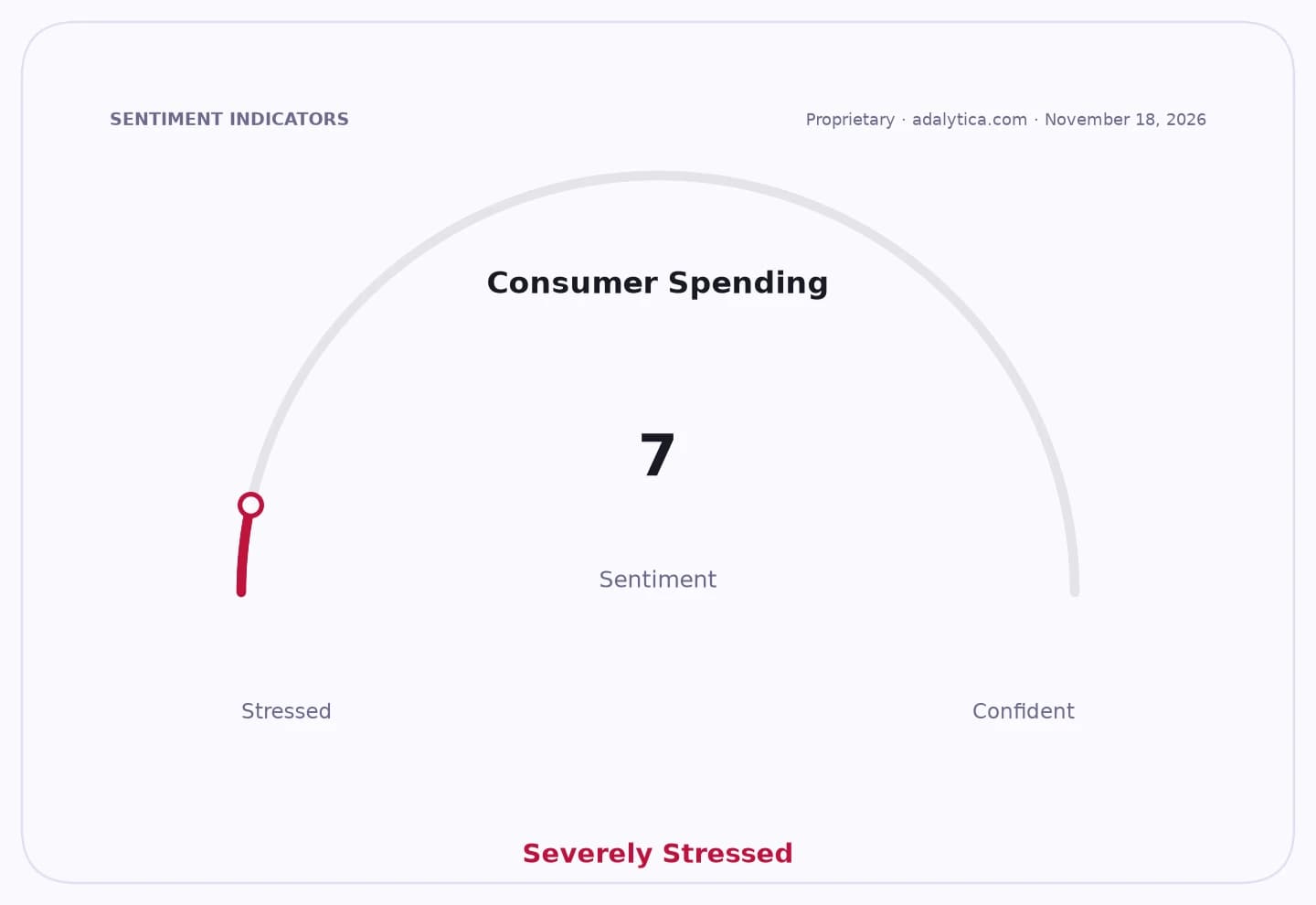
Prime members getting two-day free shipping is especially important. That ties pharmacy demand to Amazon’s subscription base and gives the company a structural advantage in fulfillment and retention. For customers, the value proposition is not just lower friction but potentially lower out-of-pocket costs, a point that could resonate while broader consumer-spending sentiment remains weak. Adalytica’s consumer spending gauge is in “Extreme Fear,” suggesting households remain cautious about discretionary purchases and may be increasingly receptive to savings on essentials.
For CVS Health and Walgreens Boots Alliance, the competitive threat is not that Amazon will replace the entire pharmacy channel overnight, but that it can selectively attack the most profitable and most digital-ready slice of the market: maintenance prescriptions, price-shopping consumers and Prime households already accustomed to buying household essentials online. CVS shares were already under pressure in recent sessions, while Amazon’s stock has stayed above both its 50-day and 200-day moving averages, underscoring the market’s willingness to give the company room to expand into adjacent businesses.
The timing also fits a broader shift in healthcare distribution. Prescription technology, price transparency and home delivery are becoming more central to the way drugs are bought and fulfilled, and Amazon is entering with an established logistics network rather than building from scratch. That could pressure margins across the pharmacy value chain, from retail drugstores to intermediaries and distributors, even if the near-term revenue contribution to Amazon is modest.
Investors will be watching whether the pharmacy is a standalone convenience play or the opening move in a bigger healthcare platform. If Amazon can combine online prescribing, price shopping, fast shipping and Prime bundling, it could steadily re-route prescription volume away from traditional chains. If adoption is slow, the initiative may remain a niche add-on. Either way, it adds another front to Amazon’s push into higher-frequency consumer services and raises the stakes for incumbents already facing weaker store traffic and thin operating margins.
| Entity | Gains | Losses |
|---|---|---|
| Amazon | ▲Prime stickiness; new healthcare channel | ▼Higher execution and regulatory costs |
| CVS Health | ▲Digital urgency to modernize | ▼Prescription share, pricing power |
| Walgreens Boots Alliance | ▲Industry attention on online delivery | ▼Foot traffic and refill retention |
| Consumers | ▲Easier comparison shopping; faster delivery | ▼Less in-person pharmacy access |