Amazon, Walmart and Best Buy are pulling Cyber Monday forward to lock in holiday demand, a sign that U.S. retailers are racing for a smaller, more cautious pool of shoppers even as they lean on deeper discounts and member perks to defend sales.
Amazon, Walmart and Best Buy start early holiday sales
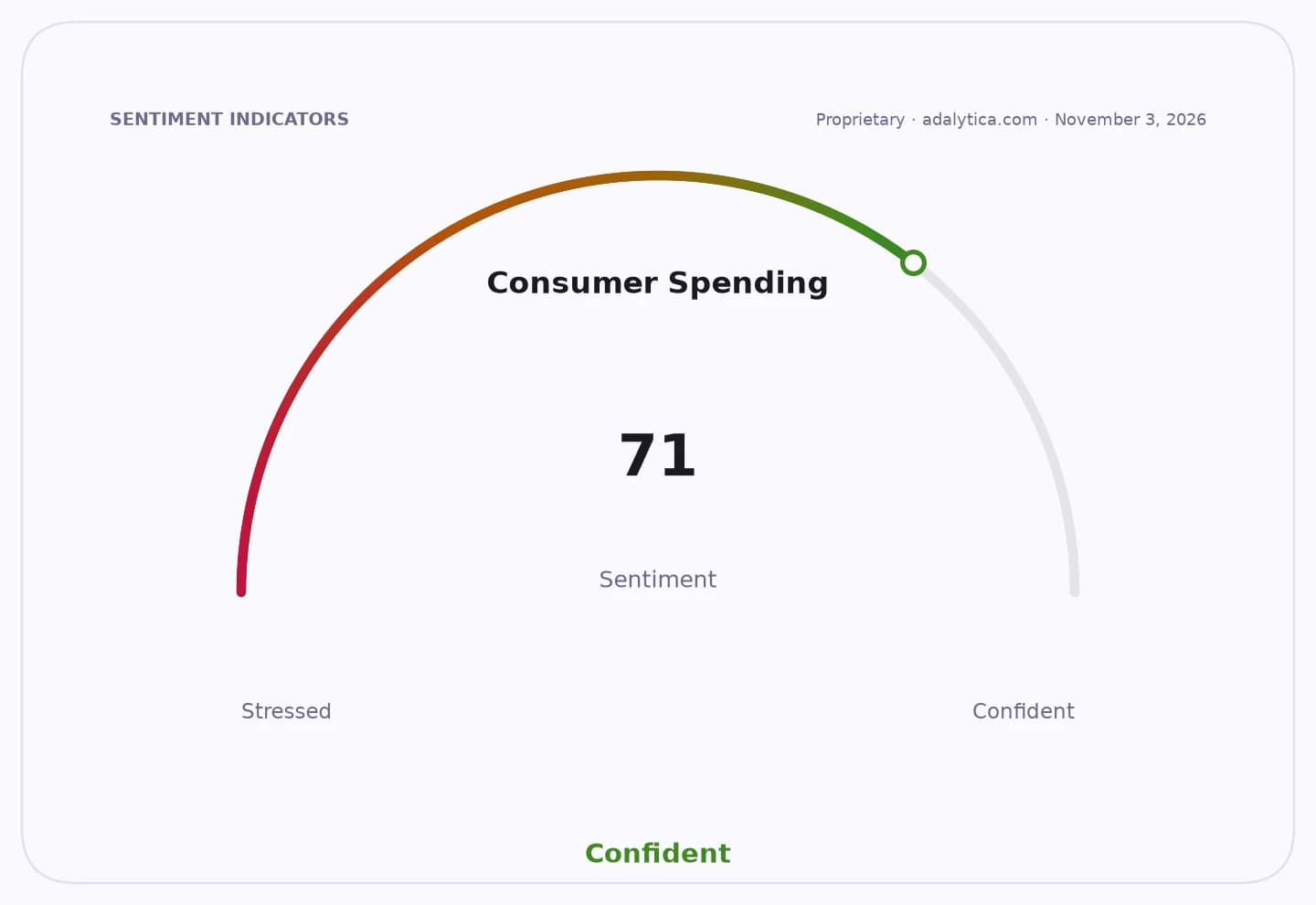
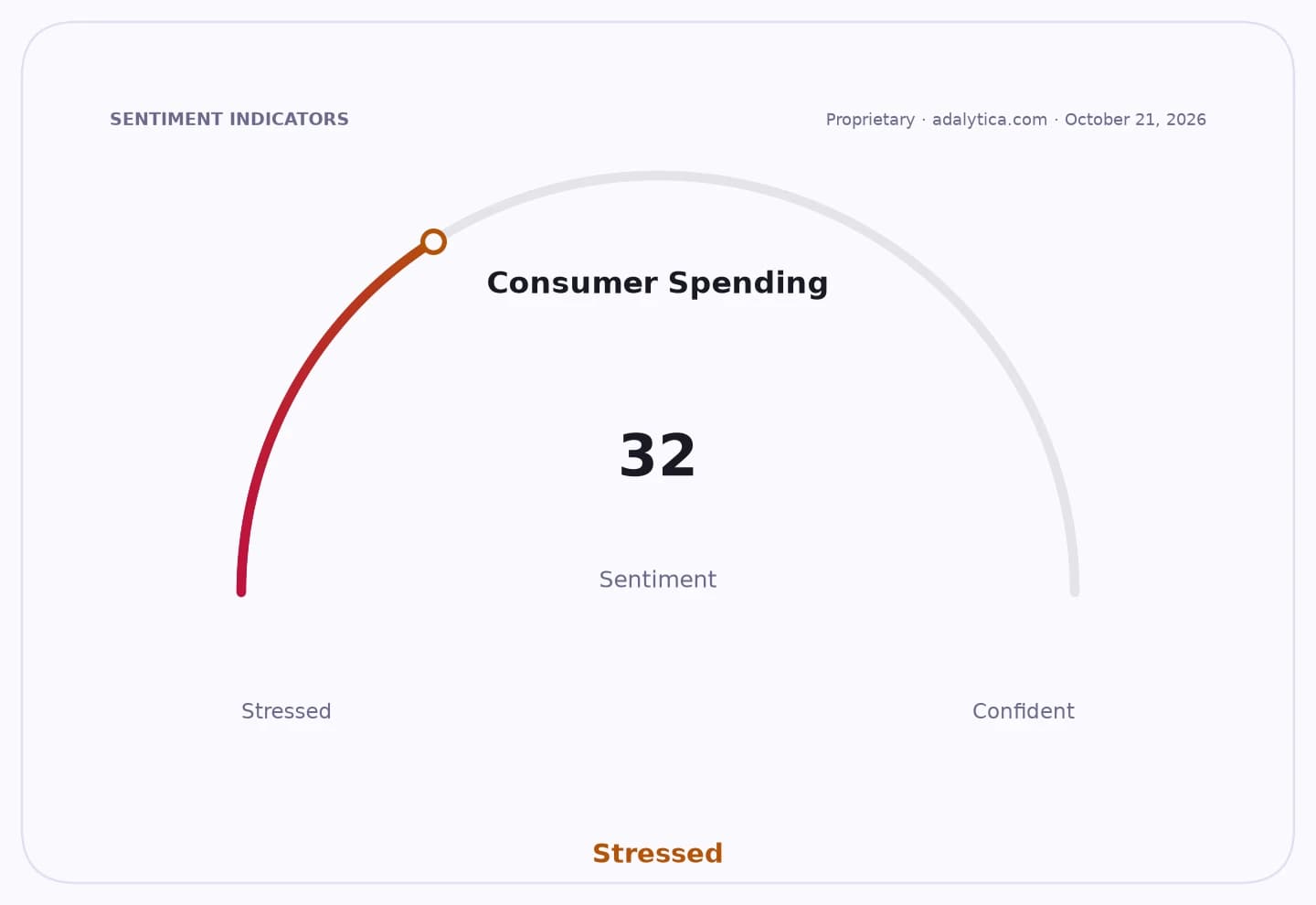
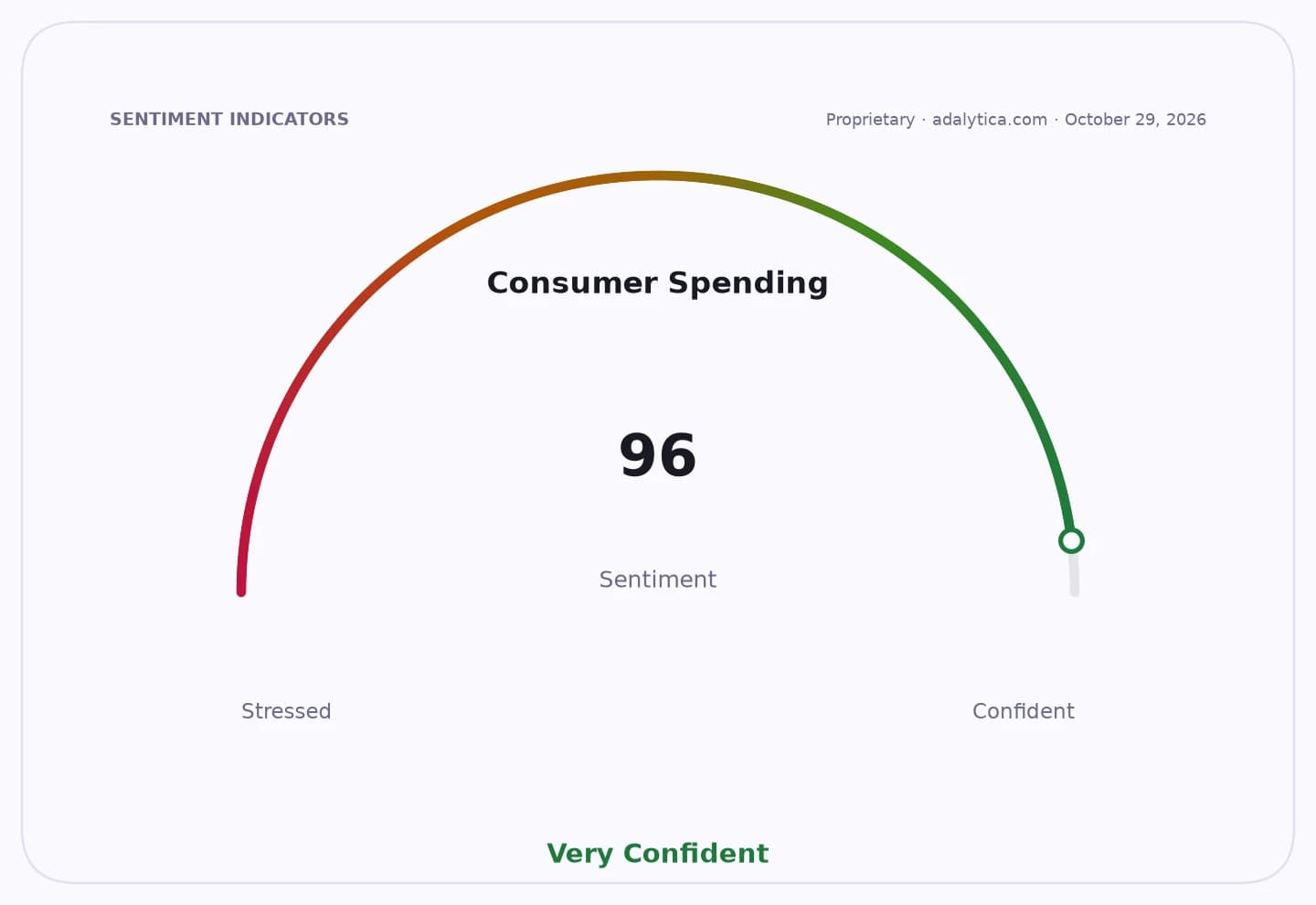
The immediate investor takeaway is that the holiday quarter is likely to be won or lost on traffic capture, not pricing power. With consumer-spending sentiment in Adalytica’s gauge at an extreme-fear reading of 7 and retail-goods sentiment at 21, the early promo calendar suggests retailers see little room to wait for the traditional peak shopping weekend. Instead, they are stretching events across nearly three weeks to pull forward purchases and reduce the risk of leaving inventory on shelves after the holidays.
Sentiment Indicators
Amazon will begin its Black Friday Week and Cyber Monday campaign at 12:01 a.m. Pacific time on Thursday, Nov. 19, and run it through Nov. 30, with new deals dropping at midnight and 8 a.m. Pacific and discounts reaching as high as 60% on selected items. Walmart is splitting its promotions into three events totaling 14 days, up from 10 last year, with Cyber Monday deals online from Nov. 30 to Dec. 2 and 24-hour early access for Walmart+ members during the first two events. Best Buy is taking the most extended approach, starting Black Friday promotions Nov. 19 and layering in Cyber Sunday and Monday, Cyber Week through Dec. 6 and a final holiday sale in late December.
That matters because retail is no longer simply a battle over headline markdowns; it is a fight over frequency, loyalty and wallet share. Amazon’s scale and fulfillment muscle, Walmart’s membership-driven traffic and Best Buy’s ability to anchor electronics demand all make them natural beneficiaries of a season that is starting earlier and lasting longer. The flip side is that prolonged discounting can pressure margins, especially if demand remains fragile and promotional intensity rises across categories from audio gear to toys.
Consumer Spending — 30-day sentimentadalytica.com
Explore this data interactively — full history, time series and cross-market comparisons.

The stock charts reflect that tension. Amazon shares have been holding above both the 50-day and 200-day moving averages, with RSI in the low 50s and momentum improving after a volatile year, while Walmart has outperformed its 200-day average and remains technically firm after a powerful run earlier this autumn. Best Buy, meanwhile, has rallied sharply since late summer but has also shown more volatility, underscoring how much of its holiday upside depends on turning promotions into traffic rather than just lower prices.
For investors, the setup still favors the biggest traffic magnets and fulfillment winners over weaker discretionary names. Amazon remains the cleanest way to express an early-holiday volume surge, Walmart offers defensive retail exposure with membership support, and Best Buy has the most leverage to any rebound in consumer electronics demand. The market underestimates how much a stretched holiday calendar can preserve top-line growth even in a soft spending environment — but it also underestimates how costly that growth can be if retailers have to buy it with heavier markdowns. The next catalyst is simple: whether these early offers convert into real basket expansion, or merely pull forward spending that would have happened anyway.
| Entity | Gains | Losses |
|---|---|---|
| Amazon | ▲Early traffic capture | ▼Margin pressure from discounts |
| Walmart | ▲Walmart+ retention and online sales | ▼Higher promo intensity |
| Best Buy | ▲Holiday electronics demand | ▼Profitability if markdowns deepen |
| Smaller retailers | ▲— | ▼Share to bigger chains |