Amundi’s US Treasury Bond 1-3Y UCITS ETF GBP Hedged Dist is still being pulled in by a bigger story: short-dated U.S. government bonds are offering little relief while investors wait for the Federal Reserve to prove it is done with higher rates.
Amundi US Treasury Bond 1-3Y ETF GBP Hedged Amid 4.17% Yields
That matters because the ETF sits squarely in the part of the curve most sensitive to the policy outlook. When two-year Treasury yields stay elevated, the income on short bonds rises, but so does the risk that prices stay subdued and total returns disappoint. For long-term investors, that turns a once-safe parking place for cash into a waiting game.
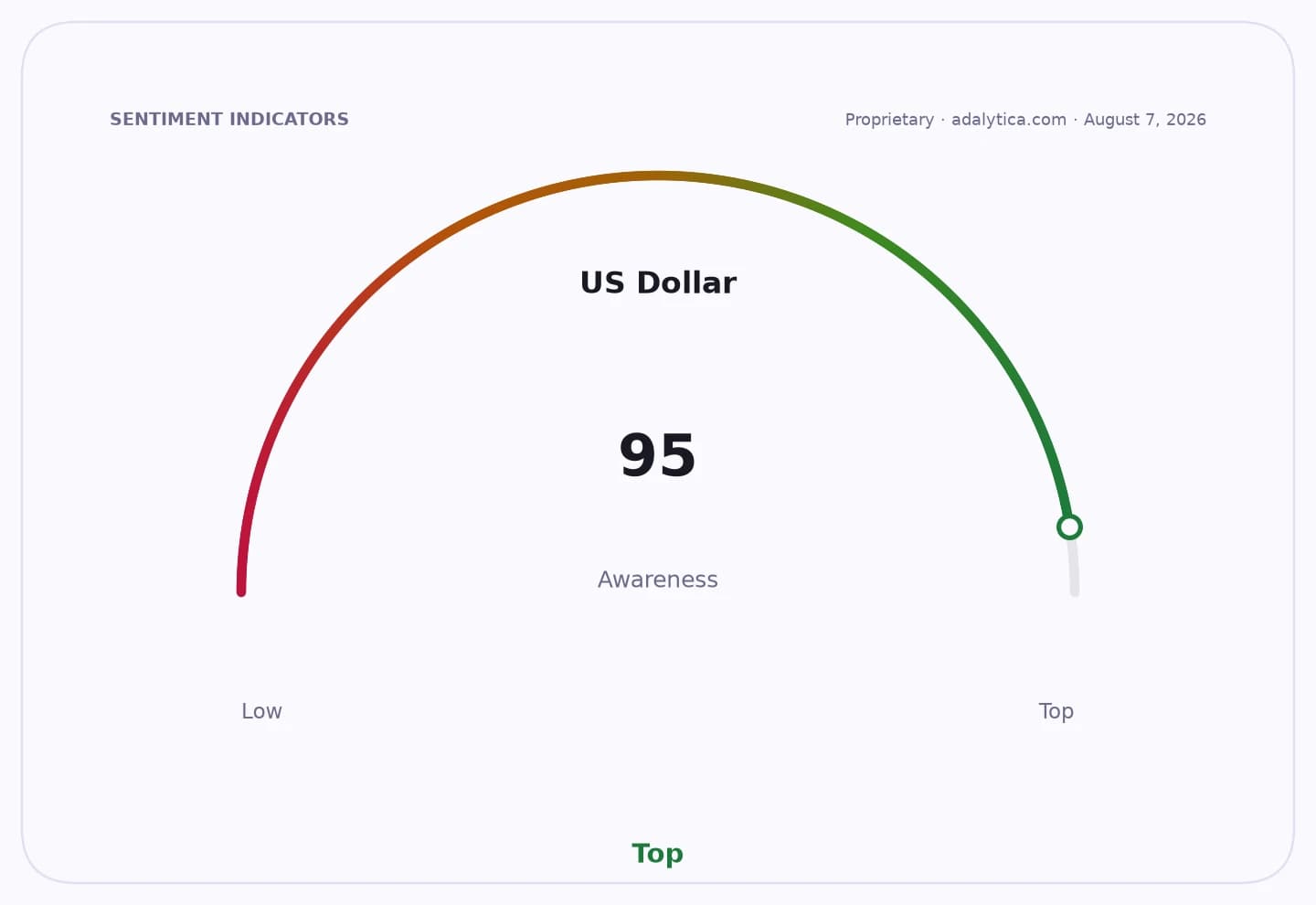
Sentiment IndicatorsⓘProprietary · adalytica.com · August 7, 2026
This is a snapshot — live sentiment, awareness and momentum for 130+ markets update continuously in the dashboard.Open AlphaPulse
The key macro backdrop has not changed much. The U.S. two-year Treasury yield was around 4.17% in the latest forecast reading, while the 10-year sat near 4.61%, leaving the curve only modestly inverted. That still points to an economy where the market expects policy to stay restrictive for longer, even as the Federal Reserve funds rate holds around 3.63%.
For bondholders, that is an awkward mix. Short-dated Treasuries no longer offer the near-zero yields that pushed investors out of cash and into risk assets, but they also do not provide the kind of price upside that comes when rate cuts are clearly on the horizon. In practical terms, funds like Amundi’s GBP-hedged ETF tend to behave like a high-quality cash alternative, not a growth engine.
DGS2 vs DGS10 — macro contextadalytica.com
Explore this data interactively — full history, time series and cross-market comparisons.Open AlphaPulse
The recent price action in comparable Treasury funds shows that tension. TLT, a long-duration U.S. Treasury ETF, has drifted down to about 82.5, below its 50-day and 200-day moving averages, with RSI readings in the mid-30s and a mildly negative MACD setup. IEF, which tracks intermediate maturities, has also slipped below its 50-day average. SHY, by contrast, has been steadier, hovering close to 81.8 and holding near its moving averages, which is exactly what you would expect from very short Treasuries in a still-elevated rate world.
Investors should read that as a signal about preference, not panic. Short-duration government bonds remain attractive for capital preservation, especially for sterling-based investors using a GBP-hedged fund to blunt currency swings. But the upside from price appreciation is likely to remain limited unless U.S. yields move decisively lower.
There is also a positioning angle. Adalytica’s US Treasury Bonds Trade Signals show sentiment at 75, labeled greed, with awareness at an extreme 100. That kind of crowding can help explain why Treasury trades often stall after a quick burst of enthusiasm: once everyone is leaning the same way, incremental good news is harder to monetize.
For investors, the takeaway is straightforward. Amundi’s short-term Treasury ETF still serves a useful role in a diversified portfolio, especially for conservative capital and liquidity management, but it is best viewed as a defensive holding rather than a return leader. If the Fed starts cutting and yields fall, the fund should benefit modestly; if inflation or growth keeps policy tighter for longer, patience will be required. For now, it looks like a solid watchlist name for income-focused investors rather than an aggressive buy.
| Entity | Gains | Losses |
|---|---|---|
| Amundi short Treasury ETF holders | ▲Capital preservation | ▼Large price upside |
| GBP-based investors | ▲Currency hedging | ▼Unhedged FX swings |
| Federal Reserve hawks | ▲Higher-for-longer policy cover | ▼Faster bond rally |
| Treasury bulls | ▲Yield income | ▼Rate-driven volatility |