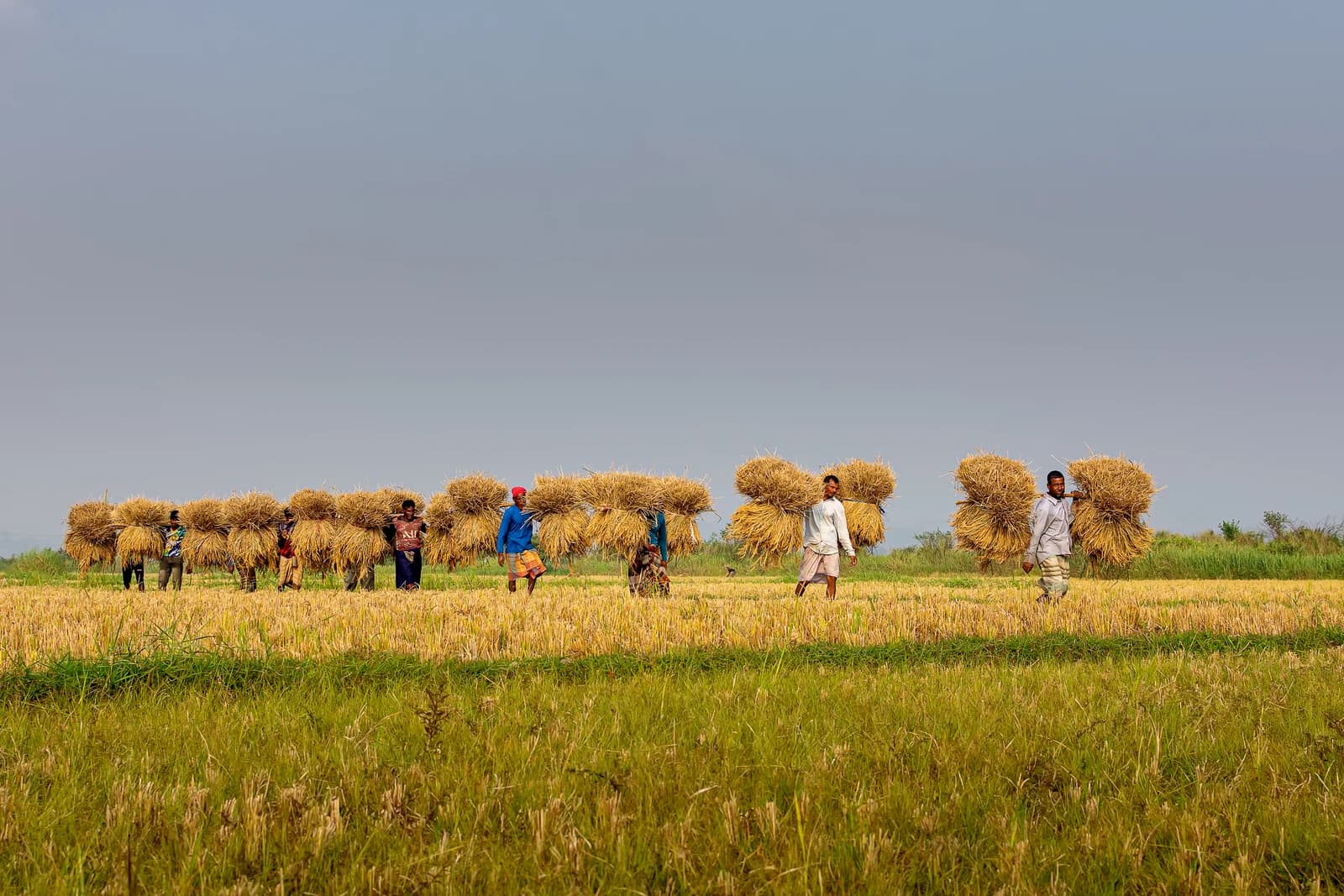
A 3-hectare shrimp-rice model in An Giang’s Vinh Binh commune is generating about 70 million dong in profit per crop, highlighting why integrated aquaculture-farming systems are drawing more attention from local officials and farmers looking for higher returns from existing land.
An Giang shrimp-rice plot earns 70 million dong
The model, which rotates all-male giant river prawns with rice, produced about 1.5 tons of shrimp, sold at around 100,000 dong a kilogram, for revenue of roughly 150 million dong against total costs of about 80 million dong, according to the farmer hosting the harvest event.
That margin matters economically because shrimp-rice farming is becoming a practical way to lift incomes in the Mekong Delta without expanding farmland. The system uses the same field for two crops, spreading risk across rice and shrimp while making better use of water, soil and labor at a time when farmers are under pressure from costs and climate volatility.
For investors and agribusiness players, the takeaway is that small-scale integrated aquaculture can still generate attractive unit economics in Vietnam’s countryside, particularly where local extension agencies help improve water management, feeding and harvest techniques. Strong returns in a 3-hectare plot also support the case for more input sales, seed supply, feed distribution and rural processing tied to shrimp-rice production.
The harvest event in An Giang was also designed to help cooperatives, farmer groups and technicians replicate the model more widely. That suggests policymakers see shrimp-rice as more than a single-farm success story: it is part of a broader push to scale resilient farming systems that can support rural incomes while using land more efficiently.
The next catalyst will be whether the model can hold those returns across more households and more seasons, especially if shrimp prices, feed costs or water quality turn less favorable.
| Entity | Gains | Losses |
|---|---|---|
| Vinh Binh farmers | ▲Higher crop profit | ▼Traditional low-margin farming |
| An Giang extension officials | ▲Model for expansion | ▼Slow adoption if scaling fails |
| Input suppliers | ▲More demand for seed and feed | ▼Farmers cutting costs |
| Rice-only growers | ▲Less relevant economics | ▼Missed aquaculture upside |