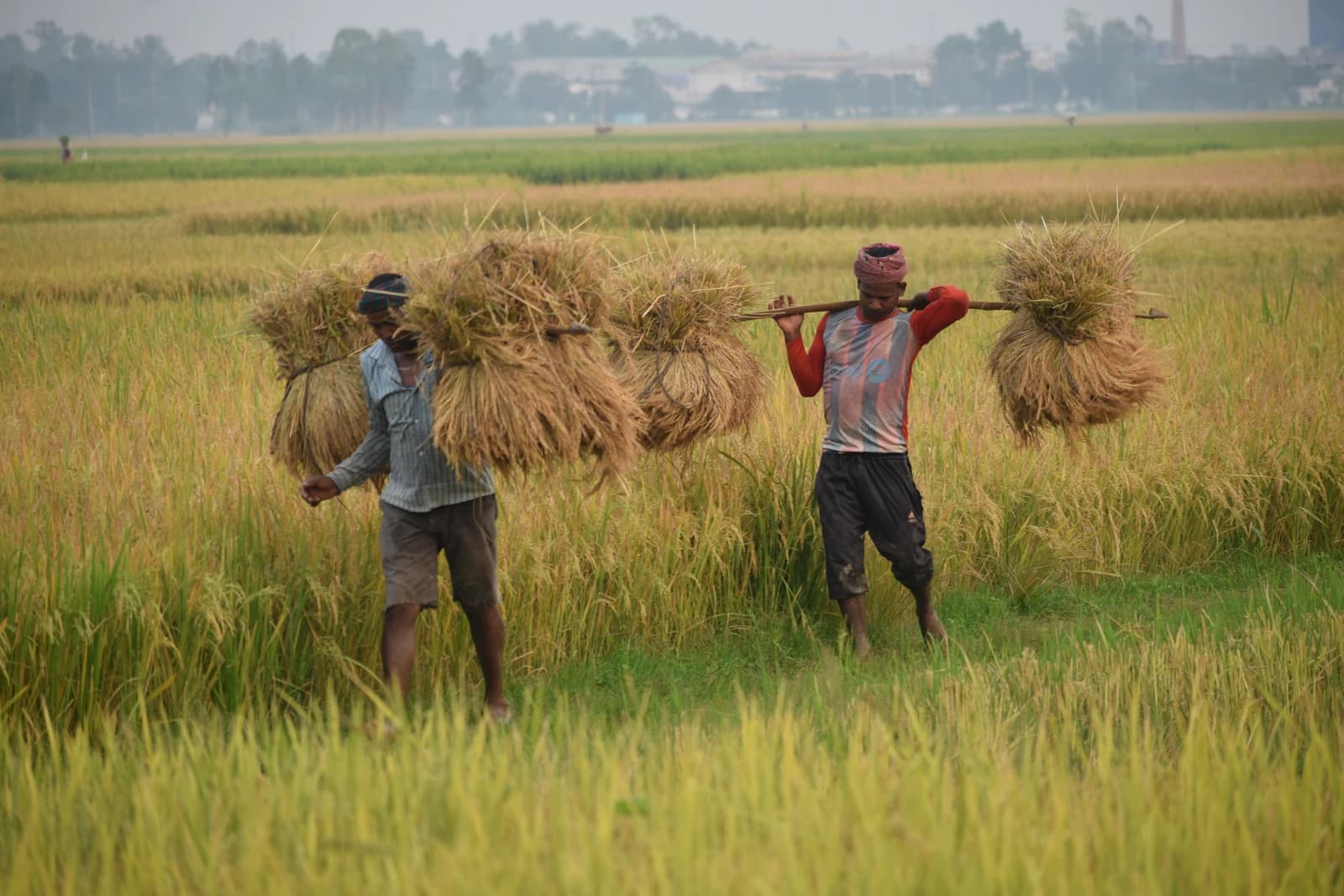
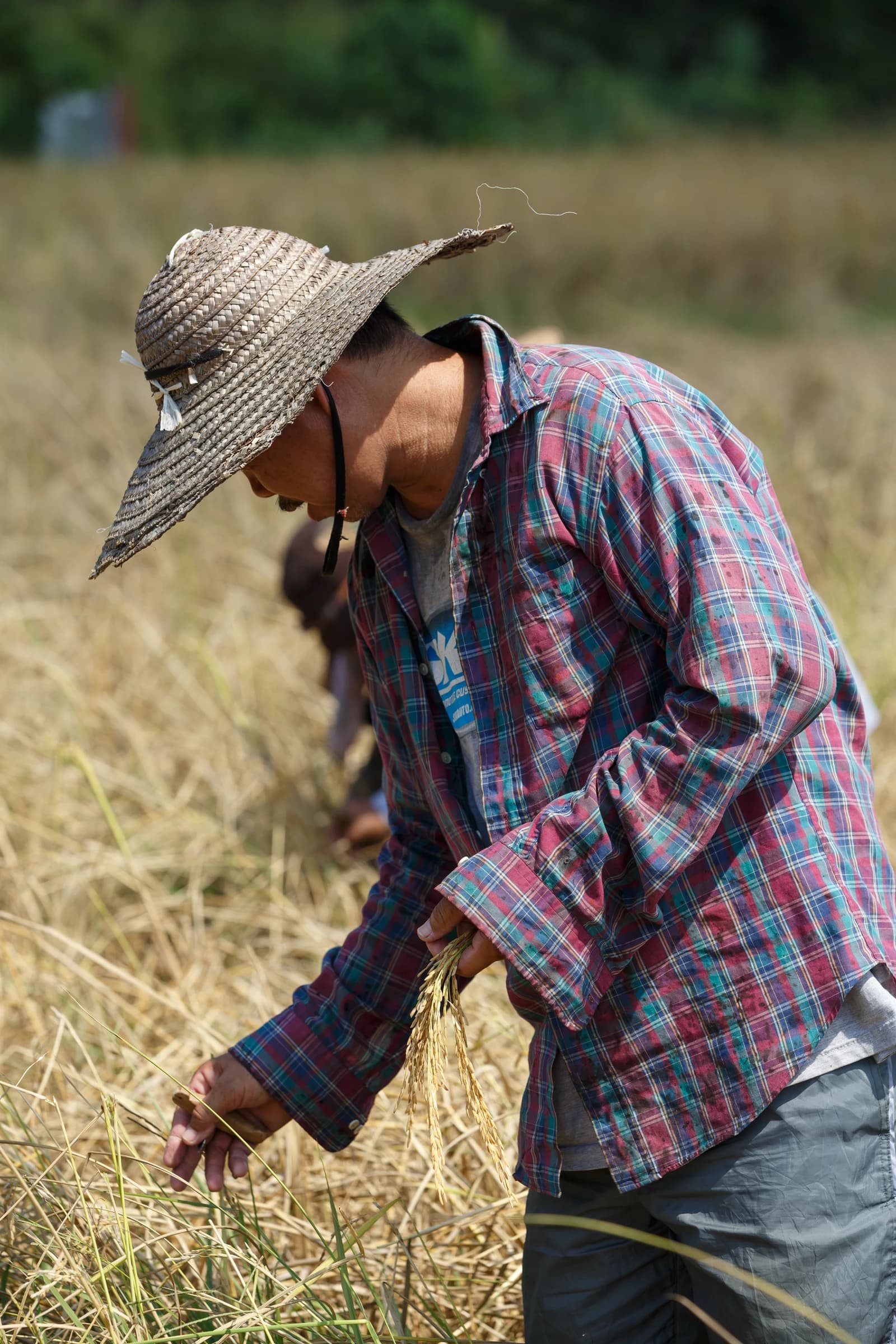
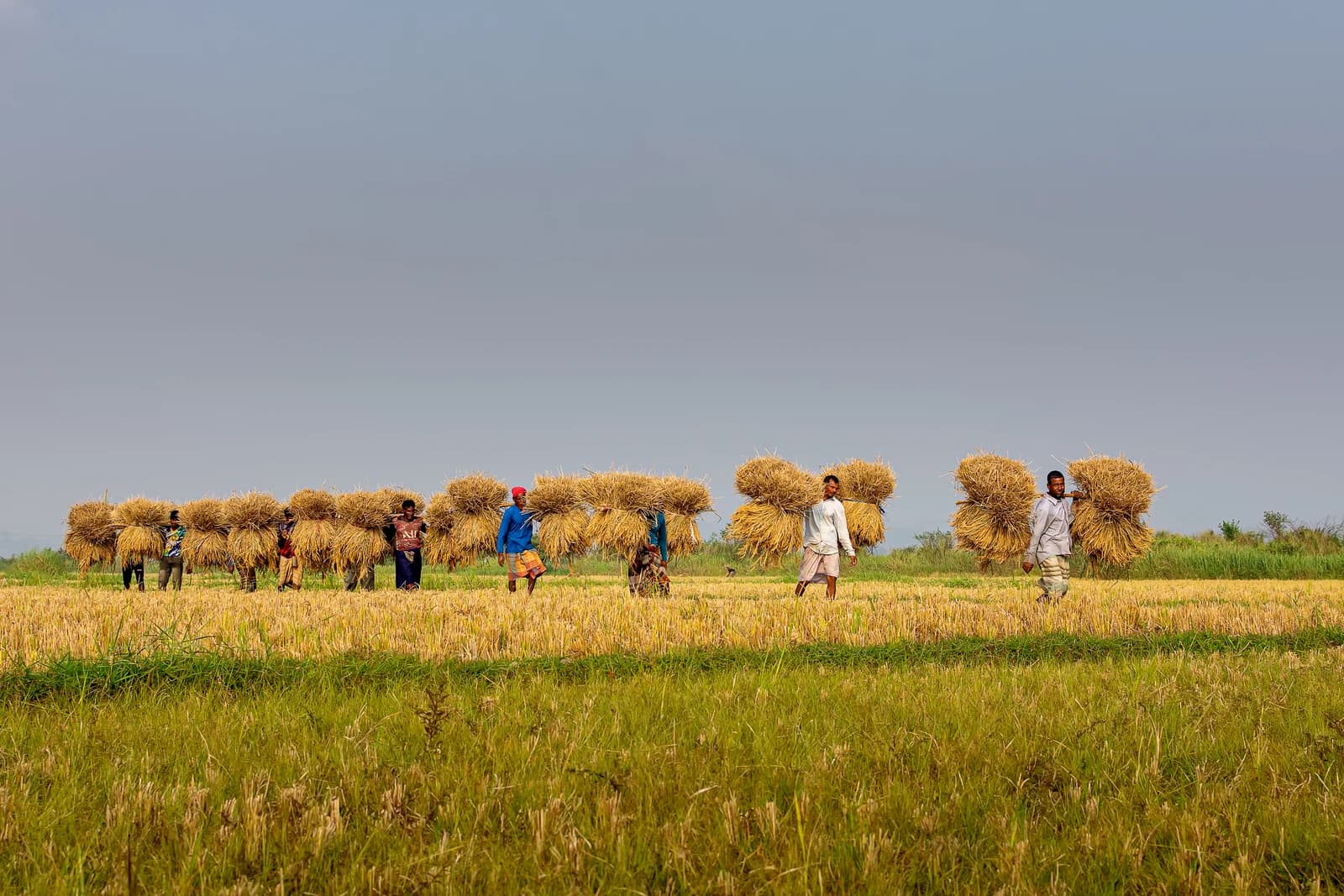
Heavy rain across Dak Lak is forcing farmers, cooperatives and local authorities to harvest rice and other crops early to stop fields from flooding, crops sprouting and yields being lost.
Dak Lak Rice Harvest at Risk From Heavy Rain
The most immediate economic issue is not the rainfall itself but the risk that harvest-ready output cannot be brought in on time. Dak Lak authorities say nearly 1,500 hectares of rice have already been flooded or flattened, and they warn losses could exceed 50% if the rain persists. That would hit farm incomes directly, reduce local supply and add pressure to post-harvest handling, transport and drying capacity across the province.
The damage is already visible in places such as Hoa Thinh, Hoa My and Hoa Hiep, where cassava and summer-autumn rice have reached harvest stage but cannot wait for better weather. In Hoa My alone, more than 800 hectares remain unharvested, while waterlogged fields are preventing combine harvesters from entering. In Hoa Hiep, around 30 hectares of rice are under water. With labour short and fields muddy, local military, police and border guard units have been deployed to help cut and carry crops by hand.
For farmers, the timing matters as much as the weather. Rice that stays submerged too long can germinate in the field, cut grain quality and reduce market value. Cassava left in saturated soil can rot before it is dug up. The provincial government has told localities to classify fields by maturity, harvest the ripest areas first and move produce quickly to buyers, dryers and storage sites so that harvested grain does not spoil before it is sold.
The response also shows how exposed rural economies remain to climate shocks. Dak Lak, a major agricultural province in Vietnam’s Central Highlands and adjacent eastern districts, relies heavily on seasonal crop sales for household cash flow and next planting cycles. When harvests are delayed, farmers lose not only volume but working capital for the next crop, while cooperatives and traders face bottlenecks in collection, drying and logistics.
The wider market impact is likely to be local rather than global, but it still matters to investors watching food inflation, rural credit risk and agricultural input demand. A prolonged harvest disruption can support near-term rice prices in affected areas while also lifting demand for drying services, storage and transport. At the same time, it can strain smallholder finances and increase default risk for lenders tied to the farm economy.
The key question now is whether the rain eases long enough for the province to complete the urgent harvest. If it does not, Dak Lak could see another round of crop losses, weaker household income and higher costs for the local food chain just as farmers need cash to prepare for the next planting season.
| Entity | Gains | Losses |
|---|---|---|
| Rice traders and dryers | ▲More near-term throughput | ▼Higher logistics pressure |
| Local authorities and rescue forces | ▲Demonstrated responsiveness | ▼Resource strain |
| Farmers with fields harvested early | ▲Lower spoilage risk | ▼Slower manual harvest |
| Farmers with flooded fields | ▲— | ▼Yield and income losses |