Anthropic and Elon Musk are trying to blunt growing public unease over artificial intelligence with unusually large equity giveaways, a move that underscores how central the fight for social license has become to the AI boom.
Anthropic and Musk announce large equity giveaways
Anthropic said at least 5% of its shares will go into a “public benefit fund” aimed at responding to concerns about AI’s effects, a stake that could be worth about $50 billion if the company reaches a $1 trillion IPO valuation. Musk, meanwhile, said he will give one of his SpaceX shares to every child in America next year, a pledge that could exceed $10 billion at current prices. The announcements turn equity into a tool of persuasion, as leading AI figures seek to frame their businesses as public-good projects rather than pure profit machines.
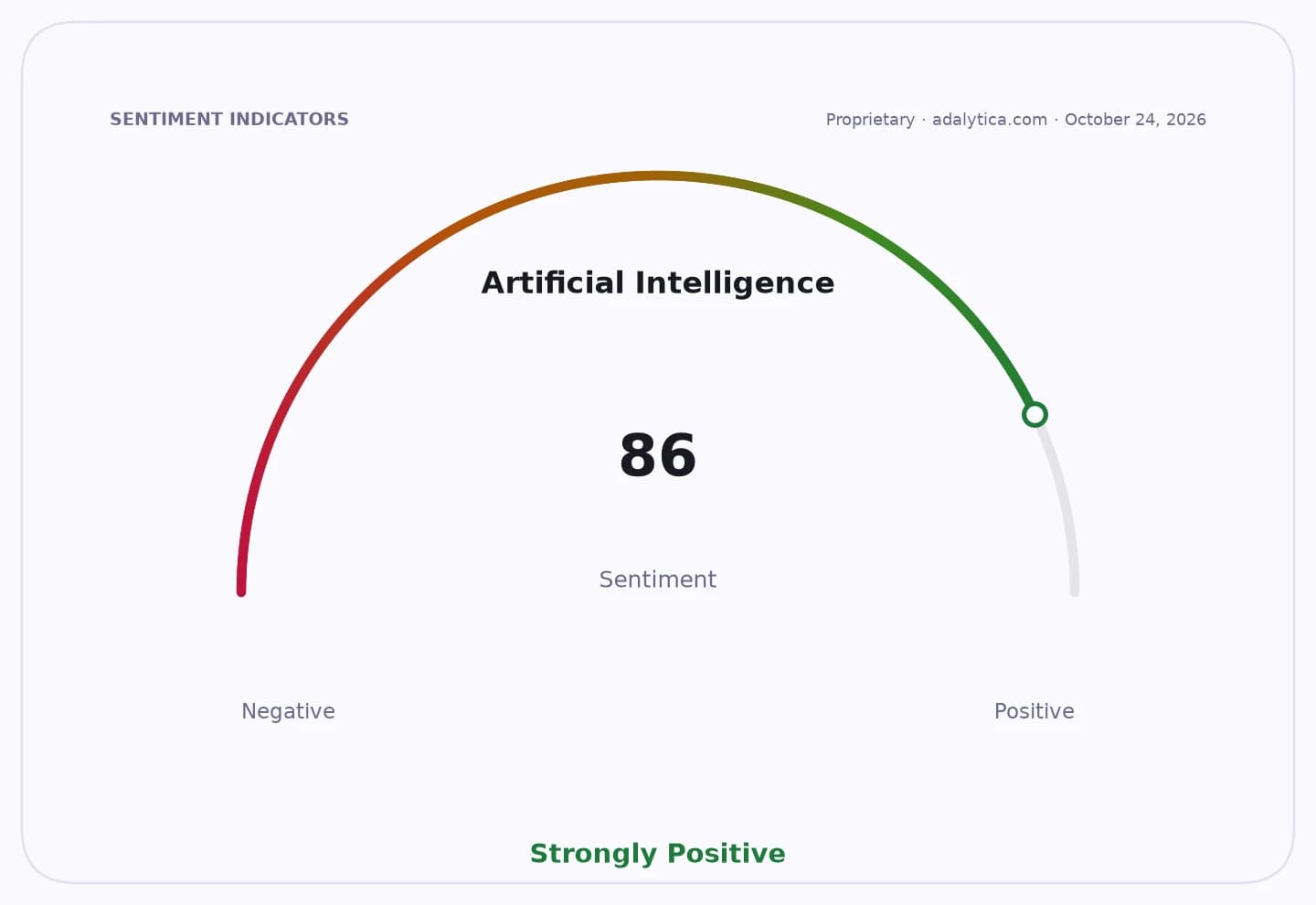
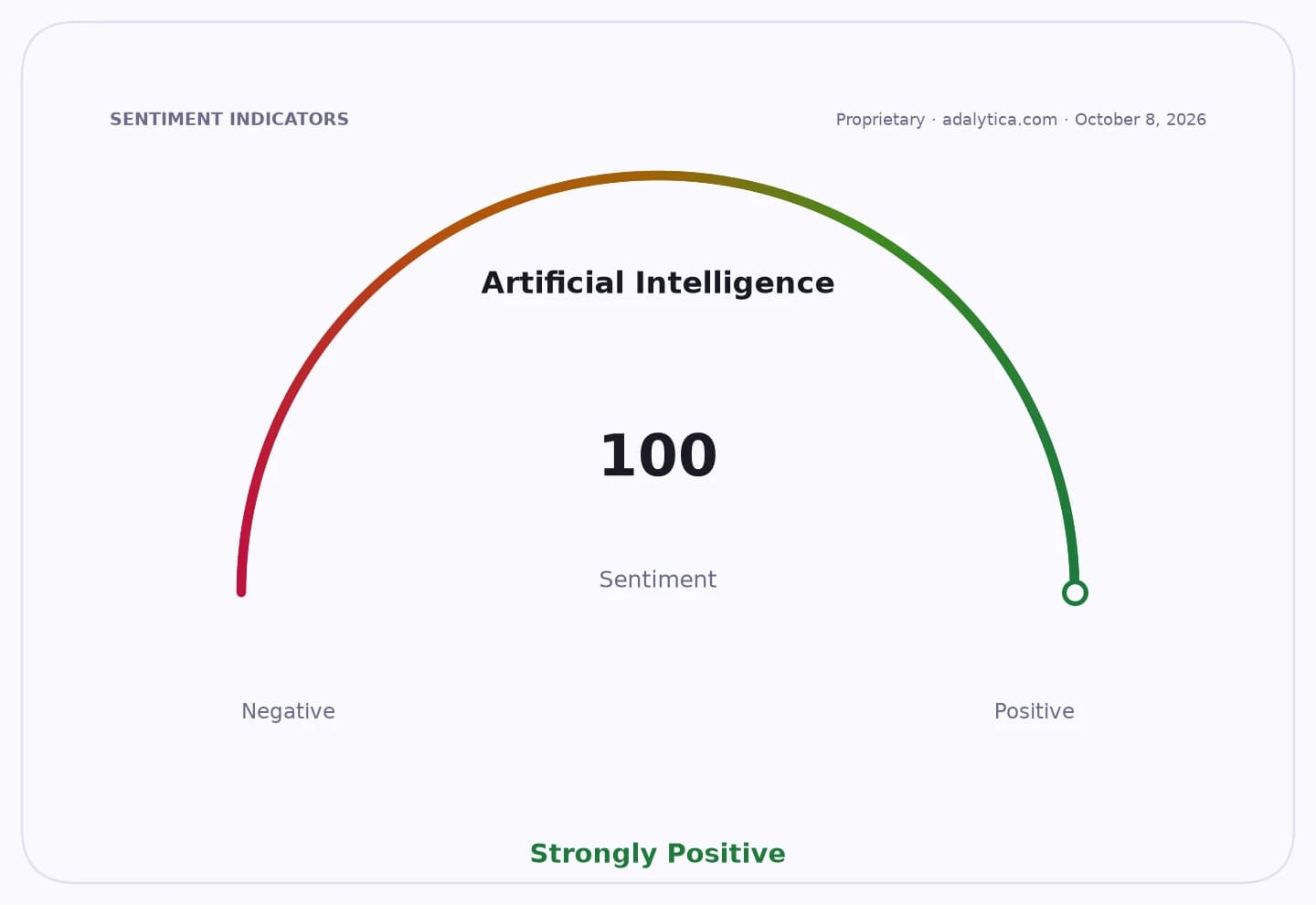
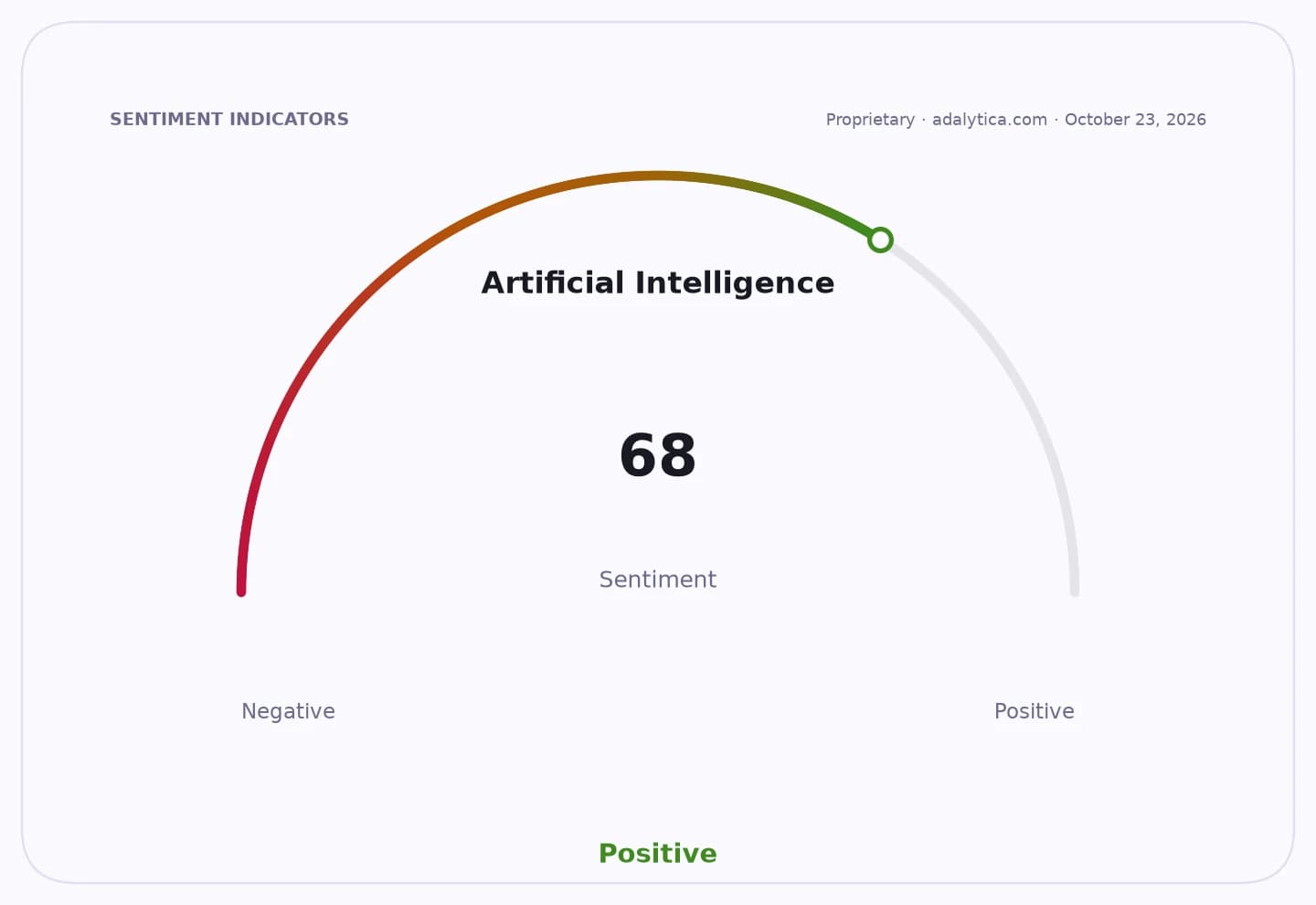
Sentiment IndicatorsⓘProprietary · adalytica.com · October 23, 2026
This is a snapshot — live sentiment, awareness and momentum for 130+ markets update continuously in the dashboard.Open AlphaPulse
The economics are straightforward: the more valuable these companies become, the larger the pool of capital set aside for social or philanthropic purposes. For Anthropic, the structure is especially notable because the company is already organized as a public benefit corporation, yet it is now formalizing a mechanism to allocate equity to causes it has not fully defined. It said the fund may eventually support traditional nonprofits or direct payments to specific populations, while ruling out political lobbying. Musk gave fewer details, and his post did not explicitly link the SpaceX giveaway to AI, but the timing came after Anthropic’s announcement and fits his broader effort to shape the public narrative around frontier technology.
For investors, the message is two-sided. On the bull case, these pledges may help reduce regulatory, reputational and political resistance to AI development by showing that founders are willing to share some of the upside. That matters at a time when the sector is facing scrutiny over safety, labor displacement, copyright, data privacy and the concentration of wealth created by generative AI. On the bear case, the giveaways also highlight how much valuation is being priced into the sector, and how aggressively founders are trying to pre-empt backlash before it translates into tighter rules or slower deployment.
The broader market backdrop is one of intense capital concentration in AI. Microsoft, Alphabet and Nvidia all remain heavily exposed to the buildout in computing power, cloud infrastructure and foundation models, while also disclosing growing legal and regulatory risks tied to AI use. Microsoft’s stock has pulled back from recent highs, and Nvidia has also slipped from its peak as investors reassess the pace of the AI trade, even though both remain far above longer-term moving averages. Technical indicators such as the 50-day and 200-day moving averages still point to strong underlying momentum in the sector, but recent volatility suggests investors are increasingly sensitive to any sign that AI’s social costs could force a change in the economics.
Anthropic said it would provide more detail in coming months, including valuation milestones and reporting on the fund’s progress. That leaves open the practical question that matters most to investors: whether this is a genuine redistribution of AI gains or a symbolic gesture designed to secure broader acceptance ahead of a major public listing. Either way, the race to dominate AI is now being fought not only on model performance and funding, but on who can convince the public that the profits are worth the social trade-off.
| Entity | Gains | Losses |
|---|---|---|
| Anthropic | ▲Social license | ▼Equity dilution |
| Elon Musk / SpaceX | ▲Public goodwill | ▼Capital commitment |
| AI investors | ▲Lower backlash risk | ▼More scrutiny |
| Public / nonprofits | ▲Potential funding | ▼Unclear payout timing |