Anthropic is trying to answer one of the biggest questions hanging over artificial intelligence: who benefits if the technology becomes hugely valuable, and who pays for the disruption it creates?
Anthropic sets aside 5% of shares for public benefit fund
The Claude maker said it will dedicate 5% of its shares to a “public benefit fund,” with the potential for another 2% of shares to be added at the board’s discretion for every 50% increase in the company’s value above a baseline that has yet to be announced. For investors, that is more than a symbolic gesture. It is a signal that AI companies are under growing pressure to prove they can share gains more broadly as public concern over job losses, data-center power demand and the social impact of the technology rises.
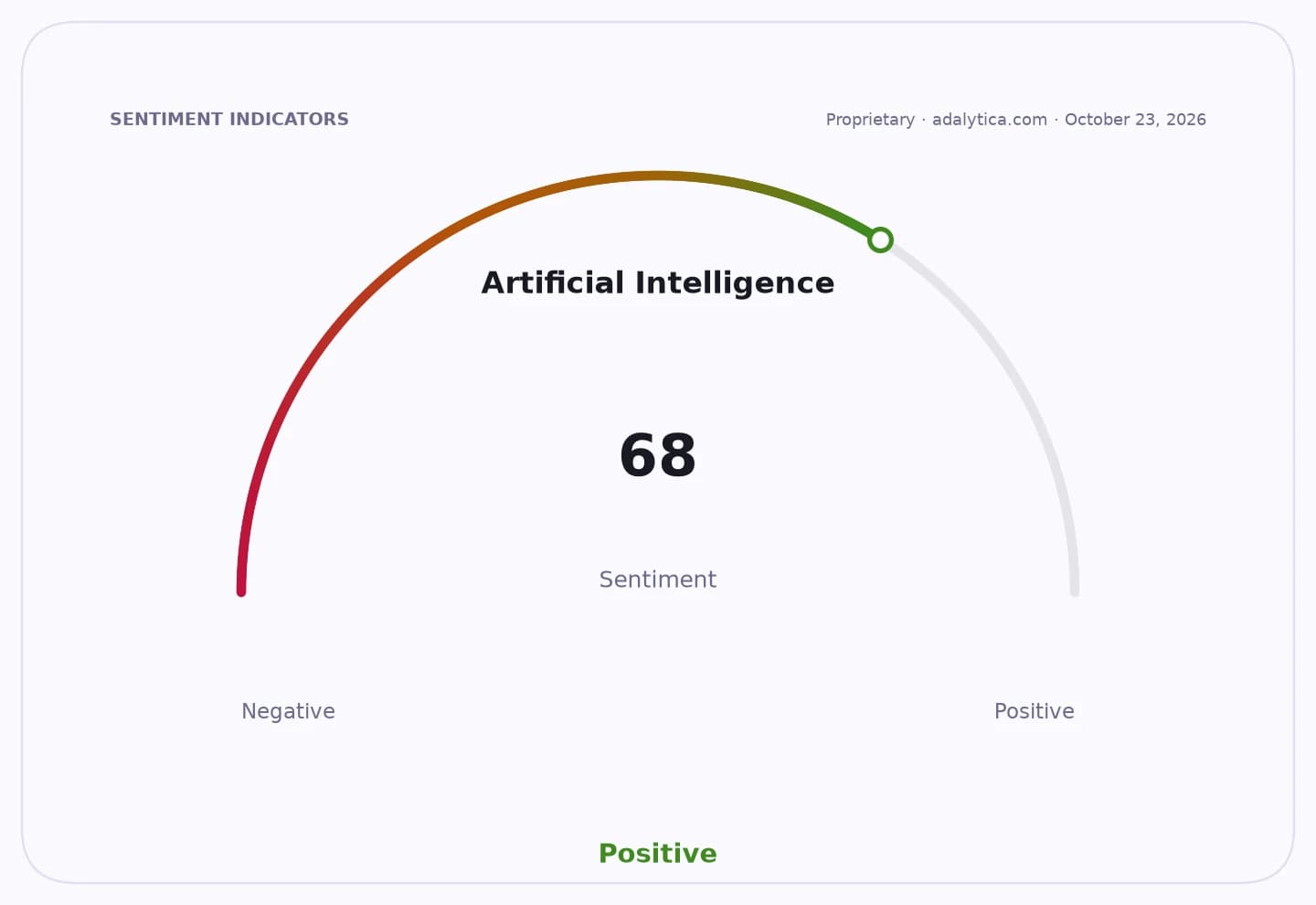
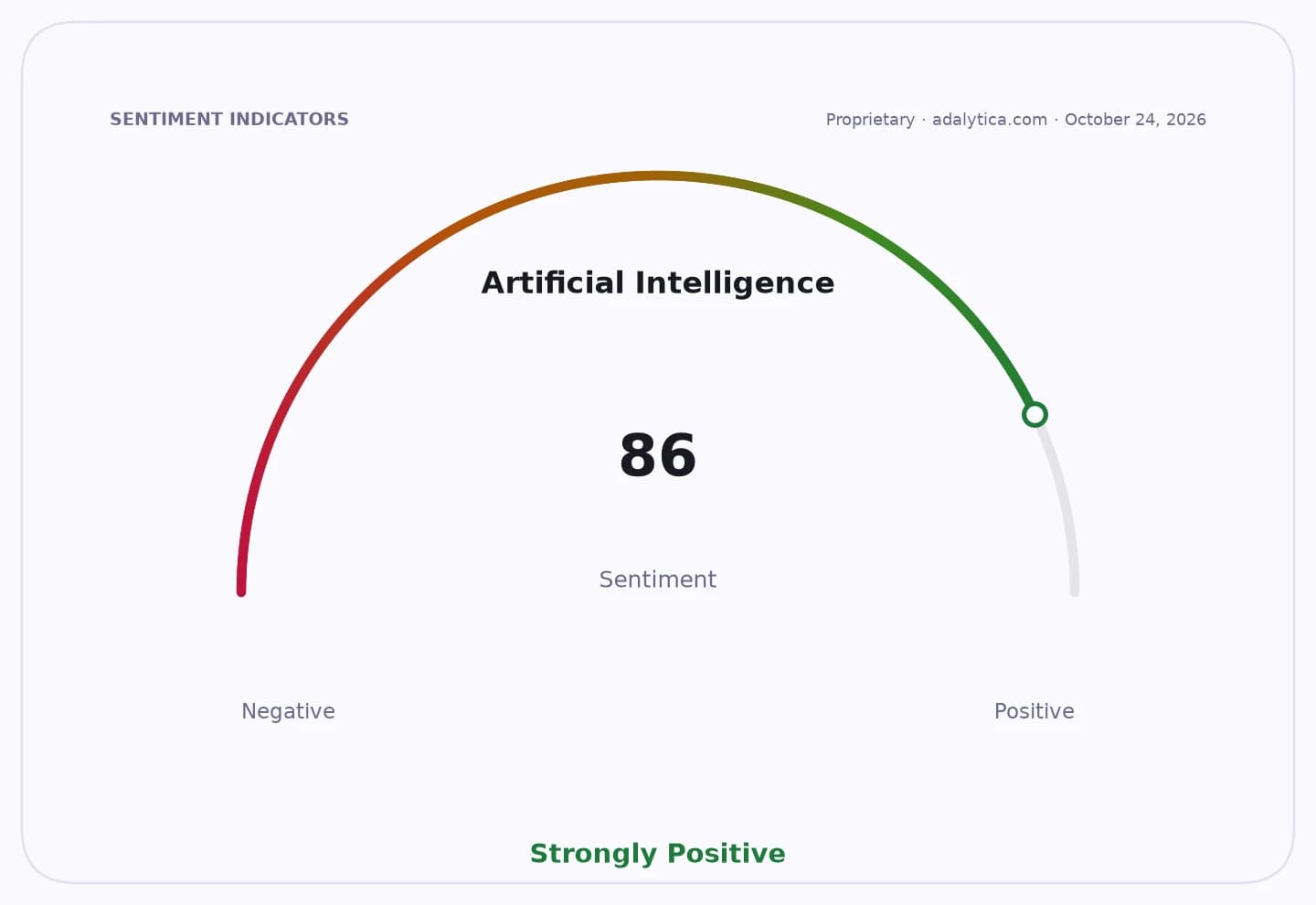
Sentiment IndicatorsⓘProprietary · adalytica.com · October 24, 2026
This is a snapshot — live sentiment, awareness and momentum for 130+ markets update continuously in the dashboard.Open AlphaPulse
Anthropic said the fund will be a wholly owned liability company and would give it more flexibility to make donations to nonprofits or direct distributions to specific groups. The company said it is targeting the labor market as one focus, setting aside $200 million to study the issue. That matters because the IMF estimates about 60% of jobs in advanced economies are exposed to AI, while Goldman Sachs has said signs of displacement could be strongest among entry-level workers.
The move also fits the company’s broader corporate strategy. Anthropic is preparing one of the biggest IPOs in history as a public benefit corporation, with a filing already submitted confidentially to the U.S. Securities and Exchange Commission. In practical terms, the fund could help the company defend its public-interest credentials just as it seeks public-market capital on a massive scale. That is especially relevant after its recent $65 billion funding round, which included Abu Dhabi tech investor MGX.
The timing is hard to miss. Polls show Americans are growing more uneasy about AI, with a recent AP-Norc survey finding 64% believe the technology is developing too fast. A separate Quinnipiac poll found 73% of U.S. voters oppose data centers in their communities. Those concerns are beginning to shape how executives and policymakers talk about AI, and companies are responding by emphasizing safety, governance and social benefits.
Elon Musk jumped into the debate by saying he preferred giving shares directly to the public, after Anthropic announced its fund. He separately said he would give one share of SpaceX to “every kid in America” next year, a pledge that would imply a value of roughly $10.7 billion based on Friday’s close. President Donald Trump praised the idea and linked it to the administration’s Trump Accounts program, underscoring how AI-era wealth and political messaging are increasingly colliding.
For long-term investors, the key takeaway is that AI leaders are no longer competing only on model quality and compute power. They are competing on legitimacy. That may not show up immediately in revenue, but it can matter over years through regulation, talent retention, customer trust and the cost of doing business. If Anthropic can turn public-benefit commitments into a durable part of its brand, it may strengthen its case as a future public company. If not, backlash could become a bigger drag on the sector’s valuation premium.
| Entity | Gains | Losses |
|---|---|---|
| Anthropic | ▲public trust, IPO narrative | ▼more dilution, governance scrutiny |
| Communities/workers | ▲funding for research, possible support | ▼uncertain near-term relief |
| AI incumbents | ▲legitimacy if backlash eases | ▼pressure to match commitments |
| Skeptical policymakers | ▲evidence of industry response | ▼less room to attack on ethics |